Sign up to get Today’s Best Articles in your inbox
Join 350,000+ subscribers and keep yourself informed with a selection of
The Week’s most interesting, enlightening and entertaining stories - plus daily puzzles.
You are now subscribed
Your newsletter sign-up was successful
Want to add more newsletters?
An account already exists for this email address, please log in.
Has the mystery of the Bermuda Triangle been solved?
Scientists discover huge methane bubbles, big enough to sink a ship, off the coast of Norway
A series of huge craters discovered on the seabed around the coast of Norway could be the key to understanding the mystery of the Bermuda Triangle.
The craters, which measure up to half-a-mile wide and are 150ft deep, are believed to have been caused by bubbles of largely methane gas leaking from deposits of oil and gas buried deep in the sea floor. The gas is believed to reach a critical mass before bursting to the surface, causing sizeable eruptions.
"Multiple giant craters exist on the sea floor in an area in the west-central Barents Sea… and are probably a cause of enormous blowouts of gas," said researchers from the Arctic University of Norway.
The Week
Escape your echo chamber. Get the facts behind the news, plus analysis from multiple perspectives.
Join more than 350,000 subscribers and keep yourself informed with a selection of The Week’s most interesting, enlightening and entertaining stories - plus daily puzzles.
Join more than 350,000 subscribers and keep yourself informed with a selection of The Week’s most interesting, enlightening and entertaining stories - plus daily puzzles.
"The crater area is likely to represent one of the largest hotspots for shallow marine methane release in the Arctic."
Further details will be released at the annual meeting of the European Geosciences Union in April, where the topics of debate will include whether the bubbles could threaten the safety of ships, thereby helping to explain the infamous Bermuda Triangle.
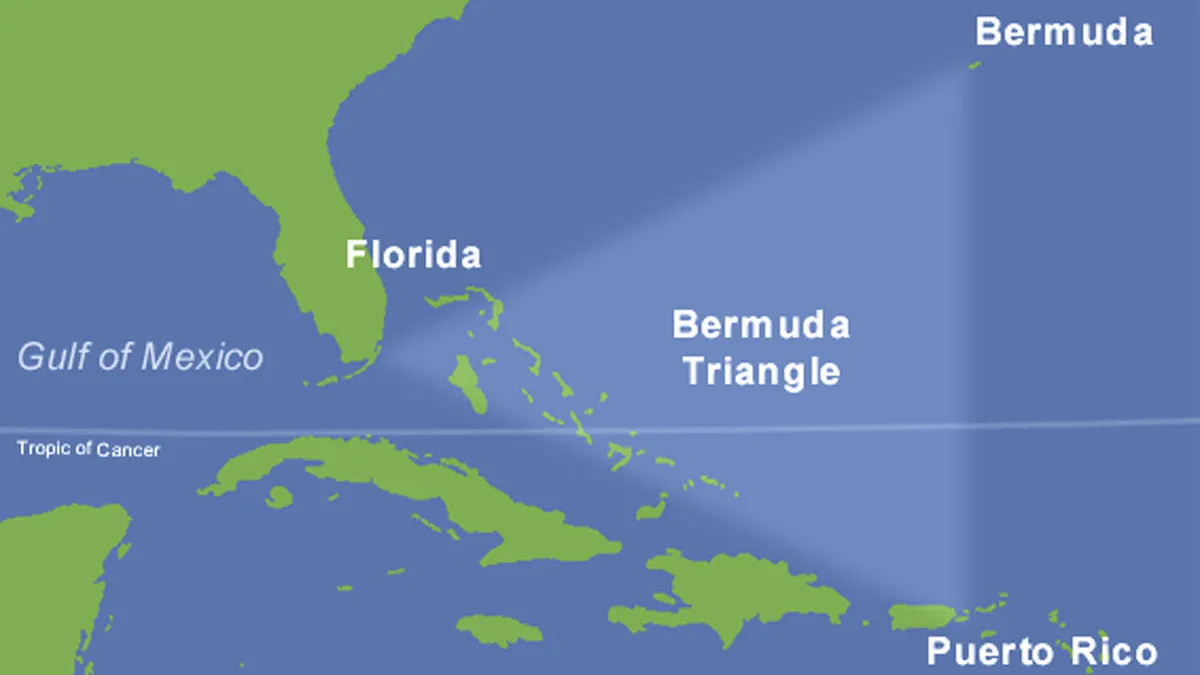
The Bermuda Triangle is a western area of the North Atlantic Ocean bounded by Bermuda, Puerto Rico and a point near Melbourne, Florida, where numerous ships and aircraft have mysteriously disappeared over the years.
According to the Sunday Times, scientists have developed radar that can produce detailed images of the sea bed and it is these pictures that could "explain anecdotal reports from mariners of water suddenly starting to foam and bubble".
Sign up to get Today’s Best Articles in your inbox
A free daily email with the day’s biggest news and analysis – and the best features from TheWeek.com
But, says The Guardian, it's not clear that the bubbles even occur in the designated area of the triangle and the vanishing qualities of the Bermuda Triangle itself are hotly disputed.
"Indeed boats and planes only vanish in the Bermuda Triangle about as often as they vanish everywhere else," the paper says.