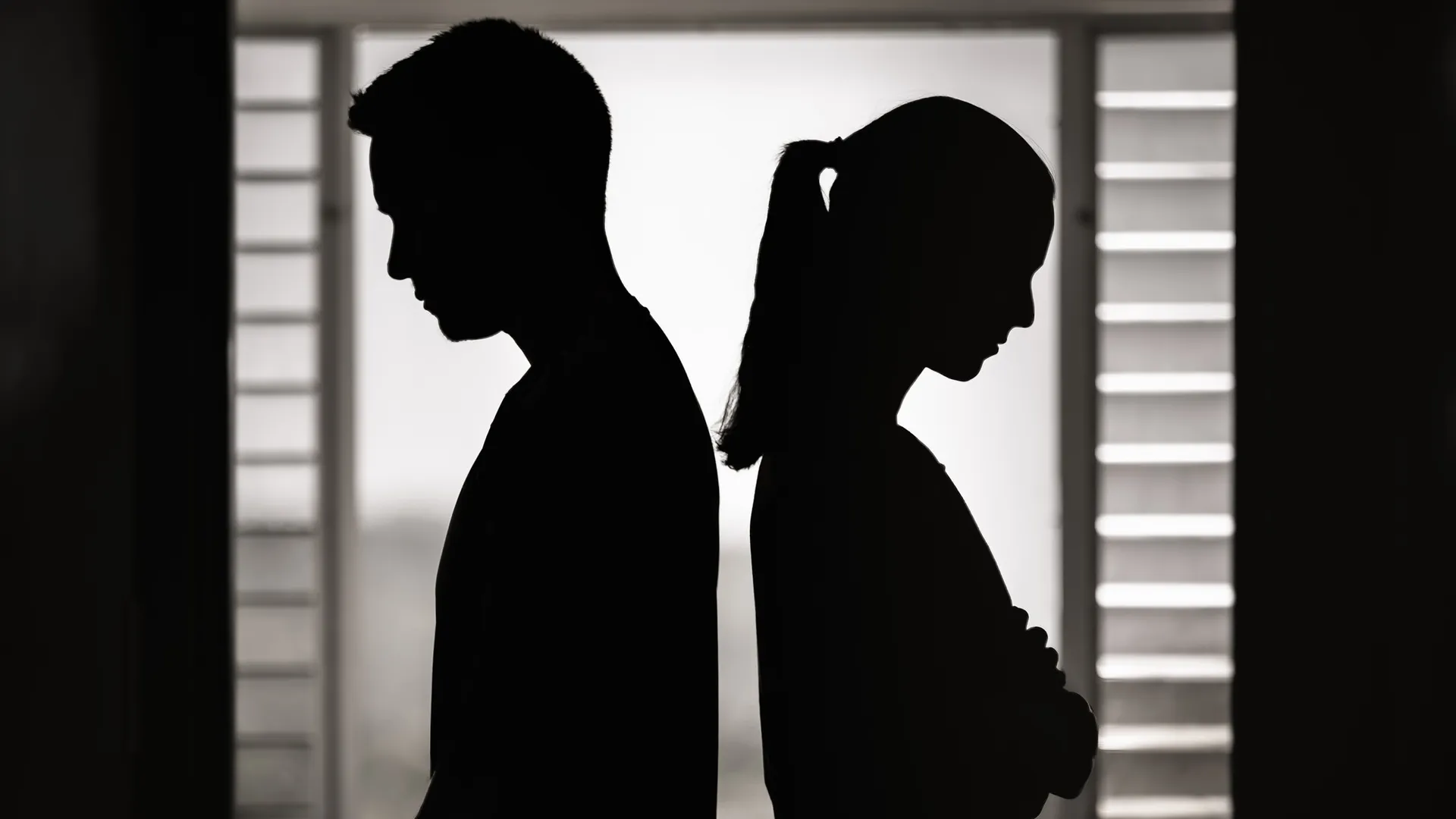
Divorce is not always the result of explosive arguments and betrayals or a "conscious uncoupling" agreed upon by two people. Instead, it can happen gradually as issues remain unresolved. Older couples are now experiencing quiet divorces, in which the partners check out of the marriage even if the pair is still legally together, often leading to complicated family dynamics and resentment.
Why is this happening?
Like quiet quitting from a job, quiet divorcing is a “breakup that doesn’t kick down the door so much as tiptoes into the room and sits on your chest,” said Vice. Quiet divorcing is not a divorce on paper and represents more of an emotional separation between partners, most of whom are over 40. “One of the first red flags that I tend to see when couples are on the verge of or in a silent divorce is when they feel more like roommates than romantic partners,” said Lisa Lavelle, a licensed clinical social worker, psychotherapist and couples therapist in New York City, to CNN. “The focus is on being mom and dad and not husband and wife or partners.”
The phenomenon is largely initiated by women and is attributed to cultural norms. Women have “spent years being the glue, the organizer, the caretaker, the solver,” said Harper’s Bazaar. After hitting their 40s, “something shifts,” and the “burnout is no longer something they can push past.”
The Week
Escape your echo chamber. Get the facts behind the news, plus analysis from multiple perspectives.
SUBSCRIBE & SAVE
Sign up for The Week's Free Newsletters
Join more than 350,000 subscribers and keep yourself informed with a selection of The Week’s most interesting, enlightening and entertaining stories - plus daily puzzles.
Join more than 350,000 subscribers and keep yourself informed with a selection of The Week’s most interesting, enlightening and entertaining stories - plus daily puzzles.
Latest Videos FromThe Week US
In general, women are also “more likely to detect emotional disconnect early, to seek conversations about relationship issues and to ultimately initiate divorce,” said Emily Impett, a psychology professor at the University of Toronto, at The Conversation. Men, “on average, are more likely to withdraw or avoid emotional confrontation.” When concerns are not addressed, the divide grows.
Boredom is also a significant contributor. “When passion fades, as it naturally does for many couples over time, the shift is interpreted not as normal,” said Impett. “Add in social media comparisons and performative affection online, and even subtle disengagement can feel especially stark.”
What are the consequences?
Divorce rates have been declining in the U.S. over the past few decades. In 1980, the rate was approximately 22.6 divorces per 1,000 married women, which then fell to 20.5 in 2008, according to the Pew Research Center. It has since fallen even further to 14.4 divorces per 1,000 married women in 2023. However, “gray divorces,” or those for people over 50, have increased from 3.9 divorces per 1,000 married women in 1990 to 10.3 in 2023. Many of these start with a quiet divorce before officially filing for a legal one.
Couples may also choose to stay in their marriage despite being quietly divorced. Approximately 60% of silent divorce couples “can’t afford to separate” and are “trapped by housing costs, dual income dependency and fear of dividing assets,” said an analysis by the Dellino Family Law Group. But there’s “no legal category for ‘emotionally separated but still married,’ which leaves these couples in a dangerous gray area where they have all the liabilities of marriage without any of the emotional or practical benefits.”
A quiet divorce “rarely resolves the underlying issues,” said clinical psychologist Mehezabin Dordi to Harper’s Bazaar. There’s “no real communication, no opportunity for repair, no shared understanding of what went wrong.” Instead, it leads to increased resentment, which can affect not only the partners but also any children in the household.