Sign up to get Today’s Best Articles in your inbox
Join 350,000+ subscribers and keep yourself informed with a selection of
The Week’s most interesting, enlightening and entertaining stories - plus daily puzzles.
You are now subscribed
Your newsletter sign-up was successful
Want to add more newsletters?
An account already exists for this email address, please log in.
The history of US nuclear weapons on UK soil
Deployment has led to decade-long protests and dangerous mishaps
Donald Trump plans to turn the UK into a “potential nuclear launchpad” and put American nuclear missiles on British soil for the first time since 2008, said the Daily Mail.
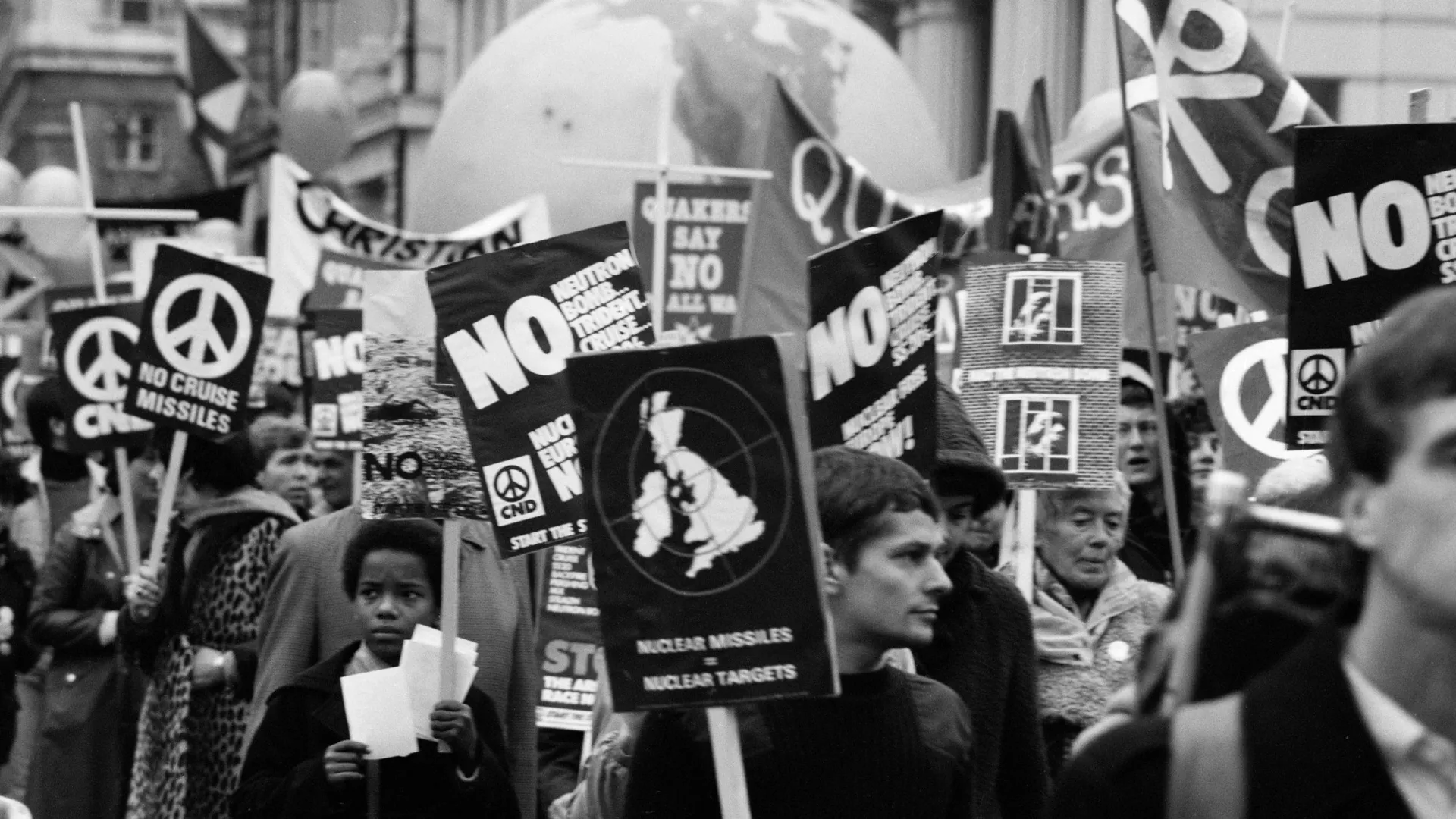
The return of US nukes to these shores could prove controversial, as was their presence in the past, when they were a divisive and at times dangerous element.
When did they arrive?
US nuclear weapons were housed on UK soil for more than five decades, arriving initially at RAF Lakenheath, Suffolk, in September 1954 as part of NATO's strategy against the Soviet Union.
The Week
Escape your echo chamber. Get the facts behind the news, plus analysis from multiple perspectives.
Join more than 350,000 subscribers and keep yourself informed with a selection of The Week’s most interesting, enlightening and entertaining stories - plus daily puzzles.
Join more than 350,000 subscribers and keep yourself informed with a selection of The Week’s most interesting, enlightening and entertaining stories - plus daily puzzles.
Two years later, a B-47 bomber on a routine training mission crashed into a storage unit containing nuclear weapons, killing four servicemen. Official US documents said it was a “miracle” none of the bombs had detonated, as it was possible “a part of Eastern England would have become a desert”, said CND. Five years later, in January 1961, an aeroplane loaded with a nuclear bomb caught fire following a pilot error, leaving the bomb “scorched and blistered”.
In 1980, RAF Molesworth in Cambridgeshire was chosen to host more US nuclear missiles. It took six years for the bombs to become operational, but a year later, in 1987, the US and USSR signed a treaty to eliminate intermediate-range nuclear arms, which included those at Molesworth, meaning the project was an “expensive waste of time”, said Cambridgeshire Live.
US cruise missiles arrived at RAF Greenham Common in Berkshire in November 1983 with 96 nuclear warheads based here. The site became synonymous with the Women’s Peace Camp – protesters who first arrived in 1981 and the last of whom left in 2000 when it was decommissioned. Anti-nuclear activists borrowed George Orwell's line from “Nineteen Eighty-Four” and dubbed Britain “airstrip one” for the US.
When were they withdrawn?
The US began removing its nuclear weapons from Britain around 2007, ending a “contentious presence spanning more than half a century”, said The Guardian. The last 110 American nuclear weapons on UK soil had been withdrawn from RAF Lakenheath by June 2008 on the orders of George W Bush as part of a post-Cold War strategic shift.
Sign up to get Today’s Best Articles in your inbox
A free daily email with the day’s biggest news and analysis – and the best features from TheWeek.com
Are they coming back?
Speculation has grown over the past two years that the US plans to deploy nuclear weapons in the UK again. Reports in July suggesting some nukes had already arrived were neither confirmed nor denied.
But now reports of Pentagon documents indicate a $264 million upgrade of RAF Lakenheath will put US nuclear weapons back on British soil. The bombs would be in place to “face down Putin”, said the Daily Mail.
The plan includes knocking down at least half a dozen buildings, setting up secure intelligence facilities, protecting the surrounding area against enemy electronic pulse attacks, and sending over 200 American personnel, according to Pentagon funding proposals.
Even our domestic nuclear weapons are "really very American", said Scottish CND's Lynn Jamieson in The National, due to “integration with and dependence on” the US.
Chas Newkey-Burden has been part of The Week Digital team for more than a decade and a journalist for 25 years, starting out on the irreverent football weekly 90 Minutes, before moving to lifestyle magazines Loaded and Attitude. He was a columnist for The Big Issue and landed a world exclusive with David Beckham that became the weekly magazine’s bestselling issue. He now writes regularly for The Guardian, The Telegraph, The Independent, Metro, FourFourTwo and the i news site. He is also the author of a number of non-fiction books.