The Week The Week
flag of US
US
flag of UK
UK
https://cdn.mos.cms.futurecdn.net/flexiimages/jacafc5zvs1692883516.jpg

SUBSCRIBE & SAVE

Less than $3 per week

Sign in
  • View Profile
  • Sign out
  • The Explainer
  • The Week Recommends
  • Newsletters
  • Cartoons
  • From the Magazine
  • The Week Junior
  • Student Offers
  • More
    • Politics
    • World News
    • Business
    • Health
    • Science
    • Food & Drink
    • Travel
    • Culture
    • History
    • Personal Finance
    • Puzzles
    • Photos
    • The Blend
    • All Categories
  • Newsletter sign up Newsletter
  • The Week Evening Review
    The lingering effects of war, pro-union Republicans, and Trump’s deregulations

     
    the explainer

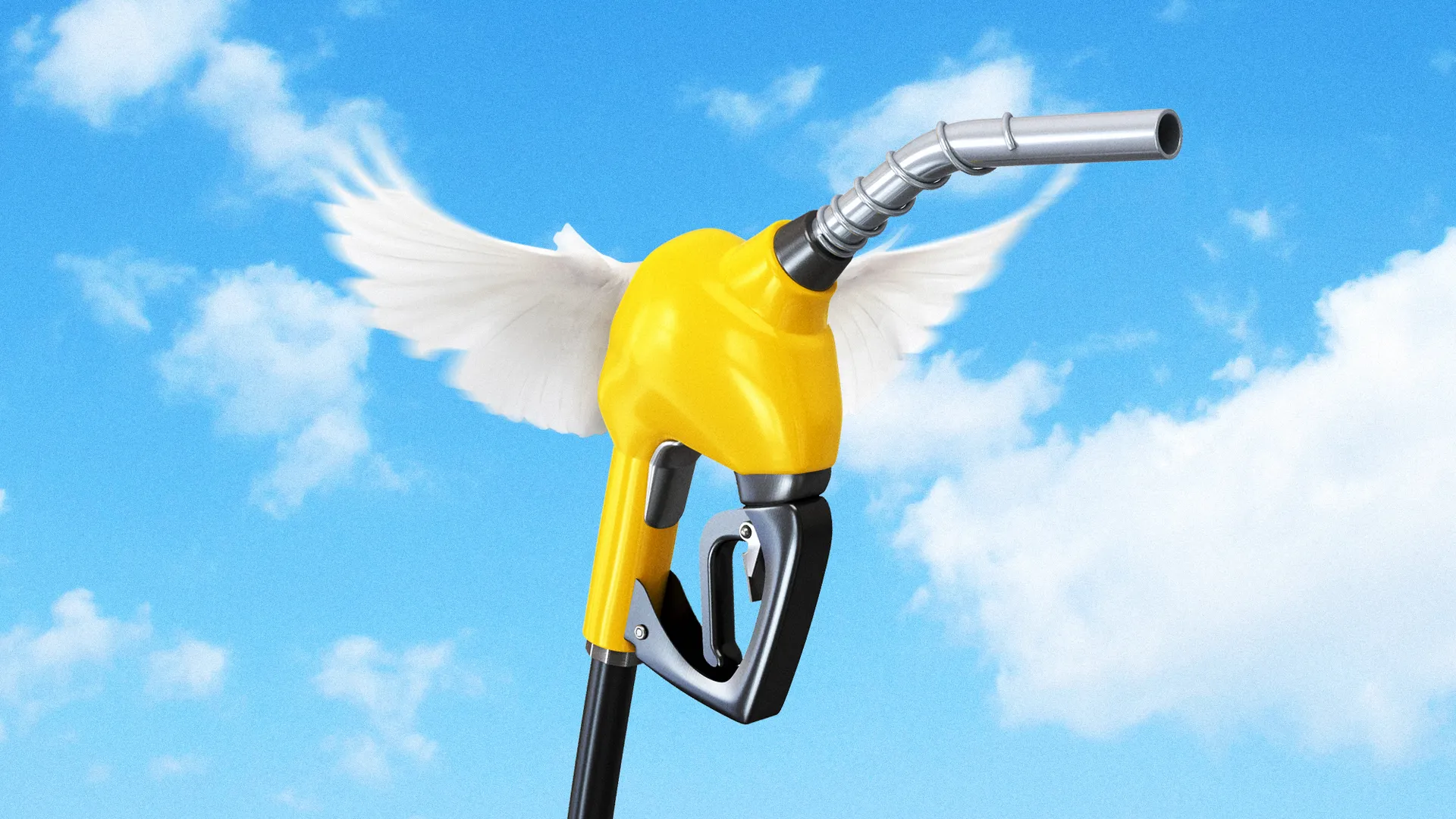
    The Iran war may end but high oil prices may not

    With the U.S. and Iran arriving at a “memorandum of understanding” to end hostilities, President Donald Trump seems to think petroleum prices will come down immediately. But economists say extended relief could take much longer to arrive.

    When will gas prices come down?
    Drivers will “probably have to wait weeks or longer to see meaningful improvement” on oil prices, said The New York Times. They often fluctuate in an “up-like-a-rocket, down-like-a-feather” manner, meaning gasoline costs “quickly rise alongside the price of crude oil but are slow to follow its descent.” Gas stations tend to lose money when the price of gas goes up, so when oil starts to “go down, station owners are slow to bring retail prices down to make up for their poor financial performance on the way up.”

    Trump is hopeful that the reopening of the Strait of Hormuz will help ease the price burden. But there’s a “big difference between reopening the Strait of Hormuz on paper and actually resuming the flow of oil through it,” said The Atlantic. While a small number of ships have started traversing the strait, the U.S. and Iran are “far apart on crucial issues, including Iran’s nuclear program,” which could “dissuade oil producers from resuming operations.”

    Many Middle East countries have had their oil production impacted. In Saudi Arabia, virtually “all oil production has been shut in” or capped, said Gregory Brew, a senior analyst at the Eurasia Group, to Intelligencer. A “full return to prewar production and refining levels is likely to take weeks, months or even years,“ said Reuters.

    What’s the bigger picture?
    Republicans are “hopeful prices will soon ease” because the midterms are on the horizon, said Politico. Even if prices go down, voters may hold onto negative thoughts about Trump’s economy.

    Other economic elements that rely on petroleum will still be affected too, most notably airline travel. Aviation experts “have spent months warning that even if the war ended, travelers should not expect airfares to go down immediately,” said The Associated Press. Fuel prices staying high will also affect the grocery aisle, so food may remain pricey for an extended period.


    today’s big question

    Are Republicans truly tilting toward unions?

    The GOP has tried to match President Donald Trump’s populism with tentative steps toward union-friendly rhetoric. Though its policies have not always kept pace, that may be changing in a small way.

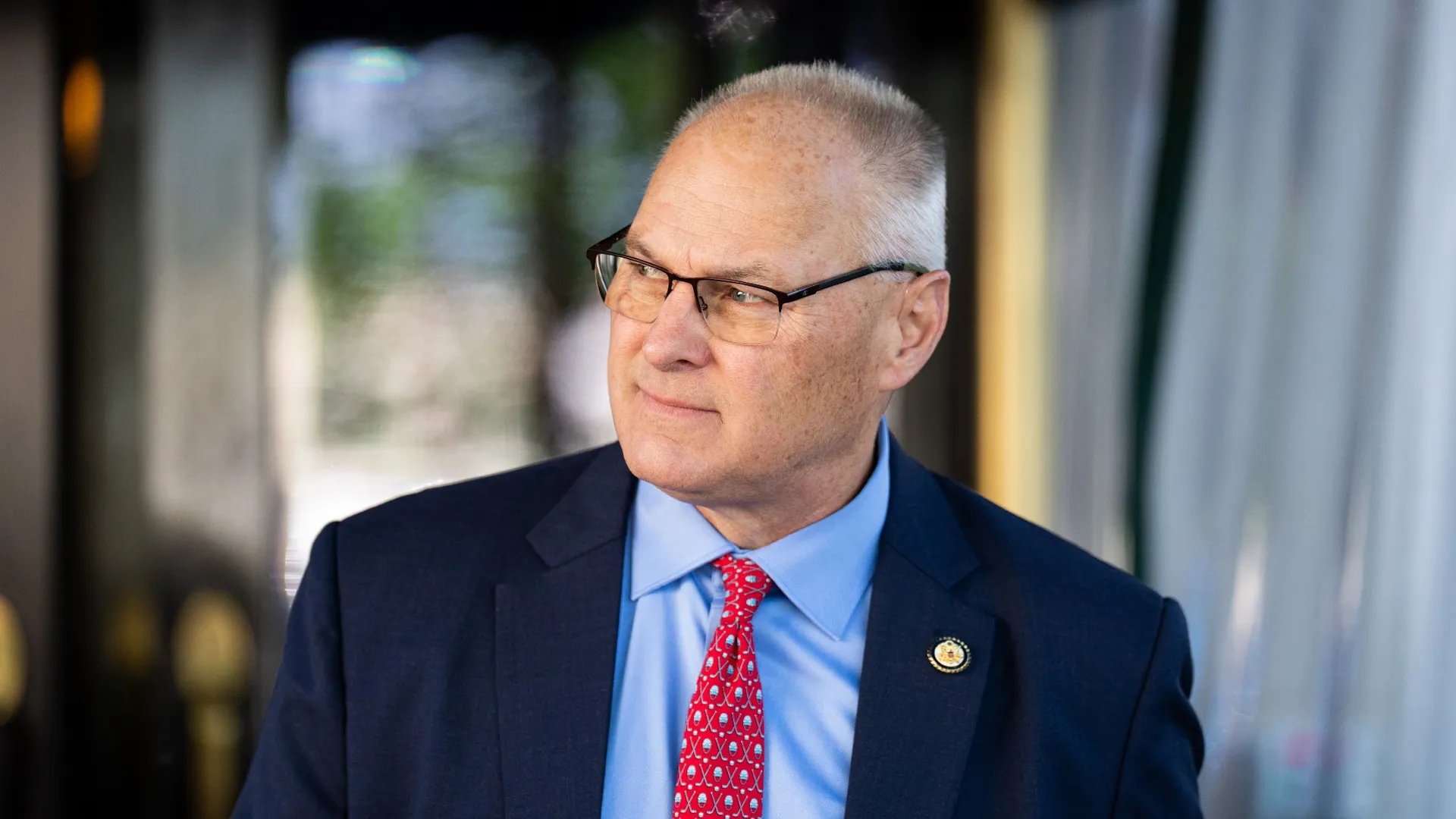
    The House of Representatives last week passed a Democratic-sponsored labor bill with the help of 20 Republicans who “broke party lines to support the measure,” said Time. The Faster Labor Contracts Act would amend federal law to “accelerate contract negotiations between newly unionized workplaces and their employees.” It was the latest example of union-friendly Congressional Republicans, including Pete Stauber of Minnesota (pictured above), “flexing their muscles” in the face of “furious” opposition from the GOP’s traditional free-market conservatives, said The Hill. 

    What did the commentators say?
    Congressional politics are “shifting in labor’s favor,” said Timothy Noah at The New Republic. The House recently passed two other bills to restore collective bargaining rights to federal workers, thanks to a “breakaway Republican faction” that joined Democrats to provide a majority vote in support of labor rights. The union-friendly bills still face “dismal odds” in the GOP-controlled Senate. 

    The latest pro-union bill is a “gift to the cultural left,” said The Wall Street Journal in an editorial. Republicans who joined Democrats to pass the measure may “think they are burnishing their populist credentials,” but they are actually “selling out their constituents to the progressive left.”

    What next?
    Sens. Josh Hawley (R-Mo.) and Cory Booker (D-N.J.) are sponsoring the Senate version of the act, said The Washington Examiner. Hawley is a union-friendly Republican and a social conservative, but the bill is running into opposition from other religious conservatives who say it will “require employers to cover abortion and transgender medical procedures.” 

    The debates arrive at a time when “many union voters have turned” on Trump over rising prices and the war in Iran, said The Washington Post. In 2024, Trump won 45% of union voters on the strength of his “promise to restore U.S. manufacturing jobs.” The discontent now could be meaningful in November, as the AFL-CIO is vowing to turn out 16 million union voters for the midterm elections.


    Statistic of the day

    337 million: The number of children around the world who live in areas affected by “riverine flooding,” while 33 million are exposed to coastal floods, according to UNICEF’s Children’s Climate Risk Report. Drought is “even more widespread,” with  more than 1.8 billion children exposed to “agricultural or meteorological droughts.”


    QUOTE OF THE DAY

    ‘There’s still an idea that in work people should sacrifice their personal lives in order to devote themselves to their career.’

    Japanese Mayor Shoko Kawata to The Guardian on receiving backlash for announcing she will take maternity leave while her deputy mayor takes over, adding that she didn’t “expect it to be so controversial.” Kawata is the first incumbent mayor in Japan to do so.


    in the spotlight

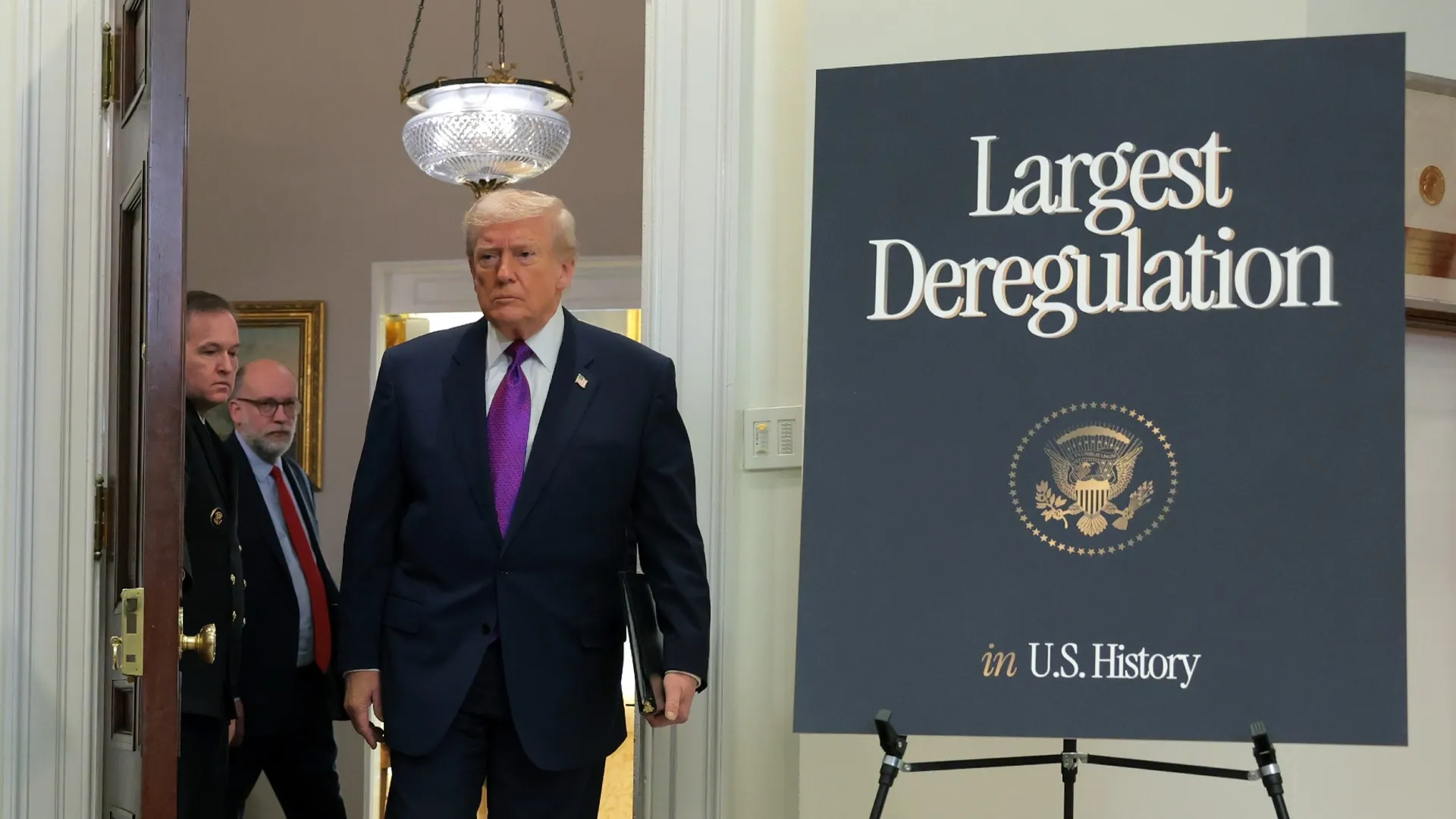
    The biggest deregulation actions Trump has taken

    While Republicans have generally been associated with deregulation since the 1970s and 1980s, President Donald Trump has overseen a stratospheric rise in deregulatory policies during his second term. The White House argues these deregulations are about eliminating the red tape of Washington, but critics are worried about Trump’s rolling back of protections.

    ‘Unleashing Prosperity Through Deregulation’ executive order
    Executive Order 14192, titled “Unleashing Prosperity Through Deregulation,” established a 10-to-1 rule for federal agencies. It ordered that anytime an agency enacted a “new regulation, it shall identify at least 10 existing regulations to be repealed,” according to the order. The goal of the rule is to “alleviate unnecessary regulatory burdens placed on the American people.”

    The order led to a slew of actions being taken by federal agencies and also stated that all new regulations should have no cost. This is “effectively impossible to accomplish when issuing any regulation at all, as nearly every regulatory change represents some level of cost to come into compliance,” said the Economic Policy Institute.

    Global warming 
    The most notable climate change-related deregulation is the repeal of a 2009 finding that “focused on emissions from motor vehicles, but later regulations of carbon dioxide emissions from power plants and methane emissions from oil and natural gas operations are based on it as well,” said the Brookings Institution. The deregulation is “going to force Americans to spend more money, around $1.4 trillion in additional fuel costs, to power these less efficient and higher polluting vehicles,” said Peter Zalzal, of the Environmental Defense Fund, to BBC News. At least 24 states are suing the Trump administration over this repeal.
     
    Financial services
    With Trump’s authority, financial services regulators are “undertaking the biggest overhaul of bank supervision since the 2008 financial crisis,“ said Reuters. These regulators argue that banks have become “too preoccupied with processes and pursuing minor issues and should focus on core financial risks.” Financial experts say rolling back these regulations has weakened the banking industry’s power to “police problems that do not inherently amount to material financial risks but which may eventually ⁠lead to problems, such as control lapses, governance or other process issues.”

    Read more


    Good day 🍺

    … for Boston bars. Scotland’s World Cup fans are drinking Beantown watering holes dry. Bar owners have been scrambling to get extra deliveries after running out of beer as the Tartan Army descends on the host city. “We have never seen anything like it,” one proprietor said to The Boston Globe. “We tripled St. Patrick’s Day.”


    Bad day 🐈

    … for pet therapy. Contrary to what many animal lovers believe, your dog or cat may not be an effective stress reliever, according to a study published in the journal Frontiers in Psychology. While interacting with your pet can boost feelings of well-being, it has no discernible calming effect.


    Picture of the day

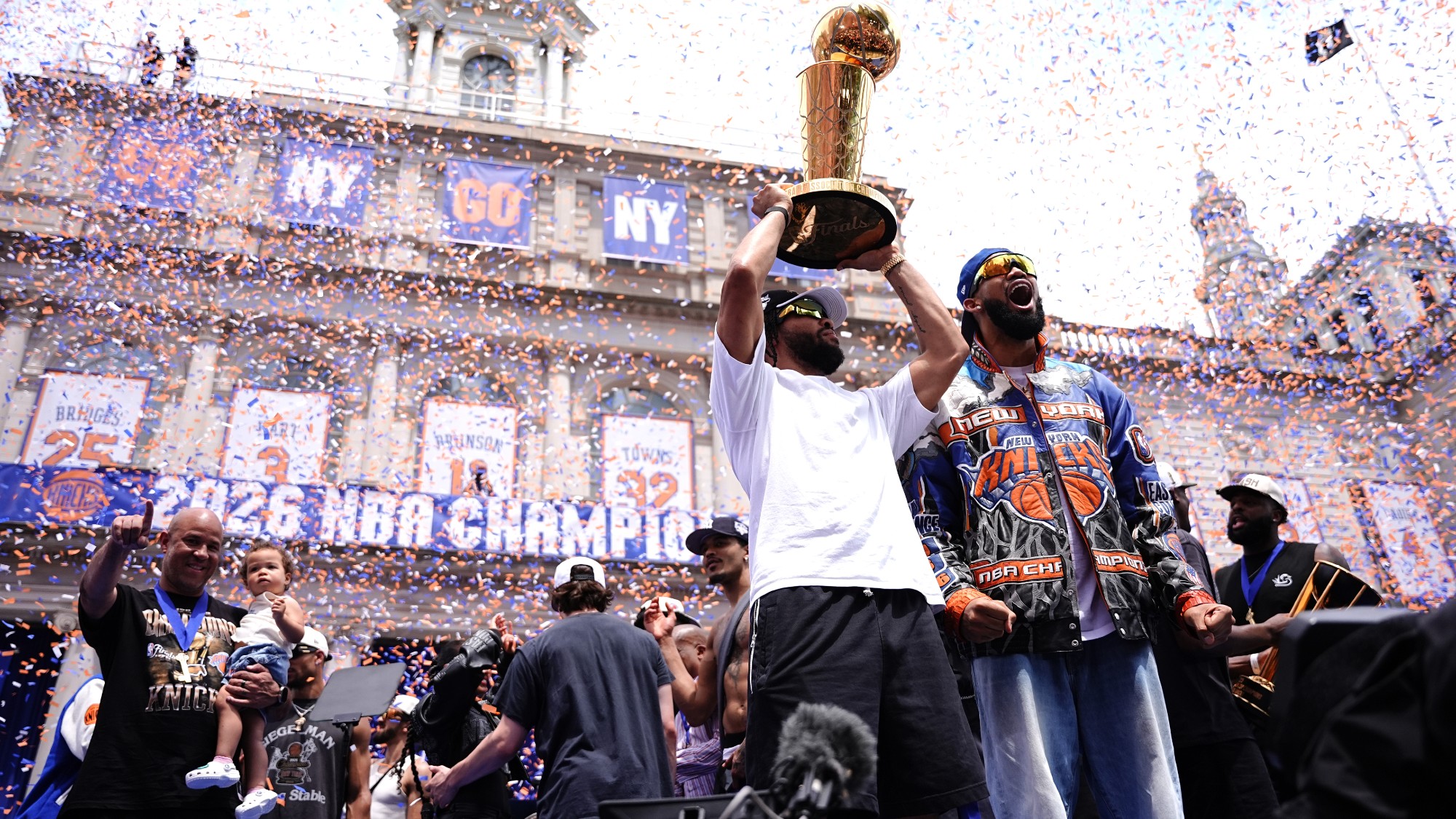
    Ticker-taped

    New York Knicks captain Jalen Brunson hoists the Larry O’Brien trophy, alongside teammate Karl-Anthony Towns (right) and Brunson’s daughter, Jordyn, and father, Rick, a Knicks assistant coach (left), at the close of the New York Knicks Championship parade and ceremony today. Their 2026 NBA Finals win is the team’s first in 53 years. 
    Angelina Katsanis / Getty Images


    Puzzles

    Daily sudoku

    Challenge yourself with The Week’s daily sudoku, part of our puzzles section, which also includes guess the number

    Play here


    The Week recommends

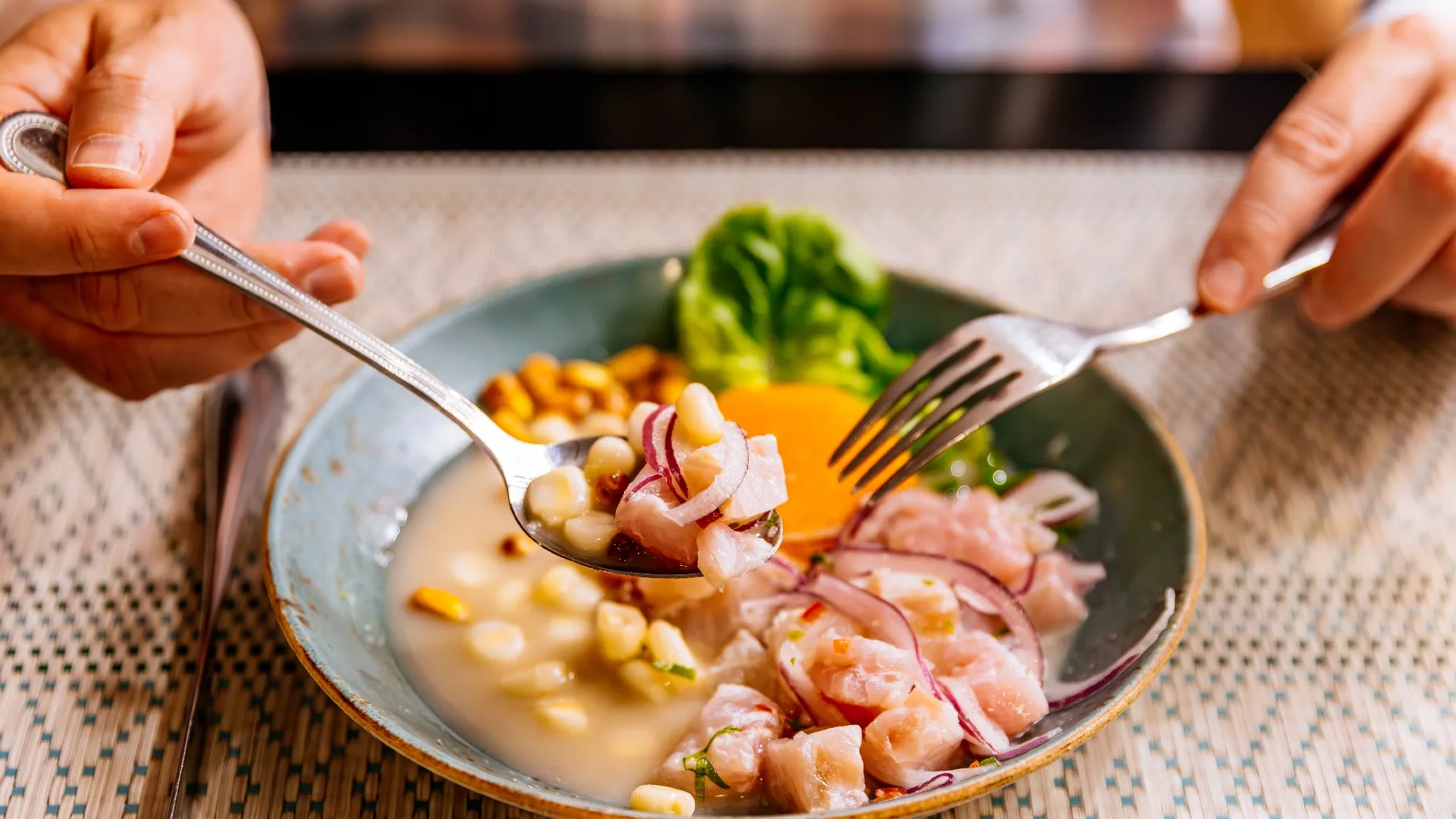
    Summer dining is delicious at these standout restaurants

    It’s probably going to be hot where you are, and with rising temperatures come slipping appetites. These restaurants across the country specialize, in part, in warm-weather-ready dishes. 

    Honest, Houston
    Honest was born in Ahmedabad, a city in the northern Indian state of Gujarat. Its food has since exploded and landed in oodles of U.S. states. And this time of year, you likely want chaat, those deliriously snackable nibbles born in Bombay. Whether you choose bhel puri with its puffed rice base or dahi puri and its thin, crackling edible cups, the chaat will be a riot of textures, chile heat and sweet chutney lift.

    Kokkari Estiatorio, San Francisco
    At this nearly 30-year-old restaurant, the mezethes (small plates) section is stacked. More than 15 wee dishes cover every craving you might have. Some, like the gigantes (monster-sized white beans with tomato sauce, feta and rivers of olive oil) are evergreen staples. Others are hyperseasonal, such as kalamboki (roasted corn with feta butter) and aginares souvlaki (artichoke skewers with bell pepper, red onion and a yogurt side).

    SRV, Boston
    “Cicchetti” are the Venetian notion of what we often know as tapas in the States: diminutive bites crafted to be eaten alongside a drink or cocktail. SRV serves delightful pasta, salads and mains, but begin with the cicchetti. During the summer season, you might encounter crostini with duck prosciutto, stracciatella and cherry, fried rice balls with pickled green garlic, and a lofty puree of whipped salt cod with black bread.

    Read more


    Poll watch

    The majority of Americans (69%) still believe they could achieve the American dream despite a 4% drop from 2024, according to a Gallup survey of more than 6,300 U.S. adults. Their outlook for other Americans is less optimistic, with only 46% believing “everyone” in the country could attain the same success, down from 51%.


    INSTANT OPINION

    Today’s best commentary

    ‘Trump and Vance’s spin on the Iran agreement is completely incoherent’
    Michael A. Cohen at MS NOW
    The White House agreed to a “ceasefire extension that met none of its prewar objectives while providing enormous financial concessions to Tehran,” and now, the administration is “desperately trying to argue otherwise,” says Michael A. Cohen. Trump “got played by the Iranians, and no one is buying his spin job.” The “most telling sign that the ceasefire deal is a dud is the White House waited until Wednesday to share the text.”

    ‘The culture wars in pro sports go on — for now’
    Michael Brendan Dougherty at the National Review
    The San Francisco Giants “recently held a Pride Night,” and “two Christian players wrote Bible verses on their caps,” says Michael Brendan Dougherty. This is “far from the first controversy about Pride celebrations and American sports and probably far from the last.” The major sports leagues are “perhaps the last relics of 20th-century American mass culture.” There are “fights over the values expressed in these arenas precisely because there’s an assumption that they reflect shared American values.”

    ‘Federal cap on student aid will hurt nursing workforce’
    Jinhee Jeong at The Seattle Times
    Some states are “already experiencing a nursing faculty shortage, and the problem will only get worse with the U.S. Department of Education’s Reimagining and Improving Student Education, or RISE, rule,” says Jinhee Jeong. This “excludes post-baccalaureate nursing degrees from the ‘professional degree’ category and sets nursing students’ loan limits at $20,500 annually.” With the “increasing cost of graduate school, fewer nurses will be able to obtain a graduate degree in nursing, which will significantly worsen the shortage.”


    WORD OF THE DAY

    Obamalisk

    The nickname for the 225-foot-tall stone tower at the Obama Presidential Center, whose design “architecture traditionalists” deem “stark, brutalist and fortresslike,” said The New York Times. The 19.3-acre complex, in the South Side of Chicago’s Jackson Park near the University of Chicago, opens to the public tomorrow following today’s opening ceremony.


    Evening Review was written and edited by Theara Coleman, Nadia Croes, Scott Hocker, Anya Jaremko-Greenwold, Justin Klawans and Joel Mathis with illustrations by Stephen Kelly.

    Image credits, from top: Stephen P. Kelly / Getty Images; Bill Clark / CQ-Roll Call, Inc / Getty Images; Anna Moneymaker / Getty Images; Alexander Spatari / Getty Images
     

    Recent editions

    • Morning Report

      Iran truce begins as details revealed

    • Evening Review

      Will the economy rebound postwar?

    • Morning Report

      Georgia GOP deals Trump a win, loss

    VIEW ALL
    TheWeek
    • About Us
    • Contact Future's experts
    • Terms and Conditions
    • Privacy Policy
    • Cookie Policy
    • Advertise With Us
    • FAQ
    Add as a preferred source on Google Add as a preferred source on Google

    The Week is part of Future US Inc, an international media group and leading digital publisher. Visit our corporate site.

    © Future US, Inc. Full 7th Floor, 130 West 42nd Street, New York, NY 10036.