The Week The Week
flag of US
US
flag of UK
UK
https://cdn.mos.cms.futurecdn.net/flexiimages/jacafc5zvs1692883516.jpg

SUBSCRIBE & SAVE

Less than $3 per week

Sign in
  • View Profile
  • Sign out
  • The Explainer
  • The Week Recommends
  • Newsletters
  • Cartoons
  • From the Magazine
  • The Week Junior
  • Student Offers
  • More
    • Politics
    • World News
    • Business
    • Health
    • Science
    • Food & Drink
    • Travel
    • Culture
    • History
    • Personal Finance
    • Puzzles
    • Photos
    • The Blend
    • All Categories
  • Newsletter sign up Newsletter
  • The Week Evening Review
    New student visa rules, a solved math mystery, and homework on the beach

     
    TODAY’S BIG QUESTION

    Will Trump’s new rules harm international academia?

    Foreign students at American colleges and universities were thrust into uncharted waters this month after the Department of Homeland Security released new guidelines to severely restrict how and how long international students can study in the United States. While the White House says the change is necessary for national security, higher education advocates claim the new rules are a blow to America’s role as an international academic powerhouse.

    What did the commentators say?
    Under the new rules, students on F-1 visas that for decades had allowed them to stay in the U.S. “as long as they maintain a full course of study” will now be limited to just four-year terms, said Bloomberg Law. The new rule also restricts shifting academic plans and “reduces the grace period” that visa holders have before they face deportation. The shift is the latest White House policy change “buffeting the roughly 1.2 million international students pursuing degrees in the U.S.”

    International student enrollment in American schools has “already plummeted” in President Donald Trump’s second term, said The New Republic. That’s thanks to “new visa restrictions” targeting specific countries, “harsh immigration enforcement,” and the “prosecution of foreign students who engage in political activity that the administration disagrees with.” 

    Placing “clear, finite limits on these visas” allows the U.S. to “properly screen, vet and monitor individuals within our borders,” said Homeland Security Secretary Markwayne Mullin in a statement. International students will now focus on their “primary purpose: completing their studies and returning home.” 

    But experts have “warned that these actions could lead to a decline in international enrollment,” said Inside Higher Ed. The outcome will be institutions that “struggle to meet enrollment and revenue goals,” as well as disruptions to the nation’s “ability to recruit top students and scholars to contribute to American research and innovation.”

    What next?
    With the rule change set to go into effect in mid-September, schools are “scrambling to figure out” what this means for their “international student offices, their Ph.D. programs and admissions,” said NPR. The “fallout” from the changes “could be considerable,” said Forbes. 

    The new guidelines are “far more” than changing a visa rule, said immigration attorney Tahmina Watson to Business Insider. “It’s an economic policy,” and the result will hurt “America’s long-term global competitiveness for generations.”


    QUOTE OF THE DAY

    ‘It’s a family-friendly audiovisual spectacle, like an elaborate Fourth of July fireworks display — and with about the same level of narrative and emotional depth.’

    Classicist Emily Wilson, whose translation of Homer’s “The Odyssey” inspired Christopher Nolan’s recent film adaptation, in a review for the London Review of Books. Though admittedly “humbled” by the filmmaker’s recognition, she would be “ashamed to have written any part of this script.”


    the explainer

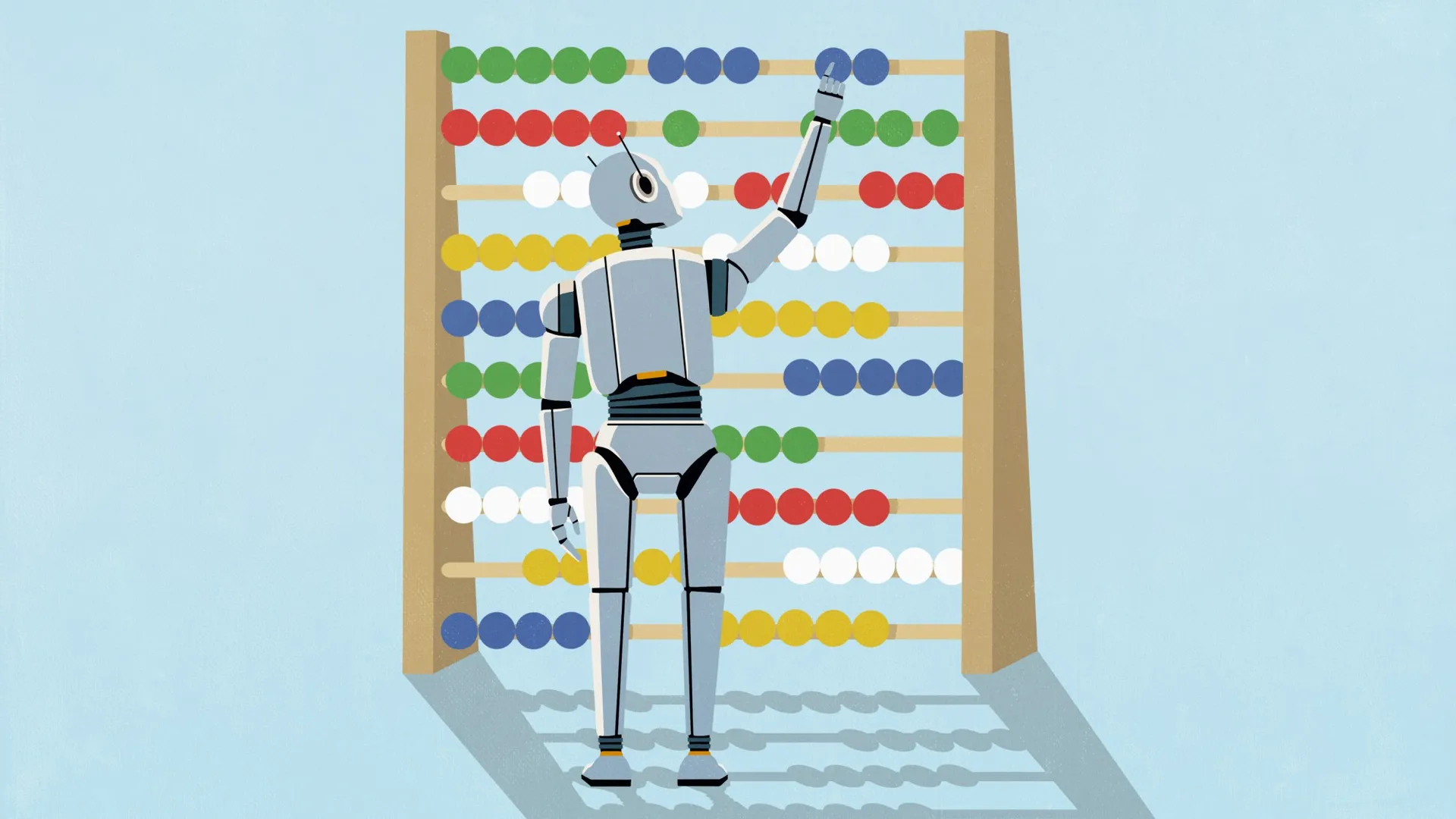
    Mathematicians buzz about AI’s solution to a math mystery

    A mathematician has somewhat unceremoniously announced that he has disproven an almost 90-year-old problem — with the help of Anthropic’s artificial intelligence model. The announcement sent waves through social media and mathematics circles, as AI-driven mathematical achievements have shaken the field and called the future of math into question.

    What math problem did AI tackle?
    The Jacobian conjecture is “false,” Harvard University mathematician and Anthropic employee Levent Alpoge said on X. Attached was a mathematical formula, a counterexample to the decades-old problem. The algebraic geometry theory suggests that a “certain type of mathematical function would also work in reverse,” said New Scientist. Despite the fact that the problem “bedeviled highly accomplished mathematicians for almost 90 years,” the conjecture “proved no obstacle” for Anthropic's “latest frontier AI model,” said Mashable.

    The AI-generated counterexample that Alpoge shared online is the “latest in a series of AI-driven mathematical breakthroughs,” said Fortune. The technology’s “progress (or assault)” on unsolved mathematics has “compounded rapidly since mid-2025,” when models first solved “five of six problems” at the International Mathematical Olympiad. Mathematicians, “relegated to the role of shepherd,” are left to watch AI “close these questions one-by-one, reaching places where the human mind can’t follow.” The mathematicians’ reaction is a “now familiar mixture of dread and amazement.”

    What does this mean for the future of math?
    The significance of the AI’s discovery varies depending on whom you ask. The counterexample did not “cause me to update my priors about what AI can and can’t do," professor and mathematician Andrew Blumberg said to Mashable. This is “exactly the kind of thing I would expect AI to be able to do.”

    For some, the recent developments of AI foreshadow a future of “increasingly capable AI models that will solve ever more complex problems,” said New Scientist. AI can “already produce master’s degrees in mathematics,” mathematician Ivan Fesenko at Westlake University in China said to the outlet. In a year, it will produce “Ph.D. degrees in mathematics.” Then the question arises: “Do we really need so many mathematicians around if AI can do such things so nicely?”


    Statistic of the day

    19 hours: The length of the world’s longest-range commercial aircraft test flight, which has just flown from France to Australia. Tens of thousands of people used flight tracking websites to follow the 10,500-mile journey of Qantas’ Airbus A350-1000ULR, which is set to deliver the airline’s first nonstop service between Sydney and London next year.


    IN THE SPOTLIGHT

    French adults are taking homework to the beach

    This is the summer of “cerebral pursuits” in France, with a “big rise” in the sale of cahiers de vacances, an adult spin-off of school vacation workbooks, said The Times. It’s the grown-ups that are “brushing up” on algebra, history and grammar on the beach.

    All grown up
    Vacation workbooks were originally designed to help schoolchildren keep up with their studies over the long summer break. But the new adult versions are a real hit. You only have to scan bookshop shelves to see the “scale of the phenomenon,” said the nonprofit Aleteia. French adults are using the workbooks not only to “evoke childhood summers” but also as an entertaining way to learn something new during the summer holidays.

    Last year, more than 650,000 vacation workbooks were sold — double the year before — and publishers are reporting even bigger sales this summer, said The Times. Among the most popular ones are “Les Maths en Vacances,” which has readers practicing geometry by folding their beach towels, and “Énigmes de l’Histoire,” which focuses on historical puzzles, such as the “mysterious fate of Louis XVII,” who disappeared after his parents were beheaded during the French Revolution. “Passeport Adultes Anglais” is all about improving your English, with a “notably challenging” section on making British “herb jelly.”

    There are also logical reasoning challenges. And police investigation workbooks offer “puzzles to solve” in a “Clue”-style format, said Instant.

    ‘Need to disconnect’
    Adults want to buy these books because they allow them to “learn a lot while having fun,” said Didier Ferat, of workbook publisher Solar, to Aleteia. The format is not “intimidating,” said Carole Strang, of publisher Éditions Nathan, to Instant. Readers can work through the books “alone or with others.” 

    There’s a sense of nostalgia at play too. Everyone knows these workbooks from their school days. They are associated with “strong memories” of childhood summers and holidays, said Strang.

    The desire to disconnect through nostalgic activities also explains the associated boom in “kidult” coloring and sticker books and an increasing passion for puzzles and crosswords. Dictionary publisher Robert has launched a new series of themed giant crossword books this summer. At a time when the “world of books is suffering,” said the publisher Charles Bimbenet to Instant, “this enthusiasm is welcome.”


    Good day 🌶️

    … for loving hot sauce. The purported benefits of spicy foods have a “strong scientific basis,” as several studies suggest they can help with longevity, said The Washington Post. Scientists believe capsaicin, the main active component in chile peppers, may be beneficial because of its “effect on the receptors in our nerve cells that perceive heat, both from temperature and spice.”


    Bad day 💰

    … for having money problems. The stress of being poor can cause long-term cognitive damage, according to a study published in the journal Innovation in Aging. Among the people studied who were in their mid-20s through early 50s, the poorest 20% were “slower on cognitive tests and scored worse on memory tests.”


    Picture of the day

    Feathered friends

    Red-crowned and white-naped cranes play in China’s Zhalong Nature Reserve. The area’s grasslands have become a major breeding ground for rare cranes in northeastern China. 
    Chi Shiyong / VCG / Getty Images


    Puzzles

    Daily sudoku

    Challenge yourself with The Week’s daily sudoku, part of our puzzles section, which also includes guess the number

    Play here


    The Week recommends

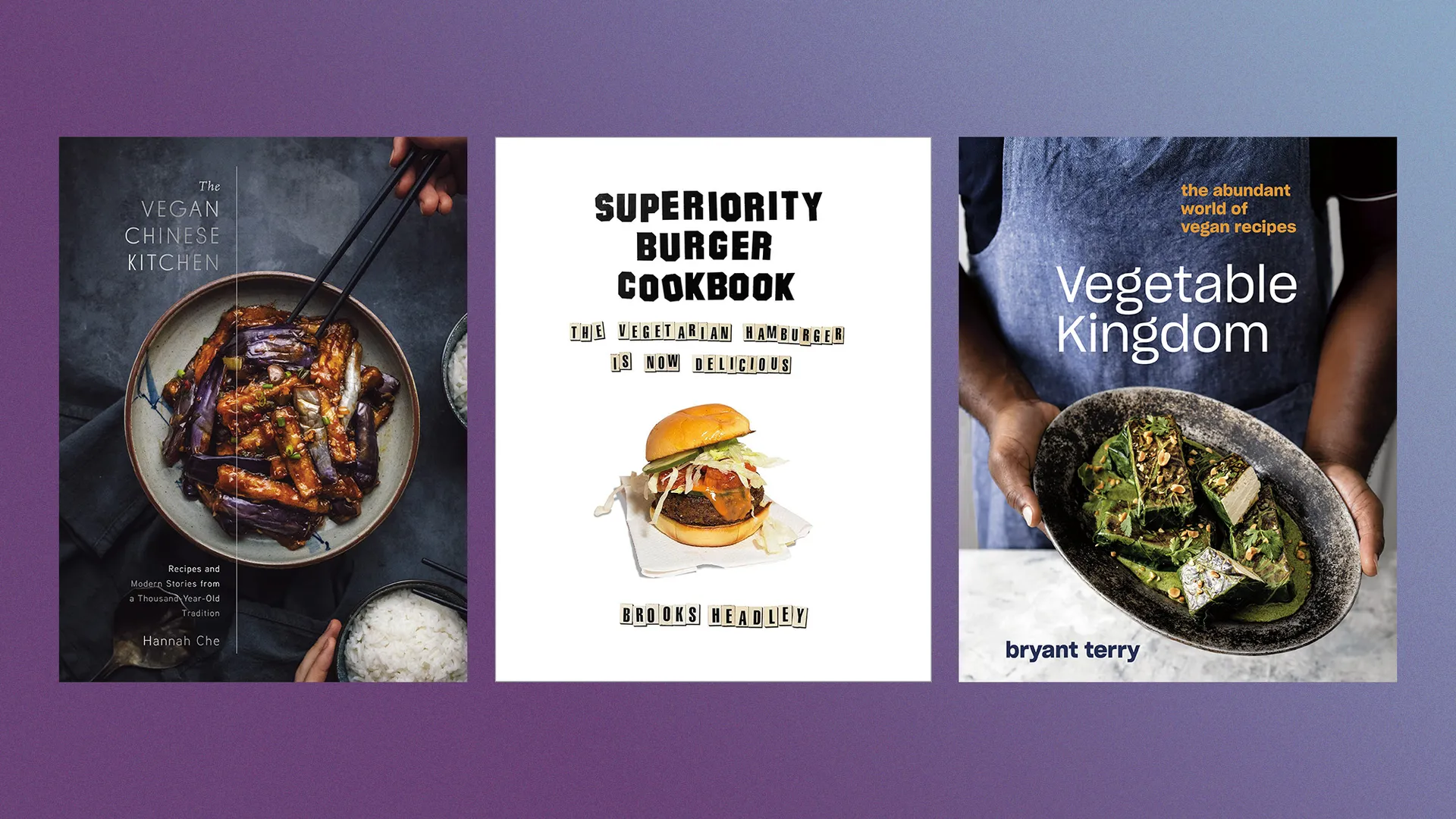
    The best vegan cookbooks of all time

    Phenomenally delicious plant-based eating has long existed in many of the world’s great cuisines. As with any kind of cooking, how a dish tastes is all in how it is made. These books will show you how to achieve top-tier vegan dishes from different angles.

    ‘The Korean Vegan Cookbook: Reflections and Recipes from Omma’s Kitchen’ 
    You may already know Joanne Lee Molinaro, aka The Korean Vegan, from social media. In her debut book, Molinaro “masterfully intertwines delicious recipes with intimate moments from her life,” said Bon Appétit. Americans might think of Korean food as meat-centric, but “Korean temple food, the cuisine prepared by Korean buddhist monks, has been around for a thousand years, predating Korean BBQ.” ($37, Avery)

    ‘Superiority Burger Cookbook: The Vegetarian Hamburger Is Now Delicious’ 
    Come for Brooks Headley’s recipe for the New York City restaurant’s legendary vegetable burger, stay for the delicious dishes that orbit that burger’s well-deserved fame. Making the burger is an ordeal of sorts, but the result is a paragon of the genre: “crisp outside and a soft but not-boring inside that’s lightly spiced and spicy, with plenty of vegetables and meat-free umami,” said Edible Manhattan. ($30, Norton)

    ‘Vegetable Kingdom: The Abundant World of Vegan Recipes’ 
    In “Vegetable Kingdom,” food justice advocate Bryant Terry skips across the Black and African diaspora. Spinach salad with blackened chickpeas, a panko-crusted cauliflower take on the Kenyan chicken, jerk tofu enveloped in collards — this is a book for “anyone who wants to make their beans and greens more exciting,” said Bon Appétit. ($30, Ten Speed Press)

    Read more


    Poll watch

    A record-high 73% of Americans believe Trump has not paid enough attention to the country’s most important problems, according to a CNN survey of 1,225 adults. Only 27% feel he has the right priorities. The sentiment comes amid “increasingly bleak views of the Iran war, stagnating economic unhappiness and broad discontent about Trump’s approach,” said CNN.


    INSTANT OPINION

    Today’s best commentary

    ‘India’s Gen Z just made Modi blink’
    Rana Ayyub at The Washington Post
    What “began as outrage over dysfunction in India’s college exam system built into something much larger — the first sustained, youth-led movement in years to force India’s powerful central government actually to concede ground,” says Rana Ayyub. Prime Minister Narendra Modi’s “government has seemed to elevate itself beyond the reach of dissent,” but the “critical mass that formed last week was something new.” It managed to “turn Modi himself into a subject of derision and satire.”

    ‘Trump’s Iran war casualty numbers don’t add up’
    Renée Graham at The Boston Globe
    After “four U.S. service members killed this month in the U.S./Israel war against Iran received a dignified transfer at Dover Air Force Base in Delaware, their names disappeared from the Pentagon’s public tracker for military casualties,” says Renée Graham. Trump is “cooking the books again, this time with the numbers of Iran war dead.” Even in an “administration where mendacity is policy, reclassifying war deaths to manipulate public opinion for this deeply unpopular war is unconscionable.”

    ‘America’s housing boom risks creating tomorrow’s housing crisis’
    Elizabeth Carmichael at Newsweek
    America is “racing to build millions of new homes,” but in the “rush to solve today’s housing shortage, we’re creating neighborhoods that could become tomorrow’s financial and environmental liabilities,” says Elizabeth Carmichael. The “country needs new homes,” but “building faster won’t solve America’s housing crisis if we’re filling neighborhoods with developments that cost more to maintain, consume more energy, undermine residents’ health and require expensive retrofits.” Americans “should be treating every new development as infrastructure for the next century.”


    WORD OF THE DAY

    pyrocumulonimbus

    Gigantic “fire clouds” generated by the extreme heat of a wildfire. The most severe form of pyrocumulonimbus, or “pyroCb” clouds, are “fire-generated thunderstorms,” said The Guardian. As France and Spain battle “some of the worst wildfires in recent history,” experts are warning that these storms “could exacerbate the effects of the blazes.”


    Evening Review was written and edited by Theara Coleman, Nadia Croes, Scott Hocker, Anya Jaremko-Greenwold, Justin Klawans, Summer Meza, Rafi Schwartz and Lea Tran, with illustration by Julia Wytrazek.

    Image credits, from top: Illustration by Julia Wytrazek / Getty Images; Malte Mueller / Getty Images; Bowie15 / Getty Images; W. W. Norton / Penguin Random House
     

    Recent editions

    • Morning Report

      Medicare drug plan subsidy axed

    • Evening Review

      Democrats’ ‘war room’ preparations

    • Morning Report

      Trump escalates mail-in voting battle

    VIEW ALL
    TheWeek
    • About Us
    • Contact Future's experts
    • Terms and Conditions
    • Privacy Policy
    • Cookie Policy
    • Advertise With Us
    • FAQ
    Add as a preferred source on Google Add as a preferred source on Google

    The Week is part of Future US Inc, an international media group and leading digital publisher. Visit our corporate site.

    © Future US, Inc. Full 7th Floor, 130 West 42nd Street, New York, NY 10036.