The Week The Week
flag of US
US
flag of UK
UK
https://cdn.mos.cms.futurecdn.net/flexiimages/jacafc5zvs1692883516.jpg

SUBSCRIBE & SAVE

Less than $3 per week

Sign in
  • View Profile
  • Sign out
  • The Explainer
  • The Week Recommends
  • Newsletters
  • Cartoons
  • From the Magazine
  • The Week Junior
  • Student Offers
  • More
    • Politics
    • World News
    • Business
    • Health
    • Science
    • Food & Drink
    • Travel
    • Culture
    • History
    • Personal Finance
    • Puzzles
    • Photos
    • The Blend
    • All Categories
  • Newsletter sign up Newsletter
  • The Week Evening Review
    A Saudi escalation, shuttered US embassies, and Hollywood’s return

     
    in the spotlight

    Saudi Arabia strikes Iran-linked fighters

    Saudi Arabia last week announced it had joined American forces in conducting airstrikes on Iraq’s Popular Mobilization Forces, a coalition of Iran-backed militias accused of attacks on both U.S. and Saudi assets in the region. The Saudi attack came in response ⁠to recent drone attacks targeting oil facilities “launched from Iraqi territory and carried out by Iran-aligned terrorist militias,” said the kingdom’s Ministry of Defense in a statement on X. 

    The latest assault is a “highly dangerous escalation,” said the Iraqi group, per Al Jazeera. Iran’s Foreign Ministry also condemned the “aggressive attacks” as a violation of Iraq’s “national sovereignty and territorial integrity.”

    The kingdom ‘does not seek escalation’
    After spending months “trying not to get dragged into a regional conflict,” Saudi Arabia “appears hemmed in, facing enemies in three directions” between Iran and its proxies in Iraq and Yemen, said CNN. But embroiling itself in a “broader conflict” is a “risky and potentially costly option” for Riyadh.

    Saudi Arabia’s strikes, done “in coordination with U.S. Central Command,” mark the country’s “first announced foray” into the U.S.-Israeli war with Iran, said USA Today. But it reportedly “launched covert strikes on the Islamic Republic” earlier this year, said Reuters.

    While Saudi Arabia “does not seek escalation,” said the Saudi Defense Ministry in a statement, it will “respond to any aggression it faces.” Over the weekend, however, Saudi Crown Prince Mohammed bin Salman spoke with President Donald Trump and “expressed concern over his plans for massive new strikes” against Iran, said Axios. 

    ‘Unpalatable choice’
    Unlike previous clandestine entanglements, Riyadh’s “overt involvement” in regional fighting “marks a new turning point in the conflict,” said The Guardian. “There is a feeling” among Saudi leadership that the Iranians are “doing what they are doing because they feel that the Gulf Arab states won’t move up the escalatory ladder,” said H.A. Hellyer, the Royal United Services Institute’s senior associate fellow in Middle East studies, to the outlet. Riyadh wants to “make it clear that assessment is wrong and that if Tehran thinks the Gulf states are easy prey, they are wrong.”

    Should Saudi Arabia come under direct Iranian attack, “it could face an unpalatable choice,” said CNN. Either it must “respond directly in a way that would draw it more deeply into war” or risk emboldening Tehran.


    QUOTE OF THE DAY

    ‘It’s like they watched “Reefer Madness” in 1937 and they believe the whole world’s gonna be hooked on marijuana.’

    Sen. Rand Paul (R-Ky.) to “PBS Newshour” on a conversation during a private lunch between White House legislative director James Braid and Republican senators about a ban on hemp products. The ban has the right divided.


    TODAY’S BIG QUESTION

    Why is the White House closing overseas missions?

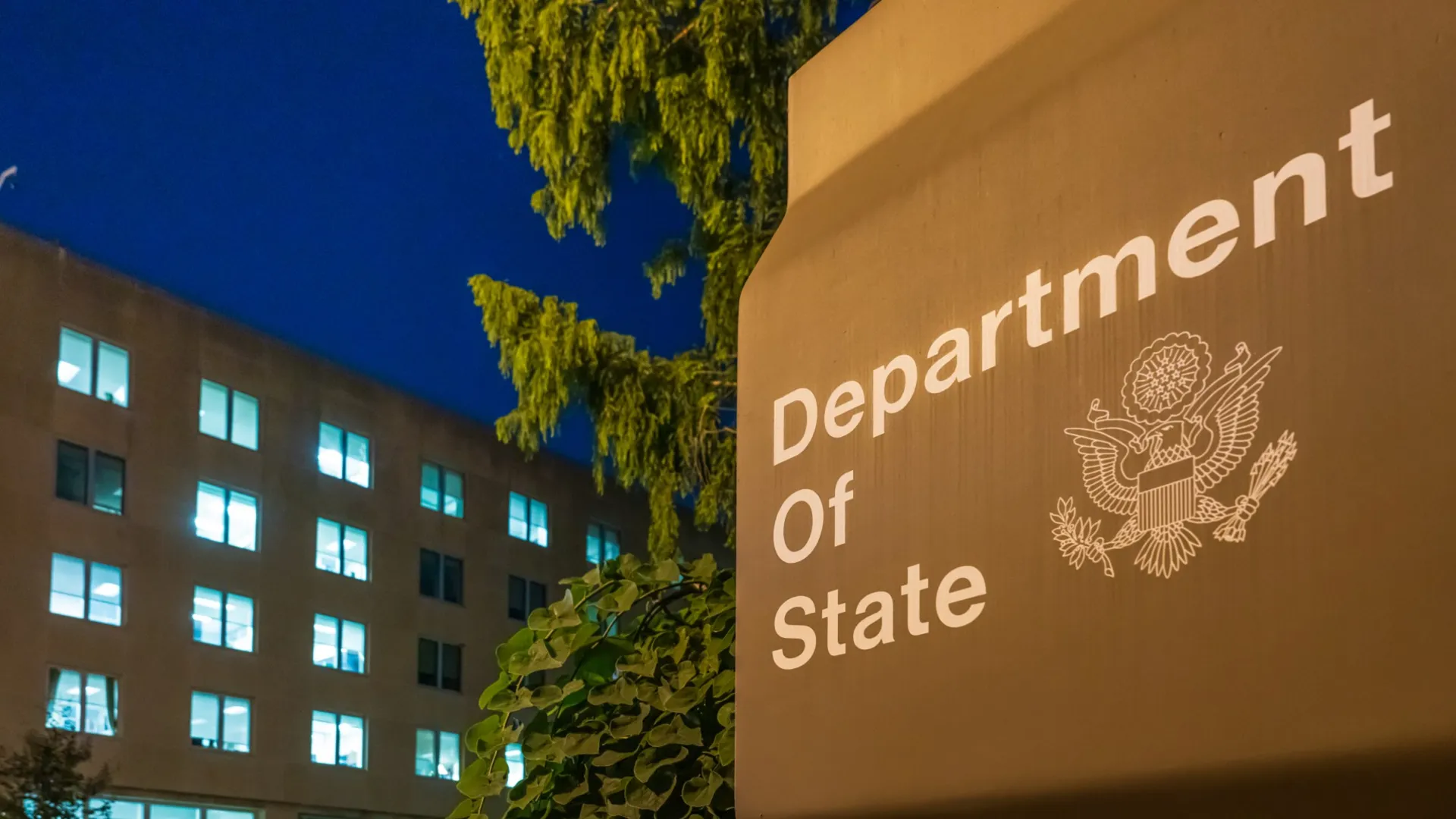
    In a new angle on its anti-globalization policies, the Trump administration plans to shutter five overseas embassies and consulates, and the news has some worried about the implications. The rare moves, which often occur only during times of conflict, could create new foreign-affairs headaches, even as Republicans laud the plans.

    What did the commentators say?
    The U.S. State Department has reportedly informed Congress that it is planning to close the embassy on the Caribbean island of Grenada; the consulates in Nagoya, Japan, and Medan, Indonesia; the diplomatic post in Winnipeg, Canada; and the embassy in Douala, Cameroon. The closures are “expected to save the government roughly $4.4 million per year,” but the affected buildings also “employ very few people compared with others,” said The Associated Press.

    Democrats “argue that cuts to the U.S. diplomatic footprint — coupled with the dismantling of the U.S. Agency for International Development, ‌which ⁠provided billions of dollars worth of aid globally — risks undermining American leadership,” said Reuters. While “on paper, the move is about efficiency,” in practice it “goes far beyond the fate of five buildings,” said Newsweek. The consular slashing “suggests the Trump administration sees America’s overseas presence as a dollar figure to be managed on a balance sheet, not as a strategic asset to be maintained.”

    What next?
    The State Department hasn’t specifically confirmed or denied the closures but said its officials were “​focused on ensuring that the ⁠nation’s diplomatic footprint was efficient and effective,” the agency told Reuters in a statement. No exact timeline for the shutterings has been announced.

    The decision follows a recent pattern of closures. Earlier this year the Trump administration announced it would “permanently close the U.S. consulate in Peshawar, Pakistan, which was the closest diplomatic mission to Afghanistan,” said the AP. At the same time, the U.S. is also “investing millions of dollars into reopening the U.S. embassies in Caracas, Venezuela; Damascus, Syria; and Tripoli, Libya,” to “restore America’s formal diplomatic presence following the ouster of long-ruling autocrats in those countries.”


    Statistic of the day

    200 mph: The speed at which cars will be zipping down Pennsylvania Avenue in the upcoming Washington IndyCar street race organized by the White House, the latest event in celebration of America’s 250th birthday. The Freedom 250 Grand Prix, scheduled for Aug. 22 and 23, will feature vehicles with “enough torque to tear off manhole covers,” said The Associated Press.


    Talking Points

    Is Hollywood back?

    The movies are suddenly thriving. The latest Spider-Man flick is setting records, and Christopher Nolan’s “The Odyssey” (pictured above) has dominated discourse for weeks. Americans were slow to return to cinemas after the pandemic sent them to streaming, and the cause of moviegoing was not helped by a pair of Hollywood strikes that disrupted the flow of new films to theaters. Now all that has changed. 

    ‘Finally releasing more movies’
    “Hollywood has got its mojo back,” Thomas Buckley and Lucas Shaw said at Bloomberg. Analysts expect the U.S. box office to “deliver its best performance” since before the pandemic, aided by the release of a “new potential blockbuster” nearly every weekend this summer.

    It is too soon to “fully dismiss recent concerns about the future of moviegoing,” Bloomberg said. Films are making more money, but the rate of movie attendance in the United States has “fallen to half what it was 25 years ago.” For now, though, studio heads finally have a “belief that they can win again,” actor Seth Rogen said to Variety.

    “Studios are finally releasing more movies” following the strikes and pandemic, thus “generating more money,” Scott Mendelson said at The Outside Scoop. Hollywood still faces “countless issues” like the looming Paramount-Warner Bros. merger and the departure of many productions from California, but analysts “haven’t been this optimistic about the box office since mid-2015.”

    It is not just volume. Movies are “kicking boring TV’s ass,” Johnny Oleksinski said at The New York Post. The obituary for the big screen experience has been “written so many times.” But Hollywood this year has given audiences a “varied offering of box-office hits” and peak TV is a “hazy memory.”

    ‘Rediscovering community’
    There was a belief that Generation Z would “forever choose small screens over big ones,” Anonymous Content’s Darren Walker said at The New York Times. The success of recent films like “Backrooms” and “Obsession,” made by twentysomething directors, has “upended conventional wisdom” about the possibility of reaching young audiences. The entertainment industry remains in a “turbulent time of transition and transformation,” but films are serving the role they always did: “We are rediscovering community.”


    Good day 💉

    … for vaccine safety. There is no link between receiving the measles, mumps and rubella (MMR) vaccine before age 2 and being diagnosed with autism, according to a study published in The Pediatric Infectious Disease Journal. The study of over 2.5 million U.S. children reinforces “existing evidence supporting the safety of MMR vaccination,” said researchers.


    Bad day 🖋️

    … for authors. Human writers can’t compete with AI-generated fiction, according to research conducted at Pennsylvania’s Villanova University. Readers are largely unable to differentiate between stories written by ChatGPT and those written by humans — and tended to prefer the AI versions, according to the study.


    Picture of the day

    Praying for rain

    A praying mantis is pictured in a drought-stricken cornfield near Cuneo in northern Italy, as all 27 of Italy’s major cities are placed under the highest heat alert. Europe is the world’s fastest-warming continent and has suffered record-breaking temperatures and ​destructive ⁠wildfires this summer.
    Marco Bertorello / AFP / Getty Images


    Puzzles

    Daily sudoku

    Challenge yourself with The Week’s daily sudoku, part of our puzzles section, which also includes guess the number

    Play here


    The Week recommends

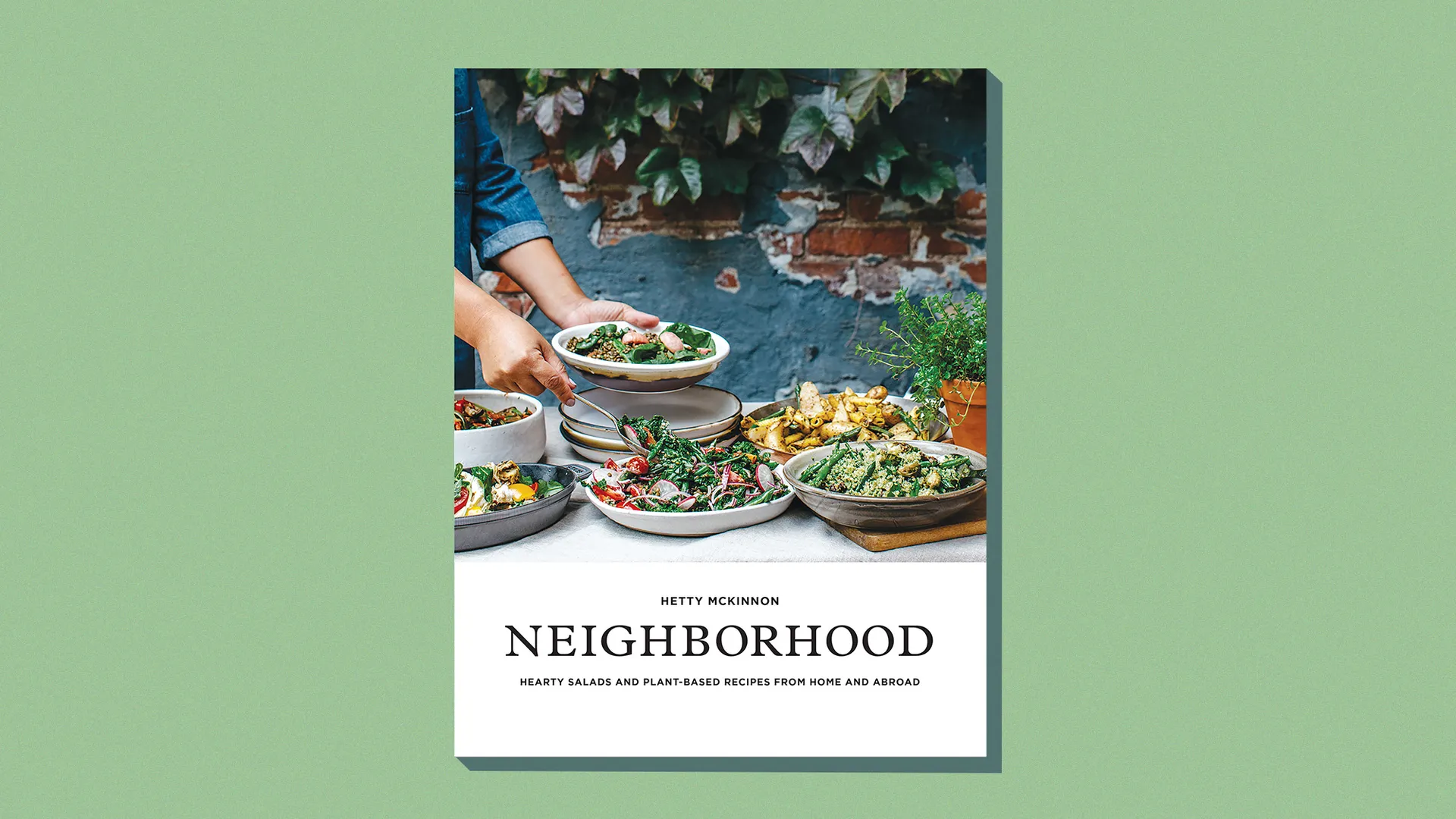
    This cookbook is a salad lover’s dream

    In the wrong hands, a salad is a vapid strategy for healthful eating. In Hetty McKinnon’s hands, a salad is a gallivanting exploration of flavor, place and texture. 

    Hearty economy
    “Neighborhood: Hearty Salads and Plant-Based Recipes from Home and Abroad” is McKinnon’s second cookbook. “Twice every week,” beginning in 2011, she writes, “I would cook healthy and hearty plant-based salad boxes, stack them into my bicycle basket” and deliver them to locals in her then-home of Sydney. She and her family moved to Brooklyn, New York, in 2015, and McKinnon published “Neighborhood” in 2017. Lucky for roughage lovers, McKinnon’s salad daring also made the transcontinental move.

    At the book’s outset, McKinnon banishes the notion that salads are consumptive meals: frail assemblages that keen and collapse if you look at them sideways. No, salads can — and should — be both sound and protean.

    Vegetable traipsings
    The salad-making blueprint of “Neighborhood” comprises six chapters, taking the reader from McKinnon’s current home in the United States back to Australia, with stops in France, the Mediterranean and Asia. The recipes strive for inspiration not purity.

    Chili is molly-whopped into a substantive dish of various beans, bell peppers and tomatoes served with a vibrant sauce of yogurt, avocado, cucumber and lime. A salade niçoise becomes greenified, with fried green beans, oozy steamed eggs, lentils and caper mayonnaise. A dressing of honey, fresh ginger and toasted sesame oil napes quinoa, edamame and sautéed bok choy. The salad, in McKinnon’s kitchen, wonders and wanders, and the author heeds its inquisitiveness.


    Poll watch

    One-quarter of men aged 18-29 (25%) trade stocks daily, and most of them (64%) feel like failures, according to a study of 2,000 American men by pro-marriage think tank the Institute for Family Studies. Of the 23% of young men who gamble daily, including on sports and events, 66% feel similar angst.


    INSTANT OPINION

    Today’s best commentary

    ‘The ethical perils of gene therapy’
    Anjana Ahuja at the Financial Times
    In China, a “risky experimental treatment was undertaken for a non-fatal condition; oversight by external authorities, regulators and ethical review boards in China was insufficient to avert tragedy,” says Anjana Ahuja. The “episode is another blow to a country vying to become a global leader in biotech,” as “truly advancing science means being open, honest and transparent about mistakes, as well as successes.” Parents “crave better lives for their children and ambitious researchers covet world firsts.”

    ‘I used to mock gym bros. Here’s why I became one.’
    Emily Hoeven at the San Francisco Chronicle
    It “may seem absurd to say that deadlifts and squats and bench presses changed my life” but “then again, it wasn’t long ago that I couldn’t lift a coffee cup without excruciating pain,” says Emily Hoeven. It is “almost impossible to name an area of life that weightlifting doesn’t improve.” Studies “show that it boosts confidence and mood, strengthens bones, reduces joint pain and chronic inflammation and improves cognition,” and it “can be especially beneficial for older women.”

    ‘The godmother of the “conspiracy mom”’
    Jessica Winter at The New Yorker
    After JFK’s assassination, Oklahoma housewife Shirley Martin “flung herself into investigating the crime and getting to know some of those closest to it,” says Jessica Winter. It is “generally understood today, as it was not understood 60-plus years ago, that those who subscribe to conspiracy theories tend to do so in order to make sense of an unstable reality,” and “in some ways, Martin was a preview of today’s post-Covid, stay-at-home ‘conspiracy mom’ or of the MAHA moms.”


    WORD OF THE DAY

    SABSing

    A practice on college campuses named after an acronym standing for “see and be seen.” SABSing is essentially just hanging out, but with an “unplanned, unacknowledged flair of spontaneity,” said Town and Country. The term originated in 34th Street, the University of Pennsylvania student magazine. The trend has the “chronically online” youth “coming together to touch grass.”


    Evening Review was written and edited by Theara Coleman, Scott Hocker, Anya Jaremko-Greenwold, Justin Klawans, Joel Mathis, Summer Meza, and Rafi Schwartz, with illustration by Stephen Kelly.

    Image credits, from top: Illustration by Stephen P. Kelly / Getty Images / AP Photo; J. David Ake / Getty Images; Syncopy Production / Universal Pictures / Alamy; Penguin Random House
     

    Recent editions

    • Morning Report

      House GOP ethics scandals upend midterms

    • Evening Review

      The return of a deportation court

    • Morning Report

      Democratic voters’ split decision

    VIEW ALL
    TheWeek
    • About Us
    • Contact Future's experts
    • Terms and Conditions
    • Privacy Policy
    • Cookie Policy
    • Advertise With Us
    • FAQ
    Add as a preferred source on Google Add as a preferred source on Google

    The Week is part of Future US Inc, an international media group and leading digital publisher. Visit our corporate site.

    © Future US, Inc. Full 7th Floor, 130 West 42nd Street, New York, NY 10036.