The Week The Week
flag of US
US
flag of UK
UK
https://cdn.mos.cms.futurecdn.net/flexiimages/jacafc5zvs1692883516.jpg

SUBSCRIBE & SAVE

Less than $3 per week

Sign in
  • View Profile
  • Sign out
  • The Explainer
  • The Week Recommends
  • Newsletters
  • Cartoons
  • From the Magazine
  • The Week Junior
  • Student Offers
  • More
    • Politics
    • World News
    • Business
    • Health
    • Science
    • Food & Drink
    • Travel
    • Culture
    • History
    • Personal Finance
    • Puzzles
    • Photos
    • The Blend
    • All Categories
  • Newsletter sign up Newsletter
  • The Week Evening Review
    Russia’s hybrid attacks, the Mormon Church’s real estate, and Trump’s weird obsessions

     
    TODAY’S BIG QUESTION

    Could Russia’s hybrid attacks pull Europe into the war?

    Observers have long feared Russia’s war against Ukraine will expand to the rest of Europe. Now, Moscow has reportedly backed a rise in so-called hybrid sabotage attacks on European targets, as CIA Director John Ratcliffe traveled to Russia last week to warn the Kremlin against attacks on NATO.

    What did the commentators say?
    Authorities have linked Russia to a growing number of “drone incursions, acts of sabotage, cyberattacks” and other hostile “gray zone” acts in Europe, said The Wall Street Journal. The incidents include discoveries of explosive drones at or near a German airport — a sign that Russian President Vladimir Putin may have a “rising appetite for risk” as he seeks to sow divisions among Ukraine’s continental allies. 

    Hybrid attacks refer to actions that fall short of provoking open conflict. They “require a more concerted response” than Europe has so far mounted, said Bloomberg in an editorial. Although hybrid attacks are “small-scale, deniable and rarely lethal,” Ukraine’s European allies must “demonstrate that attacks come with costs.” Russia is “testing how much the alliance will tolerate.”

    Putin now has a choice. The Russian leader can keep the hybrid attacks “below an open assault” that would trigger a NATO response, said David Ignatius at The Washington Post. Or he can “take a harder punch” to see if President Donald Trump will keep the U.S.’s defense commitment to Europe.

    What next?
    Analysts suspect Putin has given up hope that Trump “might be able to coerce Ukraine” into surrender, said CBC News. Russia’s leader may turn instead to “expanding the conflict” to conclude the nearly five-year-old war. 

    Military think tanks have warned Russia could stage “some kind of provocation in Eastern Europe” to divide the NATO alliance and its support of Ukraine, said CBC News. That may include an attempt to “seize a slice of Russian-speaking territory in a neighboring country.” The latter concern was reportedly behind Ratcliffe’s trip to Moscow. 

    Other European officials are skeptical that Putin can expand the war. Russia is “bogged down” in Ukraine and “doesn’t have capabilities to challenge NATO,” said Latvian Foreign Minister Baiba Braze on “PBS NewsHour.” But attacks below the level of outright war will likely continue. 


    QUOTE OF THE DAY

    ‘This is the moment we get to look back on and realize how grateful we were to witness the greatness of a young kid with a dream.’

    Former English soccer captain David Beckham on Instagram in response to Argentine captain Lionel Messi’s announcement that the “time has come” to retire from international play. Messi will continue to captain Inter Miami CF, of which Beckham is co-owner, until December 2028.


    the explainer

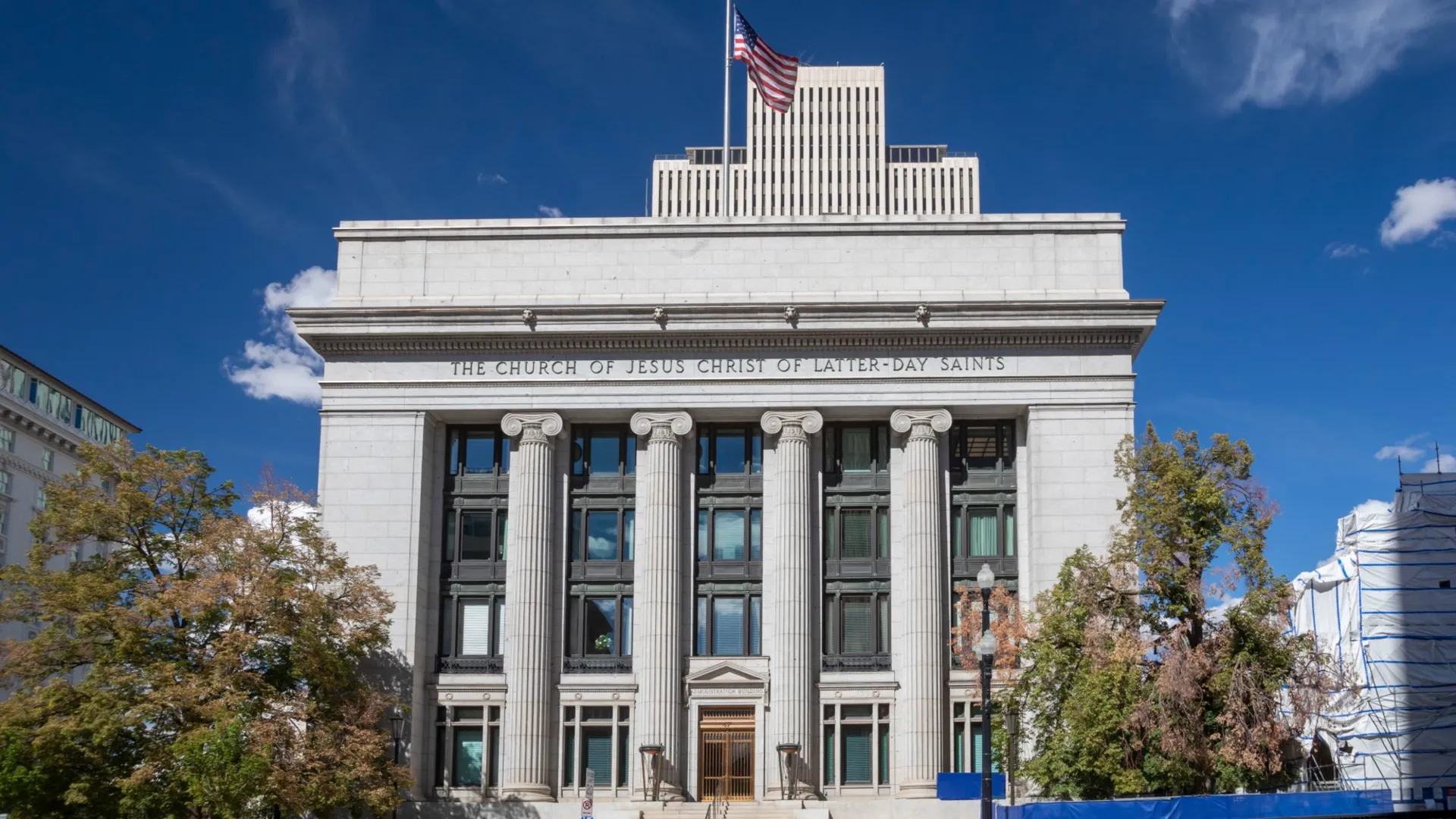
    Mormons’ secretive real estate kingdom is growing

    While Mormon temples may be a common sight in many cities across the U.S., the average American may not realize just how much land is owned by the Mormon Church. Using a largely obscure real estate company, it has been quickly expanding its holdings in numerous states and isn’t showing any signs of slowing down. 

    How is the church acquiring land?
    It largely purchases land through its real estate management brand, Property Reserve. While it’s “relatively unknown to many,” the company plays a major role in the Mormon Church, said Bloomberg. Through a “web of subsidiaries,” Property Reserve has “accumulated billions of dollars of properties from farms and ranches to apartments and hotels, becoming one of the U.S.’s largest and least transparent landowners.”

    One region in Florida being developed sits on a swath of land “almost as large as San Francisco,” said Bloomberg. The project is so massive that Florida created an “independent local government, usually first appointed by the landowners, designed to oversee funding of major infrastructure and development.” 

    The deals have not been without controversy. The church has, for example, bought 3,000 acres of ranch land in Kyle, Texas, a “property that has been entangled in a lawsuit from an environmental group seeking to prevent the land from being developed,” said the San Antonio Express-News.

    What’s the impact?
    The church’s most consequential purchases are driving “development on a scale that can reshape entire regions,” said Bloomberg. It comes amid an effort to further Mormon culture in the U.S., from “influencers with millions of followers to TV shows such as ‘The Secret Lives of Mormon Wives.’” But the church has also “faced criticism over its multibillion-dollar real estate portfolio.” 

    The pushback has been compounded due to the Mormon requirement that members donate 10% of their income to the church as a tithe, according to the Mormon Church’s website. The church has been sued for allegedly using these tithings to fund real estate projects. There have also been allegations that the Mormon real estate portfolio is part of a larger shell company scheme, which the church denies. 


    Statistic of the day

    $4.3 billion: The cost of NASA’s just-launched Nancy Grace Roman Space Telescope, a powerful observatory designed to map vast stretches of the universe. Its huge field of view could catalog 20 billion stars, according to NASA, and measure light from nearly a billion galaxies while hunting for tens of thousands of new planets. 


    in the spotlight

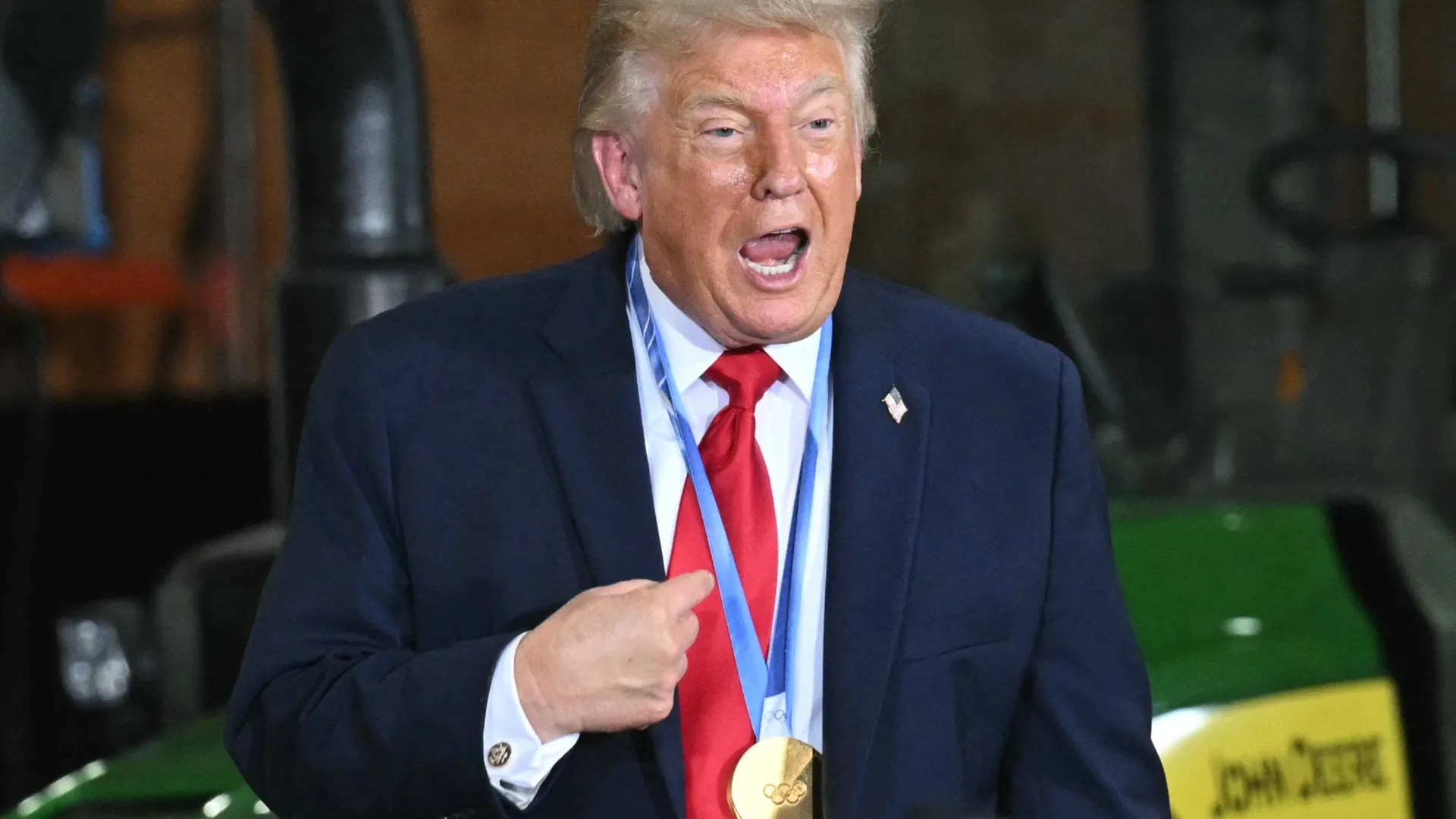
    The obsessions Trump just can’t quit

    President Donald Trump is inarguably a man of deep passions. He has expressed these as issues of great, and occasionally even national, importance. This penchant for publicly invoking both his reliable bugbears and darlings offers valuable insight into his inner life. 

    Florsheim shoes
    After “searching for something that would feel better after a day on the job,” Trump “settled on Florsheim” leather oxford shoes this past spring, coming to like them so much that he “started dispensing them,” said The Wall Street Journal. 

    He has “grown fond of guessing people’s shoe sizes in front of them” before tasking an aide to order them a pair, said The Daily Beast. “I have fun with it,” said Trump when asked in March by Fox News’ Brian Kilmeade about reports detailing the footwear focus. 

    Steam-powered catapults
    The president has “returned again and again to the concept of steam power,” said The Atlantic. In “nearly a decade of loudly complaining,” he has lamented that naval aircraft carriers use “electromagnetic systems to launch fighter jets instead of steam-powered catapults,” said The Guardian. 

    He has even instructed the Pentagon to “redesign a new aircraft carrier to replace the modern system with the old-fashioned catapults he prefers,” said the outlet. One possible explanation for his fixation is the fact that he “just really loves ‘Top Gun’” and “doesn’t think fighter jets look anywhere near as cool when they take off from Ford-class carriers,” said New York magazine. 

    William McKinley
    Since Trump declared in a 2018 social media post that “I am a tariff man,” his “veneration” for President William McKinley, who also referred to himself as such, has “only grown,” said The New Yorker. But Trump’s “admiration” for McKinley “seems deeper than just tariffs,” said Asma Khalid on NPR’s “All Things Considered.” McKinley, too, “realigned and consolidated the power of the Republican Party for decades,” and Trump has also hailed McKinley’s work “expanding America’s footprint around the globe.” 

    Trump additionally “honored” his predecessor by “undoing an Obama-era change” to rename Alaska’s Mount Denali back to Mount McKinley, said U.S. News & World Report. But for all of his enthusiasm, said The New Yorker, Trump’s “McKinleyism is not deeply informed.”


    Good day 🗺️

    … for old-school GPS. MapQuest, the pre-smartphone website for travel directions, has declared it will not change the name of Lake Ontario in its app, unlike Google Maps, after Trump signed an executive order renaming it Lake America. The act of rebellion has “foisted MapQuest back in the spotlight,” becoming Apple’s most downloaded navigation app, said The Boston Globe. 


    Bad day 🥬

    … for public health. The government has shut down research projects key to the “fight against cyclospora,” the foodborne parasite “sickening thousands of Americans this summer,” said Politico. Congress defunded two of the three projects earlier this year, while the third is set to move from Maryland to Iowa this fall as part of a “sweeping USDA reorganization.”


    Picture of the day

    Shelling out for dinner

    Aldabra tortoises are fed a platter of vegetables at Surabaya Zoo in East Java, Indonesia. Four of the giant herbivores, a male and three females, have been transferred to their new home from Japan’s iZoo as part of a breeding and conservation program.
    Robertus Pudyanto / Getty


    Puzzles

    Daily sudoku

    Challenge yourself with The Week’s daily sudoku, part of our puzzles section, which also includes guess the number

    Play here


    The Week recommends

    The new movies coming out this month

    With kids back in school and movie theaters buzzing with their best audience numbers in years, September might be the perfect time to catch a matinee. And these upcoming features should be on your list of possibilities.

    ‘Bad Apples’
    Featuring one of those film concepts whose poor taste is part of the pitch, “Bad Apples” stars Saoirse Ronan as Maria, a struggling young elementary school teacher who inadvertently imprisons the class bully in her basement. This “warped, needling and sometimes bitterly funny” film is an “odd, wicked little amorality tale,” said Guy Lodge at Variety. (in theaters Sept. 18)

    ‘If I Go Will They Miss Me’
    Lil Ant is a cerebral 12-year-old with a Greek mythology obsession whose father returns from prison and sets about trying to toughen him up. Director Walter Thompson-Hernández’s film, full of metaphors and magical realism, unfolds like a cinematic poem. A “gorgeously composed” coming-of-age story, it is “defined by a bracing sense of wonder and an evocatively delivered humanism,” said Robert Daniels at Roger Ebert. (in theaters Sept. 18)

    ‘Primetime’
    Moviegoers of a certain age surely remember the brief run of a show called “To Catch a Predator” hosted by Chris Hansen in which actors play underage kids who lure predatory men in conjunction with law enforcement, amounting to a nationally televised series of sting operations. “Primetime” tells this pretty insane story as a “dark-but-oddly-zany bio-thriller" starring Robert Pattinson (pictured above) as Hansen, said Iana Murray and Jack King at GQ. (in theaters Sept. 25)

    Read more


    Poll watch

    Younger adults are half as likely to feel proud of where the U.S. is “heading as a nation” (29%) as what it has been “in the past” (59%), according to a Generation Lab survey of 1,031 Americans ages 18 to 34. And 71% are not proud of the current state of the country.


    INSTANT OPINION

    Today’s best commentary

    ‘After the flash flood disaster, here’s what Nepal really needs’
    Dikshya Subedi at Al Jazeera
    Days after the flood that struck the “Rasuwa and Nuwakot regions of Nepal, the number of missing people is growing,” says Dikshya Subedi, and the “threat is far from over.” While Nepal could not “realistically have prevented the initial collapse, the scale of the disaster highlights glaring gaps in disaster risk reduction and preparedness under a changed climate reality.” The country “urgently needs real funded investment in early-warning systems for glacial and flood hazards in high-risk mountain corridors.”

    ‘Saving money is hard enough. Stop taxing workers under 25.’
    Sam Raus at USA Today
    Before “young people have accumulated any meaningful savings, the government is already taking a share of every paycheck,” says Sam Raus. “The question needs to be: Why are we taxing them in the first place?” The U.S. “already subsidizes housing, education and healthcare through an array of programs.” A “simpler alternative deserves consideration: Exempt workers under 25 from federal income and payroll taxes, allowing them to build financial security before the government begins collecting a share of their earnings.”

    ‘What should we do with Trump’s monstrous architectural legacy?’
    Jan-Werner Muller at The Guardian
    Since a Supreme Court ruling will “embolden the president dramatically to change Washington, D.C.’s landscape by spending money never approved by Congress, we might be cursed with a triumphal arch, as well,” says Jan-Werner Muller. “This raises the question: What to do with a monstrous architectural legacy in post-Trump America?” Some “might dismiss the question.” But the decision to “leave Trump’s structures in place as if his reign had just been another normal era in U.S. history is not neutral.”


    WORD OF THE DAY

    Spaghett

    A Baltimore beer cocktail made with a bottle of Miller High Life “tinted pink with Aperol and sharpened with lemon juice,” said The New York Times. It’s named after a 2016 marinara-loving character on Adult Swim’s former sketch comedy show “Tim and Eric Awesome Show, Great Job!” played by Reed Cahill, a former bartender at Wet City Brewing.


    Evening Review was written and edited by Theara Coleman, Nadia Croes, David Faris, Scott Hocker, Anya Jaremko-Greenwold, Justin Klawans, Joel Mathis and Rafi Schwartz, with illustrations by Stephen Kelly.

    Image credits, from top: Illustration by Stephen P. Kelly / Getty Images; Jim West / UCG / Universal Images Group / Getty Images; Saul Loeb / AFP / Getty Images; A24 / Icki Eneo Arlo / Range Media / Square Peg / Range Media Partners / Alamy
     

    Recent editions

    • Morning Report

      Army loses another leader

    • Evening Review

      Trump’s South Carolina victory

    • Morning Report

      Iran war veers back into dueling strikes

    VIEW ALL
    TheWeek
    • About Us
    • Contact Future's experts
    • Terms and Conditions
    • Privacy Policy
    • Cookie Policy
    • Advertise With Us
    • FAQ
    Add as a preferred source on Google Add as a preferred source on Google

    The Week is part of Future US Inc, an international media group and leading digital publisher. Visit our corporate site.

    © Future US, Inc. Full 7th Floor, 130 West 42nd Street, New York, NY 10036.