The Week The Week
flag of US
US
flag of UK
UK
https://cdn.mos.cms.futurecdn.net/flexiimages/jacafc5zvs1692883516.jpg

SUBSCRIBE & SAVE

Less than $3 per week

Sign in
  • View Profile
  • Sign out
  • The Explainer
  • The Week Recommends
  • Newsletters
  • Cartoons
  • From the Magazine
  • The Week Junior
  • More
    • Politics
    • World News
    • Business
    • Health
    • Science
    • Food & Drink
    • Travel
    • Culture
    • History
    • Personal Finance
    • Puzzles
    • Photos
    • The Blend
    • All Categories
  • Newsletter sign up Newsletter
  • The Week Evening Review
    A new security agreement, a Canadian refuge for Haitians, and AI in air traffic control

     
    TODAY’S BIG QUESTION

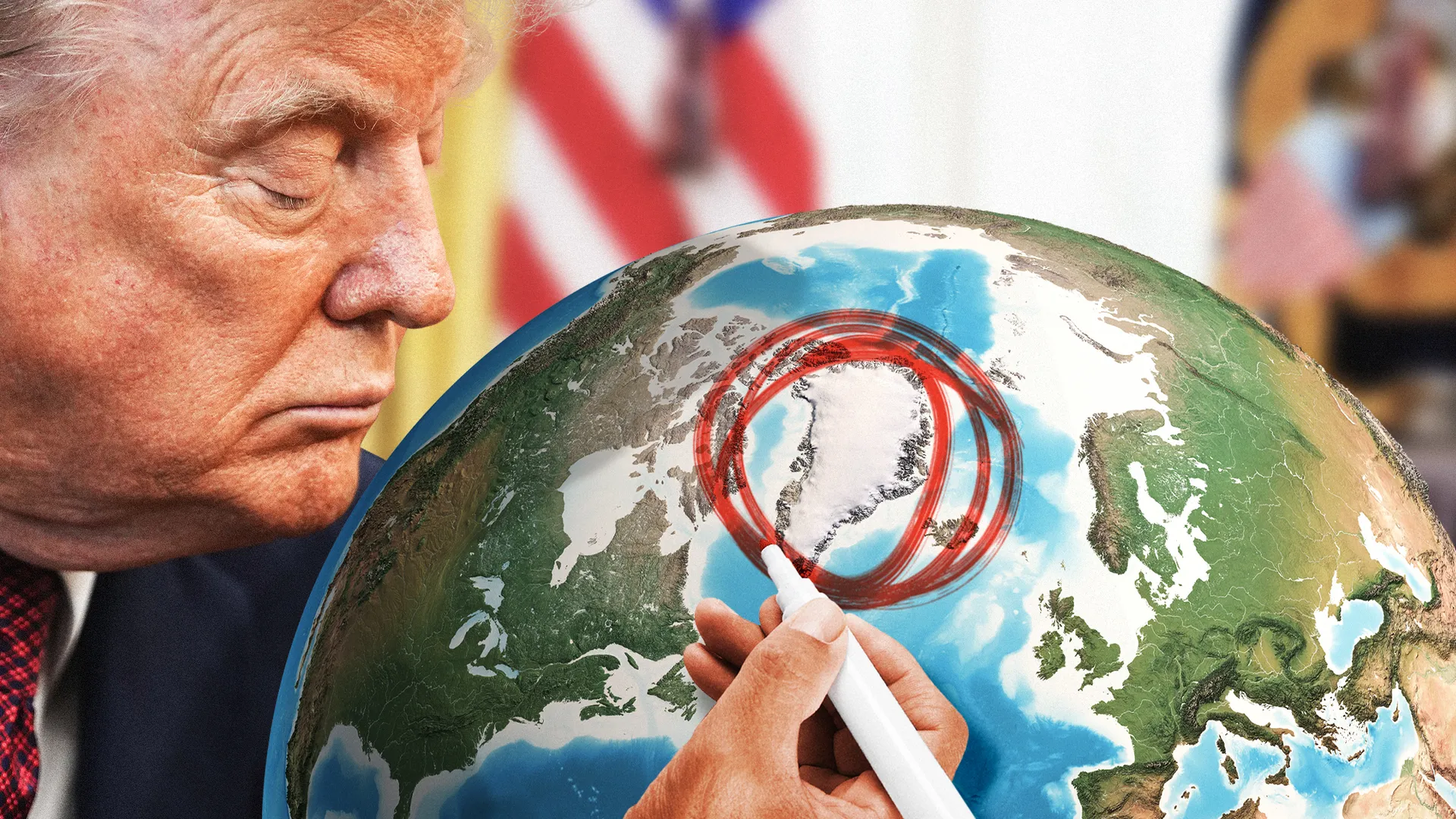
    Is the Greenland deal a victory for Trump?

    After months of threats to annex Greenland, President Donald Trump signed a deal today that gives the U.S. “permanent control over security” in the semiautonomous Danish territory, he said to the U.N. General Assembly in New York City. “From now on, no U.S. adversary can ever have a base in Greenland, have a military presence in Greenland or make sensitive investments in Greenland without our express written approval.” The deal is considered a win for both sides. But as ever with Trump, the “devil is in the details,” said Barron’s.

    What did the commentators say?
    The U.S. has made it easier to “control encroachment on Greenlandic soil by China, Russia and other adversaries,” so the Arctic is undoubtedly a “safer place for America and its allies today,” said The Economist. For this, “due credit must go” to Trump.

    A 1951 agreement with Denmark already granted the U.S. military exclusive privileges over the “valuable strategic territory,” but the new deal is a “hedge against the risk that Greenlanders might someday declare independence from Denmark,” said The Wall Street Journal’s editorial board. That said, it’s still “fair to ask whether this deal could have been reached without the collateral damage to U.S. alliances from Trump’s bullying threats.”

    It’s “perhaps a triumph of optics,” said Marc Jacobsen at Al Jazeera. Despite all the backslapping in the White House, changes to the existing arrangement appear to be “relatively limited.” This is a “testament to the negotiating skills of the Danish and Greenlandic representatives,” who have given Trump the “opportunity to claim the victory he needed, while preserving sovereignty.”

    A “wise Danish politician once said that you can achieve almost anything if you are willing to let others take the credit,” said Henrik Dahl, a Danish member of the European Parliament, to The Telegraph. “So let us give Donald Trump the credit for something very close to the status quo.”

    What next?
    The deal was signed on the sidelines of the U.N. General Assembly in New York today. The agreement still applies if Greenland chooses independence, said The Associated Press, and Trump “did not respond to questions about whether a U.S. acquisition of Greenland was off the table.”


    QUOTE OF THE DAY

    ‘Why would we do that in the United States of America? It’s something we would hear about in another country and be concerned about individual rights and due process.’

    Michelle Mendez, the legal director of the nonprofit National Immigration Project, to The Associated Press, on how ICE has removed thousands of detainees who are subject to final deportation orders from its online detainee locator system. It’s just “another iteration of disappearing people,” she added.


    IN THE SPOTLIGHT

    Canada becomes a haven for Haitians fleeing ICE

    As a result of nearly 300,000 U.S.-based Haitians having their Temporary Protected Status (TPS) revoked by the Trump administration last month, many are heading north of the border. But while they look to join a country that has a vibrant Haitian diaspora, fleeing to Canada presents its own challenges.

    ‘Difficult to predict’
    Canada’s asylum rules “allow migrants with close family members to enter the country and seek protection,” and many have roots in the nation, said The Atlantic. There are about 100,000 people of Haitian descent living in Canada, according to the country’s 2021 census — a number that likely increased during the last five years. 

    But Haitians “without close family members in Canada who arrive at the land border are generally ineligible to seek asylum,” so it’s “difficult to predict how many Haitians may try” crossing into Canada, said The Atlantic. Canadian immigration rules have “changed significantly” since the first Trump administration, and it’s “much harder to make asylum claims at Canada’s border,” said CNN. 

    This hasn’t stopped numerous people from trying. Haitians who “do apply for asylum are more likely to be rejected than approved,” but officials say that “U.S. work experience, along with English and French proficiency, could provide qualified applicants with a major advantage in the Canadian job market,” said WLRN. 

    ‘Part of the answer’
    Canada has an “extensive immigration system separate from its refugee protection system,” so for some Haitians, the better question may be not “‘Can I claim asylum in Canada?’ but ‘Could I qualify to immigrate to Canada?’” said The Haitian Times. Canada may be “part of the answer,” but that “doesn’t necessarily mean claiming asylum.”

    For many Haitians fleeing ICE, the “only route into Canada is a path through the woods,” said The Atlantic. It can be a risky venture, as Haitians who are denied entry by Canadian border officials are usually “turned over to U.S. Customs and Border Protection and typically transferred to ICE.” But many Haitians are still “willing to risk a dangerous and illegal journey” into Canada, said USA Today, to “avoid returning to their home country.”


    Statistic of the day

    $6.9 billion: The amount of money laundered through international banks by A7, a “Kremlin-backed fintech company” that “tricked its way into the global financial system” with a “vast document forgery operation” despite sanctions on Russia, said the Financial Times. Some of the payments were linked to “war-related goods,” including military equipment. 


    THE EXPLAINER

    Concerns fly as AI is integrated into air traffic control

    Artificial intelligence is officially being incorporated into air traffic control systems, as the FAA rolls out an AI tool already used in control towers at several major airports. But some aviation experts are wary of letting this technology take off.

    What’s the new technology?
    The tool is a software called the Strategic Management of Airspace, Routes and Trajectories (SMART). It “centralizes 200 data streams, including weather patterns, flight paths, traffic flow and controller staffing metrics, into one platform,” said the FAA in a press release. An AI engine then analyzes the data to “provide a comprehensive visualization of where planes are going, how much traffic the system can handle and where congestion or weather could cause challenges.”

    The SMART system “will not replace human operators or direct any changes to flight routes but merely offer recommendations that controllers can choose to heed or ignore,” said The New York Times. SMART is headquartered at the FAA’s Air Traffic Control System Command Center in Virginia, where officials will “disseminate the AI recommendations to controllers at the regional towers and other air traffic facilities.”

    SMART is the brainchild of the AI firm Air Space Intelligence, which earned an $875 million contract from the government to develop it. For now, the rollout is “limited to the Washington region, affecting three airports,” said the Times, though officials expect its implementation at other airports in the future. 

    Why are experts worried?
    Many in the aviation industry are skeptical about SMART’s widespread use. There are remaining questions about “where the system would get its data,” and “controllers must be able to veto its recommendations,” said S. Todd Yeary, a former air traffic controller, to NewsNation. AI has a tendency to hallucinate false information, and since air traffic control information is always changing, any data “fed into a system cannot be assumed to remain reliable.” 

    The airlines themselves have expressed similar concerns. There were “weeks of industry confusion over the FAA’s vague description of its much-hyped plans” for SMART, said Politico, which only eased when the agency said it would “use the tool in just a limited way at first.”


    Good day 💉

    … for fighting Ebola. Health workers in the Democratic Republic of the Congo have begun receiving the Ervebo vaccine to protect against the Ebola virus. The rollout started in the capital of Ituri province, the “epicenter of the fastest-growing outbreak of Ebola in history,” with plans to inject about 50,000 frontline workers, said Al Jazeera.


    Bad day 🖼️

    … for preserving art. The Uffizi Galleries in Florence have removed Caravaggio’s “Bacchus” from public display after rain leaked on the painting’s protective case during a storm. Videos taken by visitors showing water pouring down the glass prompted criticism that the museum is “not adequately protecting its collection from extreme weather,” said The Times.


    Picture of the day

    ‘Eye-to-Eye’

    A short-eared owl flies over the salt marshes of British Columbia’s Fraser River Delta captured in a photograph by Ivan Sjogren. The Swedish photographer has won the gold award in the Birds in Flight category of the Bird Photographer of the Year competition.
    Ivan Sjogren / Bird Photographer of the Year


    Puzzles

    Daily sudoku

    Challenge yourself with The Week’s daily sudoku, part of our puzzles section, which also includes guess the number

    Play here


    The Week recommends

    The best anime series ever made

    Japanese animated series based on a popular manga have long been an internationally loved medium in both television and film. These anime series are the best of the best, spanning decades and ever-evolving art styles.

    ‘Attack on Titan’ (2013-23)
    While it’s one of the newer entries, “Attack on Titan” is regarded by many as the “most popular modern anime series” and is adapted from Hajime Isayama’s original manga, said Slash Film. The show “successfully built a broad audience” consisting not only of “diehard anime and manga fans” eager to see its “horrific imagery and action translated from page to screen” but also “newcomers to the medium.” (Crunchyroll, Hulu, Netflix)

    ‘One Piece’ (1999-present)
    Written by Eiichiro Oda, “One Piece” is the “best-selling manga series of all time,” said Collider.
    For over 25 years, Toei Animation has “produced epic, sprawling adventure sagas worthy of the manga’s legendary reputation,” said Slash Film, and the show helped define the shonen subgenre, which is primarily marketed to young boys ages 12 to 18. (Crunchyroll, Hulu, Netflix)

    Sailor Moon (1992-97)
    Naoko Takeuchi’s “Sailor Moon” is one of the most “globally recognized anime series of all time,” said IGN. The show’s “gorgeous animation, stunning character designs” and an “all-time great transformation sequence” make this the “granddaddy of all magical girl anime.” It helps that each of the Sailor Scouts is “as well built-out and unique as Sailor Moon,” allowing audiences to “find their own favorites” as they revisit the “hilarious, heartfelt and action-packed” series over the years. (Hulu)

    Read more


    Poll watch

    Over half of Democratic voters (54%) are more motivated to vote based on their dissatisfaction with Trump, wanting to stop him and the GOP from advancing their agenda, than based on helping Democratic candidates enact theirs, according to a CBS News / YouGov survey of 2,460 U.S. adults. 


    INSTANT OPINION

    Today’s best commentary

    ‘Police hiring standards matter. But they alone cannot stop abuse.’
    Jordan DeVylder at Al Jazeera
    Concerns have “emerged about a retreat from standards intended to protect the public by offering a baseline of conduct for law enforcement officers,” says Jordan DeVylder. The “public is right to worry,” as “loose hiring standards can put reckless individuals in positions of power.” But “ensuring commitment to higher standards in law enforcement recruitment alone cannot solve the police violence problem in the U.S.” Standards “should be evaluated according to what they actually predict, what they exclude and what risks arise.”

    ‘In defense of guilt by association’
    James Kirchick at The Atlantic
    JD Vance and Abdul El-Sayed have “very little in common ideologically and seem to like each other even less,” but they “can agree on at least one thing: that guilt by association is a contemptible means of scoring cheap political points,” says James Kirchick. They “would have us believe that their troublesome friends are no different from the people in our own lives whose political views we abhor.” But “one’s choice of friends is in fact an excellent sign of character.”

    ‘Many Americans live in the UK but few vote back home. This year, that must change.’
    Kathryn Sikkink at The Guardian
    The U.K. “hosts the second-largest population of voting-age U.S. citizens” outside the U.S., but Americans living in the U.K. “vote at very low levels in U.S. elections,” says Kathryn Sikkink. Why do “hundreds of thousands of eligible U.S. voters in the U.K. not exercise their right to vote, even though U.S. rules for voting abroad are relatively welcoming compared to many other countries”? American citizens in the U.K. “can take this opportunity.”


    WORD OF THE DAY

    presenteeism

    A productivity issue caused by employees who work while ill or injured. Remote work and an “always-on” workplace culture are adding nuance to the meaning of presenteeism, said a study published in the journal Health Psychology Research. It should be redefined as attending work in “suboptimal health,” with “varied location choices and degree of engagement.”


    Evening Review was written and edited by Theara Coleman, Nadia Croes, Scott Hocker, Anya Jaremko-Greenwold and Justin Klawans, with illustrations by Stephen Kelly.

    Image credits, from top: Illustration by Stephen P. Kelly / Getty Images; Marli Miller / UCG / Universal Images Group / Getty Images; Samuel Corum / Bloomberg / Getty Images; Julien De Rosa / Contributor / Getty Images
     

    Recent editions

    • Morning Report

      Austin DoorDash driver detained with ICE bullet in neck

    • Evening Review

      Are Republicans losing Latinos?

    • Morning Report

      ICE shooting shakes Austin

    VIEW ALL
    TheWeek
    • About Us
    • Contact Future's experts
    • Terms and Conditions
    • Privacy Policy
    • Cookie Policy
    • Advertise With Us
    • FAQ
    Add as a preferred source on Google Add as a preferred source on Google

    The Week is part of Future US Inc, an international media group and leading digital publisher. Visit our corporate site.

    © Future US, Inc. Full 7th Floor, 130 West 42nd Street, New York, NY 10036.