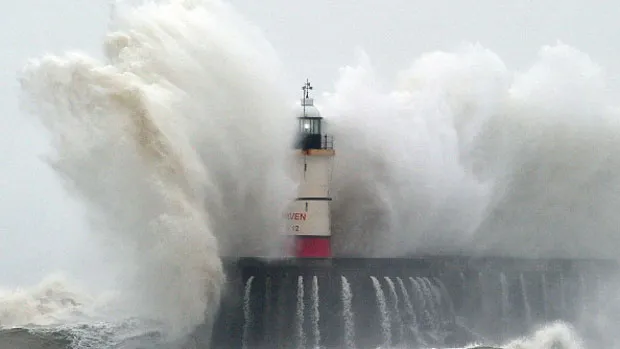
Gale force winds and heavy rain are being reported across parts of the north west, with conditions expected to worsen as a "weather bomb" continues to develop across the north of the UK.
A Met Office amber warning is in place in parts of Scotland and Northern Ireland and yellow warnings are in place in Wales and northern England.
Winds of up to 80 mph have the potential to damage trees and cause travel disruption and power cuts, experts warn. "Exceptionally large" waves could also cause localised coastal flooding.
The Week
Escape your echo chamber. Get the facts behind the news, plus analysis from multiple perspectives.
SUBSCRIBE & SAVE
Sign up for The Week's Free Newsletters
Join more than 350,000 subscribers and keep yourself informed with a selection of The Week’s most interesting, enlightening and entertaining stories - plus daily puzzles.
Join more than 350,000 subscribers and keep yourself informed with a selection of The Week’s most interesting, enlightening and entertaining stories - plus daily puzzles.
Latest Videos FromThe Week US
A Met Office spokesperson told The Guardian that "the public should be prepared for dangerous conditions, especially along causeways and coastal roads exposed to the west."
The severe conditions caused by the weather bomb are expected to last through into Thursday with a separate storm front predicted to arrive on Thursday evening, bringing more bad weather.
What is a weather bomb?
Known scientifically as an explosive cyclogenesis, the phenomenon occurs when cold and warm air meet and the pressure at the centre of the storm drops dramatically, usually by at least 24 millibars in 24 hours. The lower the pressure, the stronger the winds become.
Are weather bombs common?
Weather bombs are more ubiquitous than you might think. The term was first coined by meteorologists in the 1940s. The phrase was popularised in 1980 by Fred Sanders, an MIT professor who wrote an article in the Monthly Weather Review. He said "bomb" was appropriate because these systems develop "with a ferocity we rarely, if ever, see over land". The UK has experienced several weather bombs in recent years.
Where do they occur most?
These storms are known to occur in the eastern Pacific off the coast of Asia and the western Pacific. The North Atlantic is particularly prone to weather bombs thanks to the Gulf Stream, which pits a reliable source of warm air against cold. They often lead to severe blizzards in the north-east United States, called Nor'easters'.