Sign up to get Today’s Best Articles in your inbox
Join 350,000+ subscribers and keep yourself informed with a selection of
The Week’s most interesting, enlightening and entertaining stories - plus daily puzzles.
You are now subscribed
Your newsletter sign-up was successful
Want to add more newsletters?
An account already exists for this email address, please log in.
The most memorable podcasts of 2025
A roundup of the year’s top podcasts that kept listeners tuned in
Contrary to speculation, the podcast industry is alive and brimming with thought-provoking content, as proven by this year’s new and returning releases. Here are some of the best entries of 2025, including some therapeutic sit-downs, thrilling biographies and a new scammer to obsess over.
Bad Therapist (Independent)
Therapyspeak has become so embedded in everyday language that it is nearly a cultural relic and has lost some of its professional nuance. The Bad Therapist podcast is a response to that shift, joining the ranks of other shows in the “classic conversational podcast format pegged to a specific line of deconstructive inquiry,” said Vulture. Hosted by psychotherapist Ash Compton and journalist Rachel Monroe, each episode sees the pair “interrogate different expressions of therapy gone wrong,” including “scammers, self-proclaimed gurus and conversion therapy.” (Apple Podcasts, Spotify)
Camp Swamp Road (The Wall Street Journal)
One of this year’s best crime podcasts put an interesting twist on the genre. The mystery behind Camp Swamp Road is “far from a whodunnit,” as the shooter admits to the killing and was even on the phone with a 911 dispatcher when he did it, said The New Yorker.
The Week
Escape your echo chamber. Get the facts behind the news, plus analysis from multiple perspectives.
Join more than 350,000 subscribers and keep yourself informed with a selection of The Week’s most interesting, enlightening and entertaining stories - plus daily puzzles.
Join more than 350,000 subscribers and keep yourself informed with a selection of The Week’s most interesting, enlightening and entertaining stories - plus daily puzzles.
Instead, the show interrogates whether the fatal road-rage shooting of a man named Scott Spivey was justifiable under South Carolina’s Stand Your Ground law. The answer may seem straightforward, but “thanks to a trove of damning audio that details police corruption, the killer’s intent, and more, it turns out to be anything but.” (The Wall Street Journal, Apple Podcasts, Spotify)
Fela Kuti: Fear No Man (Higher Ground)
In the fall, Jad Abumrad, the creator of Radiolab and Dolly Parton’s America, released a biographical podcast about legendary Nigerian musician and Afrobeat pioneer, Fela Kuti. During the three years it took to make the show, Abumrad interviewed Kuti’s loved ones and admirers, such as former President Barack Obama and musician Flea, “digging up context about Nigerian art, politics and social history,” said The New Yorker.
The resulting show is “bursting with life, humor, pain, interesting ideas,” and laced with “sharp, catchy, hypnotic music.” One of the year’s standout podcasts that ended up being “both danceable and, by its end, profoundly heartbreaking.” (Apple Podcasts)
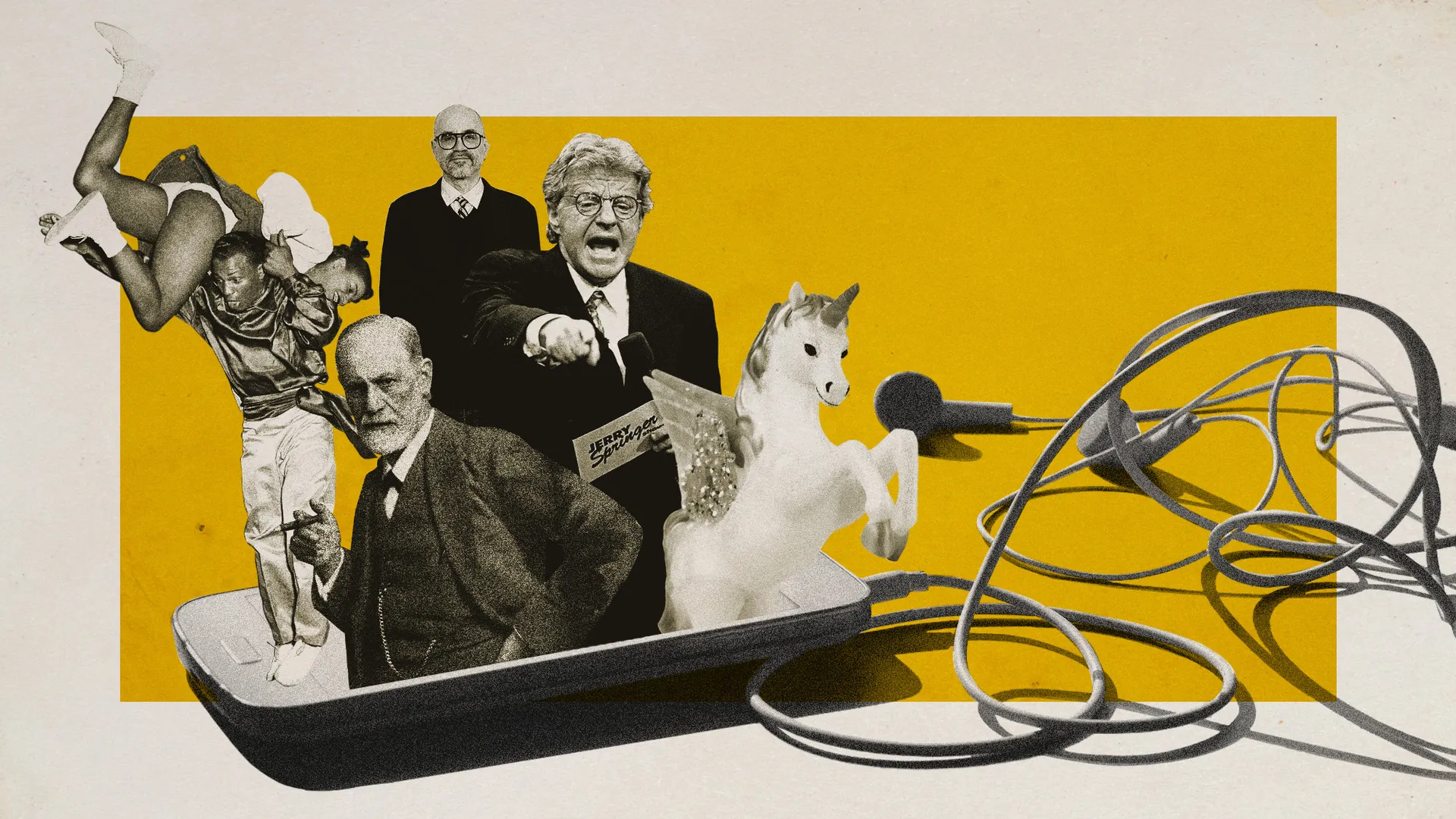
Final Thoughts: Jerry Springer (Audible)
Before his name became synonymous with an era of trash television. Jerry Springer began his career as an ambitious politician and was elected mayor of Cincinnati before setting his sights on the state of Ohio. In this nine-part series, Slow Burn’s Leon Neyfakh goes all the way back to Springer’s beginnings, “marrying excellent journalism with some unbelievable source material — not least when it comes to Springer’s 1970s sex scandal,” said The Guardian.
Sign up to get Today’s Best Articles in your inbox
A free daily email with the day’s biggest news and analysis – and the best features from TheWeek.com
With his “usual knack for good storytelling and brilliantly constructed audio clips,” Neyfakh traces the history of the talk show genre alongside the “history of Springer’s own professional choices,” said The New Yorker. Listeners will come away “wondering what might have been, had Springer better deployed his gifts.” (Audible)
Heavyweight (Pushkin Industries)
This year marked the welcome return of Jonathan Goldstein’s Heavyweight, a podcast that has all the hallmarks of an older podcasting era. The show is “particularly noteworthy” because it embodies the “kind of risk largely absent from the medium these days,” especially as video chat shows continue to rise in popularity, said AV Club.
On his show, Goldstein helps guests resolve past issues, sometimes with unpredictable conclusions. A few of the standout stories are “those entirely without quick answers or easy resolutions.” The show is “distinctly audio-first” and proves the “notion that investing in podcast production as an artistic medium will always be more spiritually rewarding than that of mere content creation.” (Pushkin Industries, Apple Podcasts, Spotify)
Our Ancestors Were Messy (Coco Hill Productions)
This podcast spotlights Black history and puts a comical twist on headline-making gossip, scandals and pop culture from pre-Civil Rights Era America. Host Nichole Hill tells juicy true stories, including a “Victorian-era love triangle that hit D.C. elites” and a “mystery concerning a tabloid sensation in Harlem,” placing listeners “inside of a vintage scandal” while “fleshing out the characters involved with the skill of a novelist,” said Lifehacker. The host’s storytelling is “descriptive, funny, conversational and crisp,” and she uses “amazing sound production that pumps it all into life.” (Apple Podcasts, Spotify)
Suspicious Minds (Agoric Media)
As AIchatbots have become more sophisticated, the fears attached to the technology have evolved. Brothers Joel and Ian Gold, coauthors of the book “Suspicious Minds: How Culture Shapes Madness,” have created this documentary series that “tackles issues around AI-fueled delusions,” aiming to understand “where they fit into humanity’s history of delusional thinking in general,” said Lifehacker. Cohost Sean King O’Grady uses “real patients’ riveting stories,” plunging listeners “deep into their disturbed mental states” and following their “journeys toward managing the illness.” (Apple Podcasts, Spotify)
Unicorn Girl (Seven Hills Productions)
There is something deeply fascinating about people who can pull off a long con, which is likely why stories of scammers have become a constant fixture in podcasting. Unicorn Girl, from the creators of Scamanda, tells the tale of another scam artist and the web of deception she weaved.
The podcast uncovers how Candace Rivera, a Utah mom with a vivacious online personality, embezzled millions of dollars from friends and a nonprofit organization she cofounded to rescue human trafficking victims. Rarely has there been a more “vivid podcasting example of there being so much more to someone than on their social media,” said Podcast Review. (Apple Podcasts)
Theara Coleman has worked as a staff writer at The Week since September 2022. She frequently writes about technology, education, literature and general news. She was previously a contributing writer and assistant editor at Honeysuckle Magazine, where she covered racial politics and cannabis industry news.