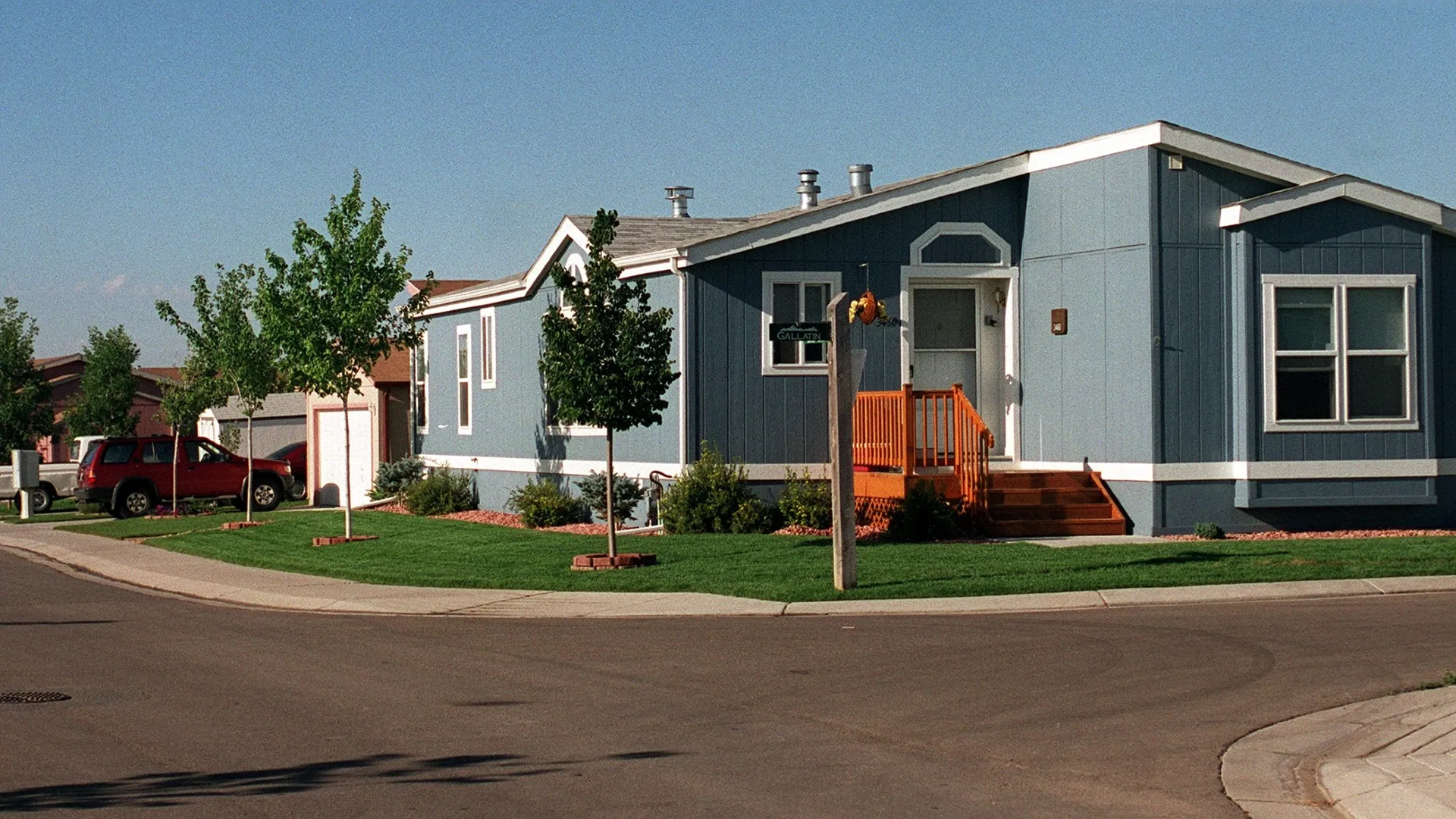
America is plagued by a housing crisis. One possible solution is manufactured housing, which can be produced quickly and relatively cheaply. A new federal housing law could open the door to the sector’s expansion. To succeed, though, manufactured housing must overcome the stigmas against mobile homes and trailer parks.
Federal law, local codes
Manufactured homes are quietly “filling the suburbs,” said The Washington Post. The dwellings were long looked down on as “low-quality, less-safe housing” that was mostly “limited to trailer parks and rural properties” for decades, but higher-quality models are springing up in the “typical American suburban subdivision.” Cost is a big factor: The average price of a manufactured home is just $90,700, though many structures “can run far more than that.”
Prebuilt housing is the “most efficient, effective way to allow homeownership in the United States,” said Joel Farkas of Fruition Communities, which is planning an 8,000-unit neighborhood in the Denver suburbs, to the Post. The median U.S. single-family home price now runs more than $400,000, and elevated mortgage rates are “suppressing housing turnover, constricting supply and inflating prices,” said the Groundwork Collaborative, a progressive think tank. Young families are finding that “suitable homes are scarce” as a result.
The Week
Escape your echo chamber. Get the facts behind the news, plus analysis from multiple perspectives.
SUBSCRIBE & SAVE
Sign up for The Week's Free Newsletters
Join more than 350,000 subscribers and keep yourself informed with a selection of The Week’s most interesting, enlightening and entertaining stories - plus daily puzzles.
Join more than 350,000 subscribers and keep yourself informed with a selection of The Week’s most interesting, enlightening and entertaining stories - plus daily puzzles.
Latest Videos FromThe Week US
Sears’ prebuilt home kits in the early 20th century made housing widely available and relatively inexpensive for generations of Americans. A proposed program to “deliver 500,000 high-quality, factory-built homes” across the country would create a “permanently affordable” source of housing that harkens back to those Sears homes, said the Groundwork Collaborative. The housing crisis “will not be solved by half measures.”
The new federal housing law does not go as far as Groundwork’s proposal. But the legislation “aims to slash some of the red tape” that has hindered construction of manufactured and modular housing, said The Wall Street Journal. One provision eliminates a requirement that such structures be built with a permanent steel frame to make the houses easier to move. (Fewer than 5% of mobile homes are ever relocated “from their original placement,” said Axios.) Ending the rule could reduce construction costs for a single unit by up to $10,000, said the Journal.
One obstacle: The feds “can only do so much” in a country where housing policies are largely set at the state and local levels, said the Journal. “Every city, every municipality has a different code,” PTM Partners’ Michael Tillman told the outlet.
‘More support’ needed
Manufactured housing still has its own “affordability problem” even with the red tape stripped out, said Politico. Loans to buy such housing are different from regular mortgages and often feature interest rates “near double digits” that can “lock out many prospective buyers.”
Some members of Congress want “more federal government support” to make factory-built home loans cheaper, said Politico. Those efforts will be needed because the “market is not doing them,” said Scott Olson, the executive director of Community Home Lenders of America, to the outlet.