Sign up to get Today’s Best Articles in your inbox
Join 350,000+ subscribers and keep yourself informed with a selection of
The Week’s most interesting, enlightening and entertaining stories - plus daily puzzles.
You are now subscribed
Your newsletter sign-up was successful
Want to add more newsletters?
An account already exists for this email address, please log in.
How is Trump trying to turn the WHCA attack into a political opportunity?
Another close call with a would-be assassin has pushed the White House to revisit some go-to responses for moments of heightened national peril
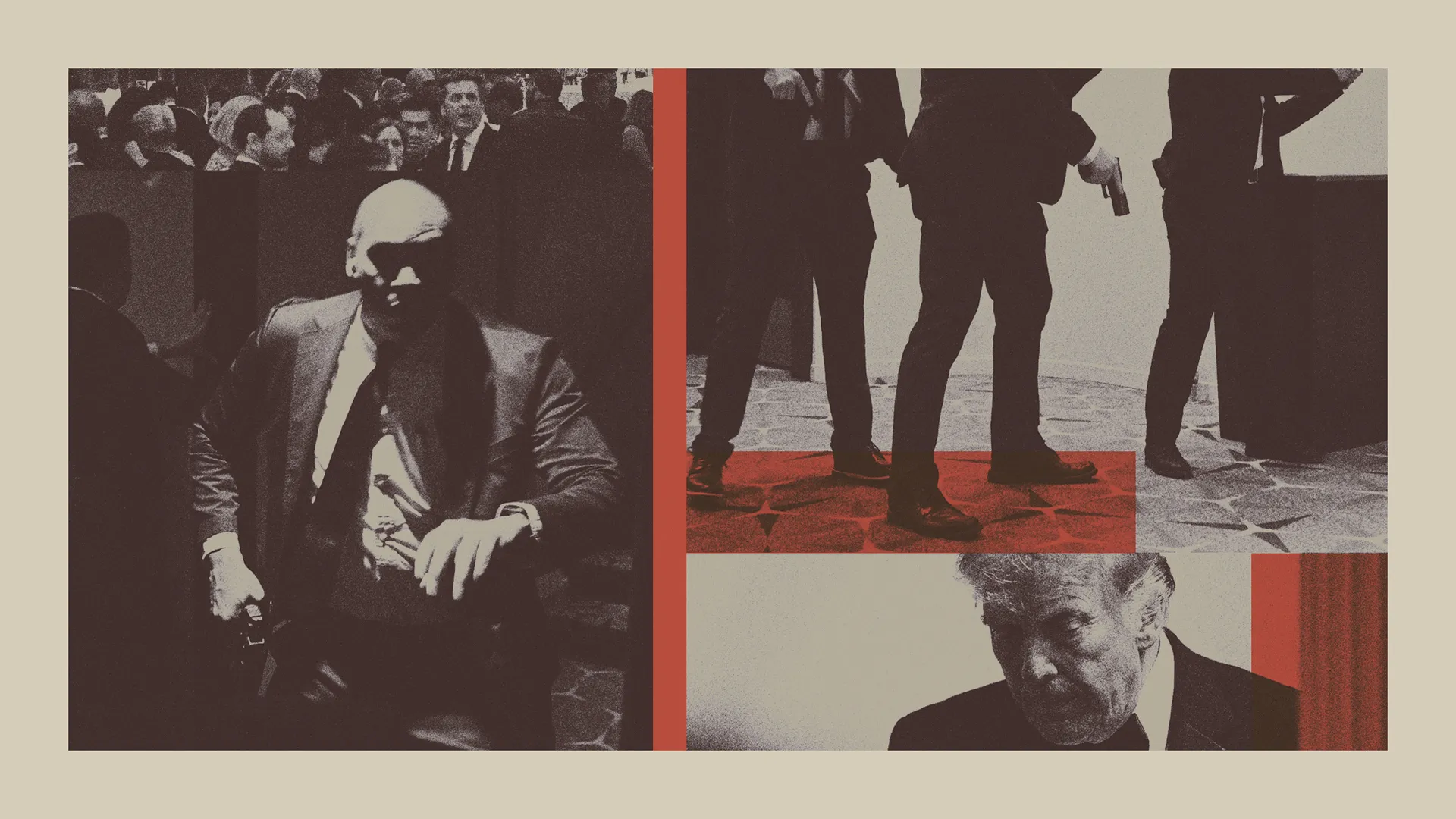
Following an assassination attempt at the White House Correspondents’ Association dinner on April 25, President Donald Trump wasted little time in framing the still-ambiguous episode to support his legally dubious ballroom construction efforts. He also used the opportunity to attack a familiar list of political adversaries, including Democrats and members of the press.
What did the commentators say?
After the attack on the WHCA dinner, Trump and his allies have “coalesced” around the embattled ballroom construction project as their “solution for presidential security,” The New York Times said. Trump’s plans for the White House ballroom include a secure bunker under what was once the East Wing. But Trump and his administration’s “coordinated effort” to connect the WHCA attempted shooting to the ongoing legal “tug of war” over the ballroom “ignored the realities of the annual dinner and the circumstances of the breach.” The shooting attempt has become “fodder to support building the president’s pet project,” said Zeteo. “Even before Trump addressed the public, the talking points already seemed to be circulating.”
Trump has a history of using attempts on his life as a “political symbol” to “rally his supporters and strengthen his grip on state affairs,” said South Korea’s The Chosun Daily. His post on Truth Social requesting the WHCA “LET THE SHOW GO ON” after the attack shows that even during a “crisis that could have led to a disaster,” Trump was able to display his “signature showmanship.”
The Week
Escape your echo chamber. Get the facts behind the news, plus analysis from multiple perspectives.
Join more than 350,000 subscribers and keep yourself informed with a selection of The Week’s most interesting, enlightening and entertaining stories - plus daily puzzles.
Join more than 350,000 subscribers and keep yourself informed with a selection of The Week’s most interesting, enlightening and entertaining stories - plus daily puzzles.
It is “notable” that “neither Trump nor anyone on his team rushed to assign a political motive” in the hours immediately following Saturday’s attack, said The Sydney Morning Herald. Instead, Trump “predictably” spent the time turning the attack “to his own purposes.” The president’s behavior in the immediate aftermath of the shooting attempt, including at his press briefing that evening, “underscored his instinct to spin narratives with himself as the undaunted hero” while “rarely missing a chance to plug his priorities,” said Reuters.
There is a “pattern” at play, said Politico. After an attempt on Trump’s life, there are “calls from both sides to turn down the temperature. And then, a pivot.” After initially pushing for Americans to “resolve” their differences, it took “less than 24 hours” for Trump to insist in a 60 Minutes interview with CBS’s Norah O’Donnell that the “hate speech of the Democrats” is “very dangerous.”
As in previous instances where Trump has asked for bipartisan calm after facing violence, such calls “proved to be very short-lived,” said The Associated Press. A host of “right-wing politicians and media figures” have begun “laboring to blame the apparent assassination attempt on rhetoric from Democrats,” said Zeteo. It is this dynamic that has allowed Trump to cast himself as a unifier who, on Sunday, “vowed that violence should not win,” while at the same time “accusing the Washington press of being in league with Democrats and covering him unfairly,” said CNN.
What next?
That there were still WHCA after-parties and associated events in the hours following the assassination attempt is a “testament to the nonstop insanity of the Trump era,” during which an “active shooter getting close to the president — for a second time” can be so “quickly metabolized by Washington,” said New York magazine.
Sign up to get Today’s Best Articles in your inbox
A free daily email with the day’s biggest news and analysis – and the best features from TheWeek.com
Acting Attorney General Todd Blanche has already begun using the episode to “pressure a preservation group to drop a lawsuit seeking to halt the construction” of Trump’s ballroom, The Guardian said. “I hope yesterday’s narrow miss will help you finally realize the folly of a lawsuit that literally serves no purpose except to stop President Trump, no matter the cost,” Blanche said in a letter to the National Trust for Historic Preservation, which has sued to stop what it claims is Trump’s illegal ballroom construction. “Enough is enough.”
Ultimately, Trump has “experience” with the “opportunities presented by such moments,” Reuters said. “No one can turn danger into a political asset better than this president,” one White House official said to the outlet.
Rafi Schwartz has worked as a politics writer at The Week since 2022, where he covers elections, Congress and the White House. He was previously a contributing writer with Mic focusing largely on politics, a senior writer with Splinter News, a staff writer for Fusion's news lab, and the managing editor of Heeb Magazine, a Jewish life and culture publication. Rafi's work has appeared in Rolling Stone, GOOD and The Forward, among others.