Sign up to get Today’s Best Articles in your inbox
Join 350,000+ subscribers and keep yourself informed with a selection of
The Week’s most interesting, enlightening and entertaining stories - plus daily puzzles.
You are now subscribed
Your newsletter sign-up was successful
Want to add more newsletters?
An account already exists for this email address, please log in.
Which side is JD Vance taking for MAGA’s infighting?
GOP insiders are battling over antisemitism with an eye on 2028
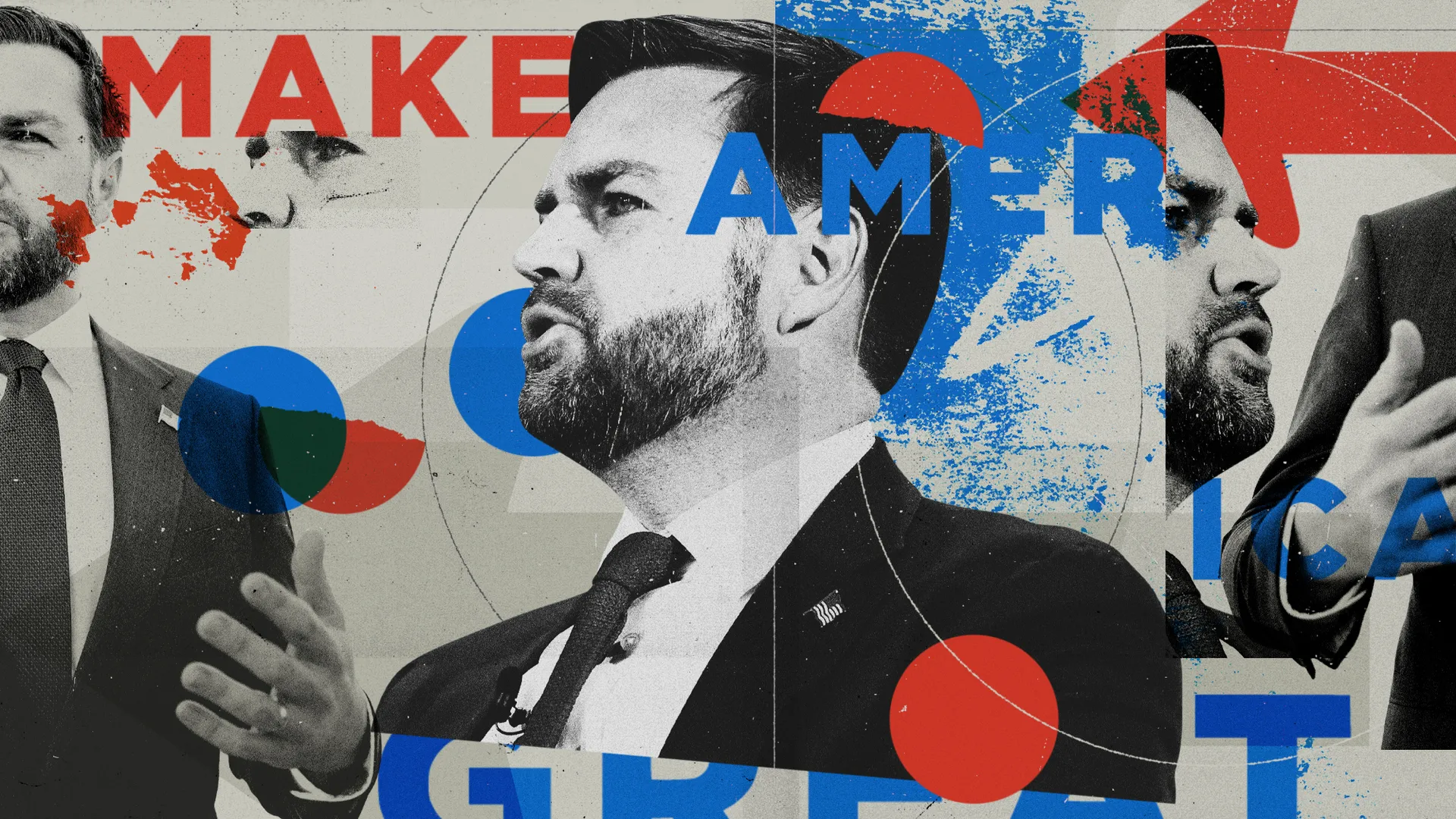
If there is a boundary setter in the GOP, Vice President JD Vance might be it. MAGAdom is feuding over whether antisemitic figures like Nick Fuentes will be allowed in the Republican coalition when President Donald Trump leaves. Observers watched last weekend’s Turning Point USA convention to see if Vance would draw a red line against bigotry in the party.
He did not. Vance ducked a chance to “condemn a streak of antisemitism” that has roiled the GOP in recent months, said The Associated Press. “I didn’t bring a list of conservatives to denounce or to de-platform,” Vance said during the convention’s closing speech. That came after conservative commentator Ben Shapiro criticized Fuentes, Candace Owens and Tucker Carlson during his own address. Those figures and their allies are “grifters and they do not deserve your time,” Shapiro said. Vance, though, refused to take sides in the feud. MAGA Republicans have “far more important work to do than canceling each other," Vance said.
Vance has repeatedly “refused to pick a side in interparty fights over bigotry,” said The New York Times. The vice president earlier this year dismissed outrage over a Young Republicans chat group that featured racist jokes and memes, and in 2024 “embraced false claims about Haitian Americans.” Antisemitism and ethnic hatred “have no place in the conservative movement,” Vance said in an interview published after his TPUSA speech. But Trump’s America is also a place where “you don’t have to apologize for being white anymore,” he told conventiongoers.
The Week
Escape your echo chamber. Get the facts behind the news, plus analysis from multiple perspectives.
Join more than 350,000 subscribers and keep yourself informed with a selection of The Week’s most interesting, enlightening and entertaining stories - plus daily puzzles.
Join more than 350,000 subscribers and keep yourself informed with a selection of The Week’s most interesting, enlightening and entertaining stories - plus daily puzzles.
“When presented with the simplest moral test, Vance failed,” said Franklin Foer at The Atlantic. Antisemitism is more than “one more woke fixation.” Trump has “always struggled” to denounce antisemitism, but that seemed mostly a product of a “vanity” that would not let him “speak ill of acolytes” like Kanye West. Vance has “clearly made the calculation that antisemites are part of the Republican Party’s base.” He cannot afford to lose them and be the GOP presidential candidate in 2028. That will give license to right-wing antisemites to “dehumanize Jews with greater abandon.”
Vance’s choice is “clarifying,” said Noah Rothman at the National Review. Rather than condemn antisemitism within the GOP, he chose to suggest that “those who object to the promotion of a bigot” are the party’s real problem. Vance “can read the writing on the wall as well as anyone,” and the signs suggest that young conservatives are increasingly big fans of “Hitlerian Caesarism.” That development “should terrify responsible actors in American public life.”
What next?
Vance has not officially announced a 2028 presidential bid but is already starting to “lock down” support for his campaign, said NBC News. Erika Kirk, CEO of Turning Point USA, endorsed Vance at the convention. That is just one sign the vice president is “finding early success in holding together” the various parts of Trump’s coalition: A straw poll of TPUSA attendees found that 84% want him to be the GOP’s next nominee.
Sign up to get Today’s Best Articles in your inbox
A free daily email with the day’s biggest news and analysis – and the best features from TheWeek.com
Joel Mathis is a writer with 30 years of newspaper and online journalism experience. His work also regularly appears in National Geographic and The Kansas City Star. His awards include best online commentary at the Online News Association and (twice) at the City and Regional Magazine Association.