Sign up to get Today’s Best Articles in your inbox
Join 350,000+ subscribers and keep yourself informed with a selection of
The Week’s most interesting, enlightening and entertaining stories - plus daily puzzles.
You are now subscribed
Your newsletter sign-up was successful
Want to add more newsletters?
An account already exists for this email address, please log in.
Russia is making 'slow and uneven' gains in Ukraine, at 'significant cost' to its army, U.S., U.K. assess
"We would assess that Russian forces are making slow and uneven and, frankly, we would describe it as incremental progress in the Donbas," a senior Pentagon official said Thursday. "Continued pushback by the Ukrainians" means there's a lot of "back-and-forth in the Donbas in terms of territory gained and/or lost by, frankly, both sides."
The U.S. has moved more than 60 percent of the 90 promised howitzers into Ukraine, and the first group of Ukrainian soldiers has been trained to use them, the Pentagon official said. Russia, meanwhile, has about 92 battle tactical groups (BTGs) in Ukraine, with another 20 still in Russia, in various states of combat readiness.
The Week
Escape your echo chamber. Get the facts behind the news, plus analysis from multiple perspectives.
Join more than 350,000 subscribers and keep yourself informed with a selection of The Week’s most interesting, enlightening and entertaining stories - plus daily puzzles.
Join more than 350,000 subscribers and keep yourself informed with a selection of The Week’s most interesting, enlightening and entertaining stories - plus daily puzzles.
These "alleged 92" BTGs are almost certainly "undermanned, not well supplied, not well led, are on ground they're not familiar with, and they don't do maneuver all that well," said retired Lt. Gen. Mark Hertling, a former U.S. Army commander in Europe. Russia has been slamming Ukraine's Donbas forces with artillery, and while Ukraine's frontline troops wait for the U.S. howitzers to arrive, they have to temporarily "give up ground" to survive the shelling.
"That's what we're seeing now in several locations in the east and south," Hertling said. "We're seeing Russian forces temporarily take ground, then being pushed back by the smart, better led, more adaptive active defense of the Ukrainian army."
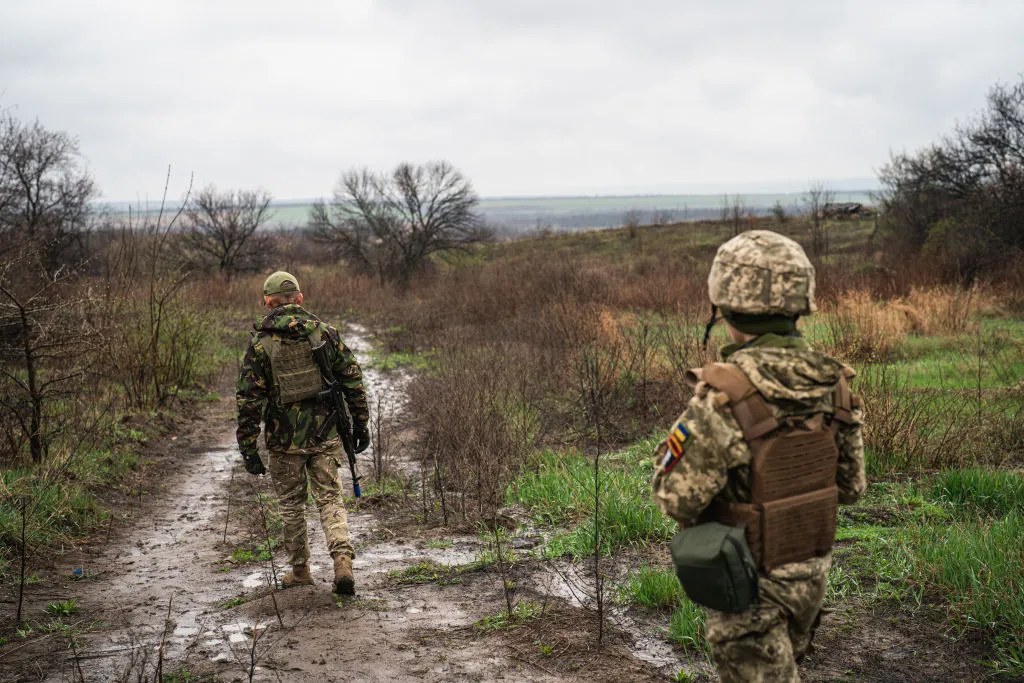
As spring arrives, "the ground conditions — and I mean literally the ground conditions — are going to be an increasing factor," the Pentagon official added. The Russians will be "ever more reliant on paved roads and paved highways," and "we would expect that some of their progress will be slowed, frankly, by mud."
Sign up to get Today’s Best Articles in your inbox
A free daily email with the day’s biggest news and analysis – and the best features from TheWeek.com
Peter has worked as a news and culture writer and editor at The Week since the site's launch in 2008. He covers politics, world affairs, religion and cultural currents. His journalism career began as a copy editor at a financial newswire and has included editorial positions at The New York Times Magazine, Facts on File, and Oregon State University.