Orangutan uses a human-made bridge: The Week's Good News
Curious orangutans are starting to get the hang of using a vital bridge built to connect populations separated by a road, and a nonprofit that has been fighting illiteracy and fostering a love of reading in kids since 2012 celebrates giving away its 6 millionth book.


Editor's note: The following is The Week's Good News newsletter. You can subscribe to it on Substack here or register to have it emailed to you every week here.
First-ever footage of orangutan using human-made bridge
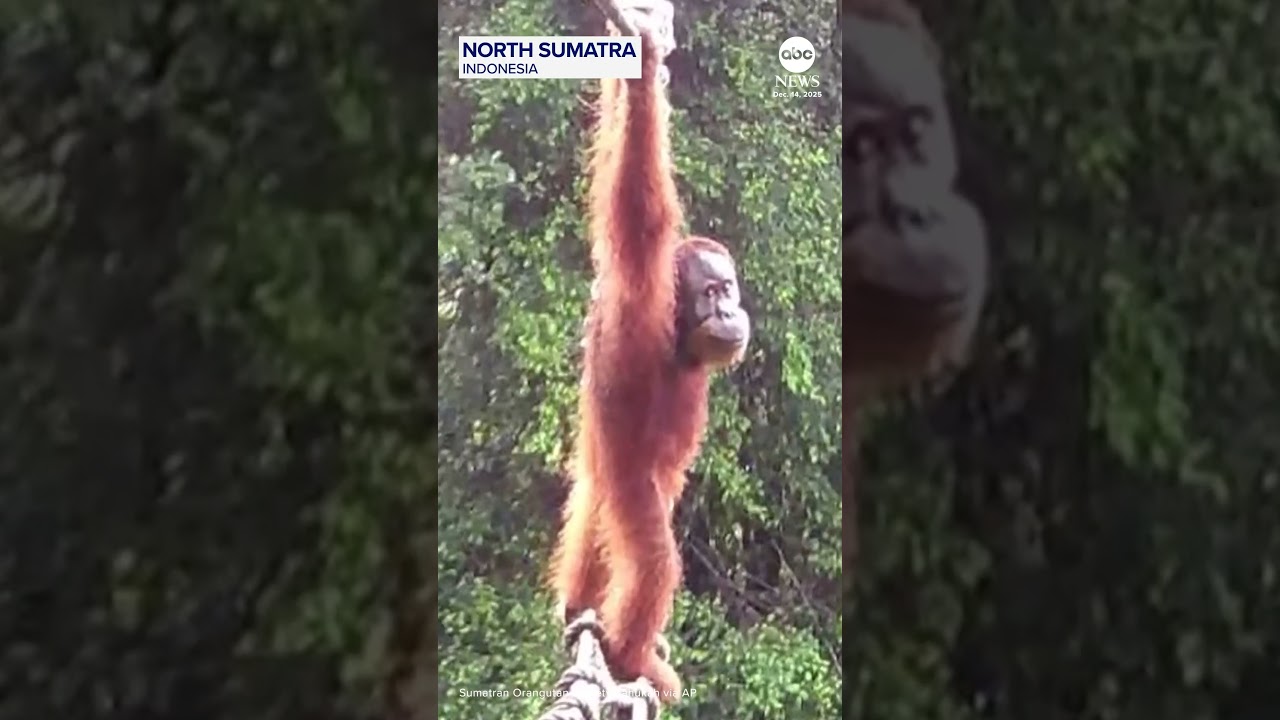
A critically endangered Sumatran orangutan was filmed for the first time using a canopy bridge to cross a road in North Sumatra, delighting conservationists. The bridge was built two years ago to reconnect two local orangutan populations split by a busy road. With only about 14,000 orangutans left in the wild, the animal crossing success offers hope that simple infrastructure can help the species survive habitat fragmentation.
Results from pioneering bowel cancer trial reveal zero relapses
Swapping post-surgery chemotherapy for pre-surgery immunotherapy resulted in substantial improvements for colorectal cancer patients involved in the NEOPRISM-CRC clinical trial. Early results showed that 59% of patients administered the immunotherapy drug pembrolizumab before surgery had zero signs of cancer, and 33 months later, none of the study participants have seen their cancer return. Previous research showed that pembrolizumab led to major tumor shrinkage in patients with stage 2 or 3 colorectal cancer.
The Week
Escape your echo chamber. Get the facts behind the news, plus analysis from multiple perspectives.

Sign up for The Week's Free Newsletters
Join more than 350,000 subscribers and keep yourself informed with a selection of The Week’s most interesting, enlightening and entertaining stories - plus daily puzzles.
Join more than 350,000 subscribers and keep yourself informed with a selection of The Week’s most interesting, enlightening and entertaining stories - plus daily puzzles.
Girl has vision restored after first-of-its-kind eye gene therapy
A 6-year-old child with Leber’s Congenital Amaurosis (LCA), a rare eye condition that often leads to total vision loss, had her sight restored following cutting-edge gene therapy at London’s Great Ormond Street Hospital. Saffie Sandford’s treatment with Luxturna, which involved injecting both eyes with healthy copies of the RPE 65 gene, was the first demonstration that gene therapy can strengthen visual pathways in a child with LCA. It “restored her sight in the dark,” said Saffie’s mother, Lisa Sandford.
New York nonprofit distributes used books to kids in need
The Book Fairies, a New York nonprofit that helps underserved communities, recently distributed its 6 millionth book. The group launched in 2012, in founder Amy Zaslansky’s garage. It collects new and gently used books, then gives them to kids in New York City and Long Island to help instill a lifelong love of reading. A new donation of 25,000 books from ThriftBooks will “change so many lives,” Book Fairies associate executive director Courtney Collins told Good News Network.

-
-
 talking pointsA leadership power vacuum may await Republicans
 -
 QUOTE OF THE DAY‘What kind of culture looks at sexual violence and sees an opportunity for profit? This is rape culture. And it should disturb every single one of us.’
 -
 today’s big questionHow long can US consumers continue their spending spree?
-
-
-
talking pointsA leadership power vacuum may await Republicans
-
QUOTE OF THE DAY‘What kind of culture looks at sexual violence and sees an opportunity for profit? This is rape culture. And it should disturb every single one of us.’
-
today’s big questionHow long can US consumers continue their spending spree?
-