Sign up to get Today’s Best Articles in your inbox
Join 350,000+ subscribers and keep yourself informed with a selection of
The Week’s most interesting, enlightening and entertaining stories - plus daily puzzles.
You are now subscribed
Your newsletter sign-up was successful
Want to add more newsletters?
An account already exists for this email address, please log in.
Possible zombie star found 110 million light years from Earth
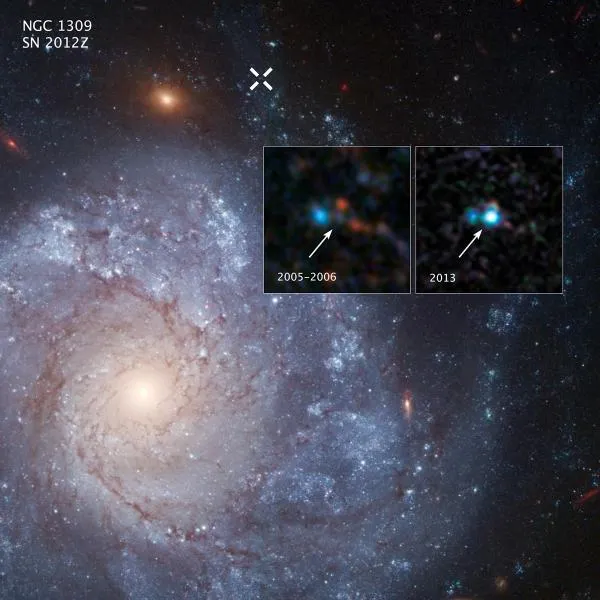
Astronomers believe that, using the Hubble Space Telescope, they have spotted a rare zombie star 110 million light years away.
When a Type Ia supernova takes place, it usually destroys the exploding white star, but in the case of the smaller and dimmer Type Iax supernova, a small portion of the dwarf star isn't obliterated, leaving behind the zombie star.
"Astronomers have been searching for decades for the star systems that produce Type Ia supernova explosions," Rutgers scientist Saurabh Jha said in a NASA statement:
The Week
Escape your echo chamber. Get the facts behind the news, plus analysis from multiple perspectives.
Join more than 350,000 subscribers and keep yourself informed with a selection of The Week’s most interesting, enlightening and entertaining stories - plus daily puzzles.
Join more than 350,000 subscribers and keep yourself informed with a selection of The Week’s most interesting, enlightening and entertaining stories - plus daily puzzles.
Type Ia's are important because they're used to measure vast cosmic distances and the expansion of the universe.... The similarities between Type Iax's and normal Type Ia's make understanding Type Iax progenitors important, especially because no Type Ia progenitor has been conclusively identified. This discovery shows us one way that you can get a white dwarf explosion. [NASA]
The astronomers would like their findings to lead to understanding of the relationship between Type Iax and Type Ia supernovae and their star systems.
Sign up to get Today’s Best Articles in your inbox
A free daily email with the day’s biggest news and analysis – and the best features from TheWeek.com
Catherine Garcia has worked as a senior writer at The Week since 2014. Her writing and reporting have appeared in Entertainment Weekly, The New York Times, Wirecutter, NBC News and "The Book of Jezebel," among others. She's a graduate of the University of Redlands and the Columbia University Graduate School of Journalism.