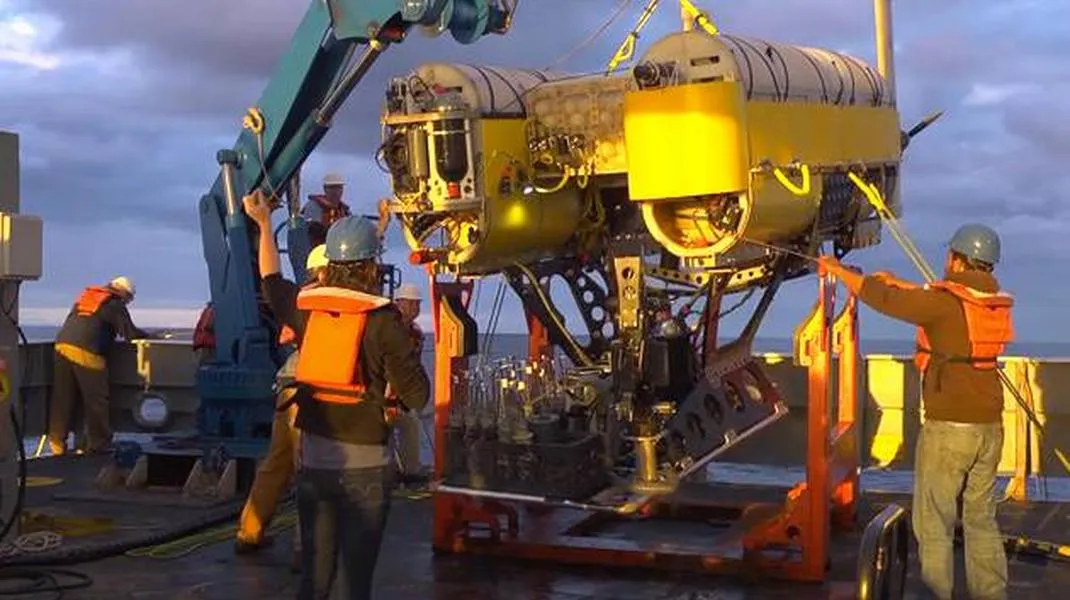
Deep sea explorer Nereus lost in the ocean, likely imploded
Facebook/WHOI
A free daily email with the biggest news stories of the day – and the best features from TheWeek.com
You are now subscribed
Your newsletter sign-up was successful
Nereus, a one-of-a-kind robotic vehicle able to go deep under the sea, vanished on Friday in the western Pacific Ocean, National Geographic said.
Based on surface debris that researchers found on Saturday, it appears that Nereus suffered a "catastrophic implosion" while exploring the deep Kermadec Trench near New Zealand. It was lost 30 days into a 40-day journey, and scientists say they'll finish exploring with the tools they still have, including an underwater elevator and baited traps.
Scientists think that the weight of the ocean was too much for the $8 million Nereus, and it imploded under 16,000 pounds per square inch of pressure. The Nereus was owned and operated by the Woods Hole Oceanographic Institute (WHOI) on Cape Cod, and was the only active scientific vehicle that was able to go to such extreme depths. It was set to take six more trips during the year. Director James Cameron, a deep sea enthusiast, said in a statement that it was a "tragic loss for deep science," and would limit access to "the last great frontier for exploration on our planet."
The Week
Escape your echo chamber. Get the facts behind the news, plus analysis from multiple perspectives.
Sign up for The Week's Free Newsletters
From our morning news briefing to a weekly Good News Newsletter, get the best of The Week delivered directly to your inbox.
A free daily email with the biggest news stories of the day – and the best features from TheWeek.com
Catherine Garcia has worked as a senior writer at The Week since 2014. Her writing and reporting have appeared in Entertainment Weekly, The New York Times, Wirecutter, NBC News and "The Book of Jezebel," among others. She's a graduate of the University of Redlands and the Columbia University Graduate School of Journalism.