Seth Meyers looks at Hillary vs. Bernie, oil money, Seinfeld, and the 2008 presidential race

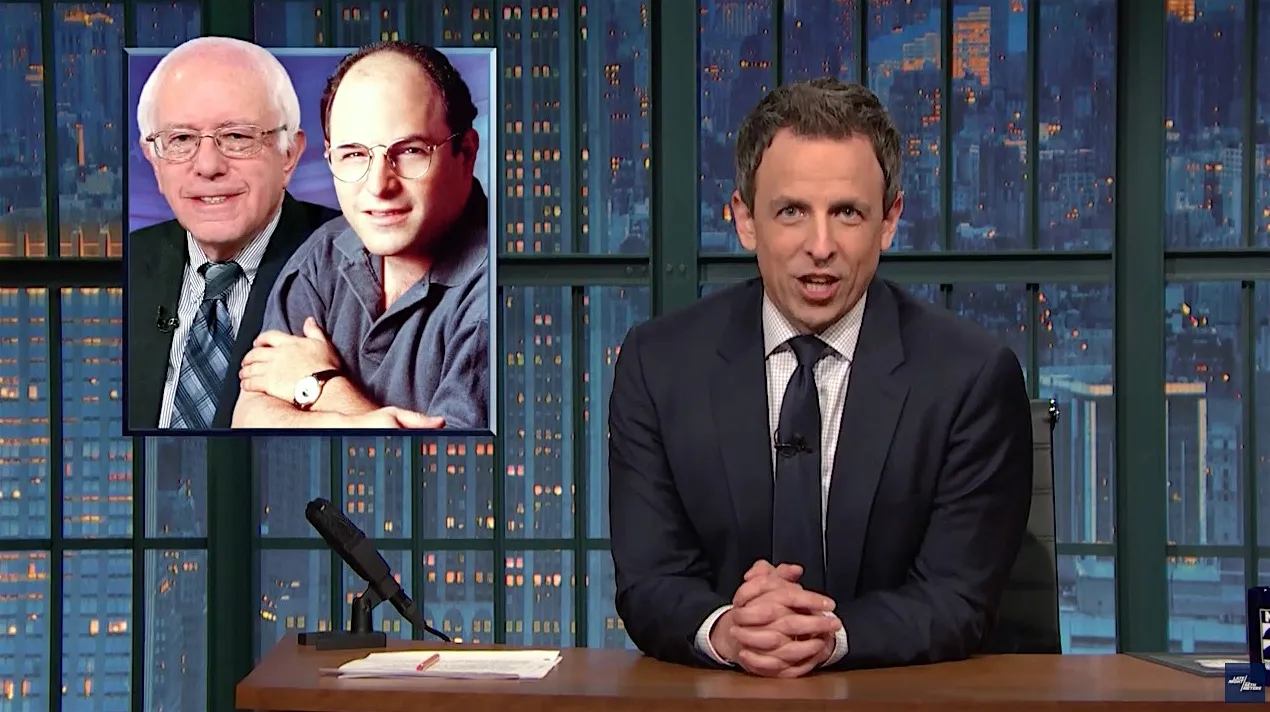
If you missed last week's dust-up about Hillary Clinton, Bernie Sanders, Greenpeace, and money from the fossil-fuel industry, Seth Meyers had you covered on Monday's Late Night. And even if you didn't miss it, Meyers has some context, from the fact-checking of the claims that Clinton is taking money from the industry to Clinton's use of the same questionable math against Barack Obama in the 2008 presidential race. Along the way he gets in a dig at Clinton's dancing, comparing it to the awkward dancing of Elaine on Seinfeld. "That's right, Hillary is the Elaine of the 2016 campaign," he said, "which explains why she spends so much time arguing with a bald man from the outer boroughs who wears glasses."
Sanders comes out better in this fight, as Meyers portrays it, but for those Democrats who worry that the Clinton-Sanders feud "has gotten too bitter," he reminded viewers that "2008 was much worse." After a few years, Meyers added, Clinton and Obama "became, like, best friends." He ended with a preview of the upcoming New York primary, and a red flag that Brooklyn native Sanders hasn't ridden the subway in a long, long time. Peter Weber
The Week
Escape your echo chamber. Get the facts behind the news, plus analysis from multiple perspectives.

Sign up for The Week's Free Newsletters
Join more than 350,000 subscribers and keep yourself informed with a selection of The Week’s most interesting, enlightening and entertaining stories - plus daily puzzles.
Join more than 350,000 subscribers and keep yourself informed with a selection of The Week’s most interesting, enlightening and entertaining stories - plus daily puzzles.

-
-
 talking pointsA leadership power vacuum may await Republicans
 -
 QUOTE OF THE DAY‘What kind of culture looks at sexual violence and sees an opportunity for profit? This is rape culture. And it should disturb every single one of us.’
 -
 today’s big questionHow long can US consumers continue their spending spree?
-
-
-
talking pointsA leadership power vacuum may await Republicans
-
QUOTE OF THE DAY‘What kind of culture looks at sexual violence and sees an opportunity for profit? This is rape culture. And it should disturb every single one of us.’
-
today’s big questionHow long can US consumers continue their spending spree?
-