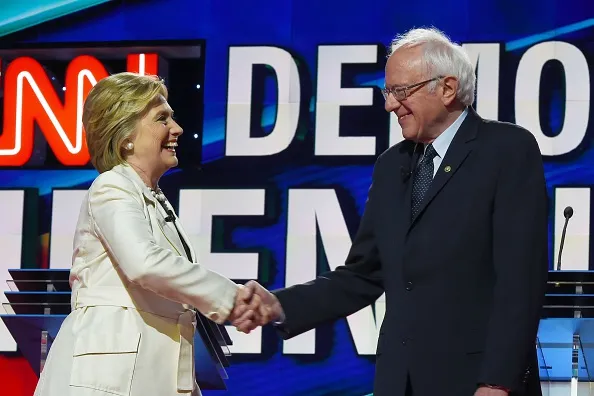
Hillary Clinton and Bernie Sanders aired 206,528 ads. Not a single one was negative.
A free daily email with the biggest news stories of the day – and the best features from TheWeek.com
You are now subscribed
Your newsletter sign-up was successful
As Hillary Clinton and Bernie Sanders' fight for the Democratic nomination winds toward a close, the pair of candidates leaves behind them a surprisingly friendly primary — perhaps the most gracious ever, at least in terms advertisements. According to Kantar Media, of the 206,528 ad spots Clinton and Sanders aired between them this year, not a single one was determined by analysts to be "negative."
"In an open presidential primary, this is probably unprecedented," Kantar's senior vice president for political advertising Elizabeth Wilner told Bloomberg.
Donald Trump, by comparison, faced $62 million in attack ads during the primary season. Obama and Clinton both aired negative ads against each other back in 2008, too. However, Sanders doesn't believe in attack ads — and Clinton both didn't see Sanders as a big enough threat and risked alienating his supporters in a general election by airing her own ads against him.
The Week
Escape your echo chamber. Get the facts behind the news, plus analysis from multiple perspectives.
Sign up for The Week's Free Newsletters
From our morning news briefing to a weekly Good News Newsletter, get the best of The Week delivered directly to your inbox.
The goodwill might not last much longer, however. Clinton has no such qualms holding back against Trump — her campaign has already produced an ad slamming her likely general election opponent for attacking Judge Gonzalo Curiel in a racist manner. And, of course, Trump has never exactly been one to hold back on how he really feels.
A free daily email with the biggest news stories of the day – and the best features from TheWeek.com
Jeva Lange was the executive editor at TheWeek.com. She formerly served as The Week's deputy editor and culture critic. She is also a contributor to Screen Slate, and her writing has appeared in The New York Daily News, The Awl, Vice, and Gothamist, among other publications. Jeva lives in New York City. Follow her on Twitter.
-
The 8 best TV shows of the 1960sThe standout shows of this decade take viewers from outer space to the Wild West
-
Microdramas are boomingUnder the radar Scroll to watch a whole movie
-
The Olympic timekeepers keeping the Games on trackUnder the Radar Swiss watchmaking giant Omega has been at the finish line of every Olympic Games for nearly 100 years
-
Judge orders Washington slavery exhibit restoredSpeed Read The Trump administration took down displays about slavery at the President’s House Site in Philadelphia
-
Hyatt chair joins growing list of Epstein files losersSpeed Read Thomas Pritzker stepped down as executive chair of the Hyatt Hotels Corporation over his ties with Jeffrey Epstein and Ghislaine Maxwell
-
Judge blocks Hegseth from punishing Kelly over videoSpeed Read Defense Secretary Pete Hegseth pushed for the senator to be demoted over a video in which he reminds military officials they should refuse illegal orders
-
Trump’s EPA kills legal basis for federal climate policySpeed Read The government’s authority to regulate several planet-warming pollutants has been repealed
-
House votes to end Trump’s Canada tariffsSpeed Read Six Republicans joined with Democrats to repeal the president’s tariffs
-
Bondi, Democrats clash over Epstein in hearingSpeed Read Attorney General Pam Bondi ignored survivors of convicted sex offender Jeffrey Epstein and demanded that Democrats apologize to Trump
-
El Paso airspace closure tied to FAA-Pentagon standoffSpeed Read The closure in the Texas border city stemmed from disagreements between the Federal Aviation Administration and Pentagon officials over drone-related tests
-
Judge blocks Trump suit for Michigan voter rollsSpeed Read A Trump-appointed federal judge rejected the administration’s demand for voters’ personal data