In Syria, Turkish troops killed in possible suicide bombing attack by Kurdish fighter

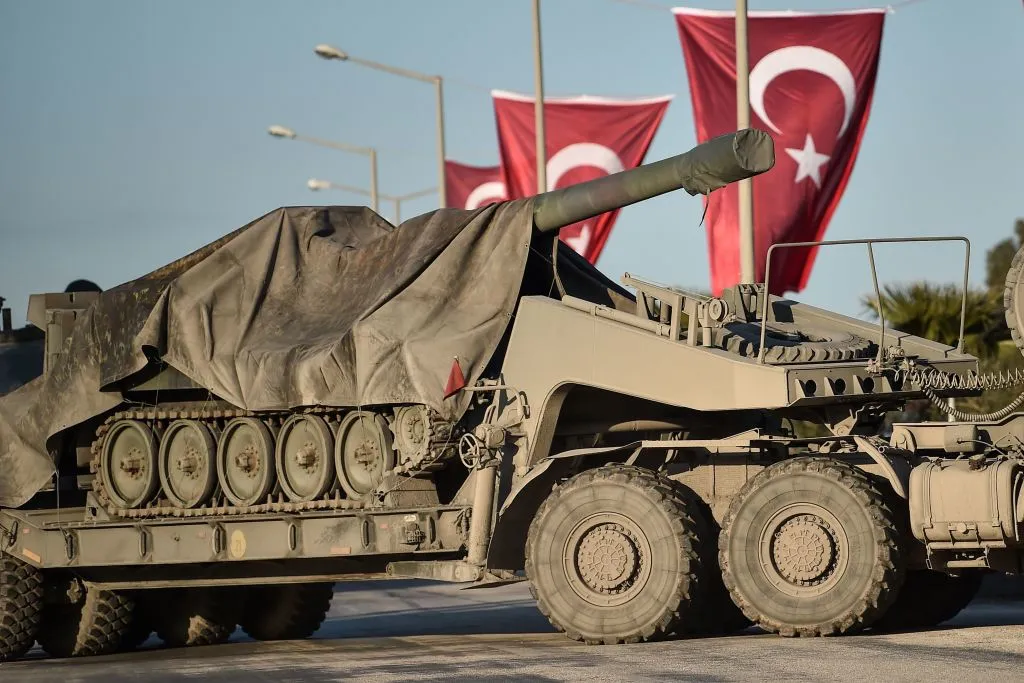
Several Turkish soldiers were killed and a tank destroyed Saturday in Syria when a Kurdish fighter threw a grenade at them, Kurdish forces said Sunday.
The independent Syrian Observatory for Human Rights said the Kurdish fighter, who also died, threw a grenade down the turret of the tank, The New York Times reports, and its director, Rami Abdulrahman, said he did not believe it was supposed to be a suicide attack. The bomber has been identified as 20-year-old Zuluh Hemo, who fought with the Women's Protection Units, or YPJ, using the name Avesta Habur. In a statement, her unit, which is part of the Syrian Democratic Forces, called her a "heroine" who "attacked the tank and blew herself up with the tank," and a "model of free Kurdish women."
The Week
Escape your echo chamber. Get the facts behind the news, plus analysis from multiple perspectives.

Sign up for The Week's Free Newsletters
Join more than 350,000 subscribers and keep yourself informed with a selection of The Week’s most interesting, enlightening and entertaining stories - plus daily puzzles.
Join more than 350,000 subscribers and keep yourself informed with a selection of The Week’s most interesting, enlightening and entertaining stories - plus daily puzzles.