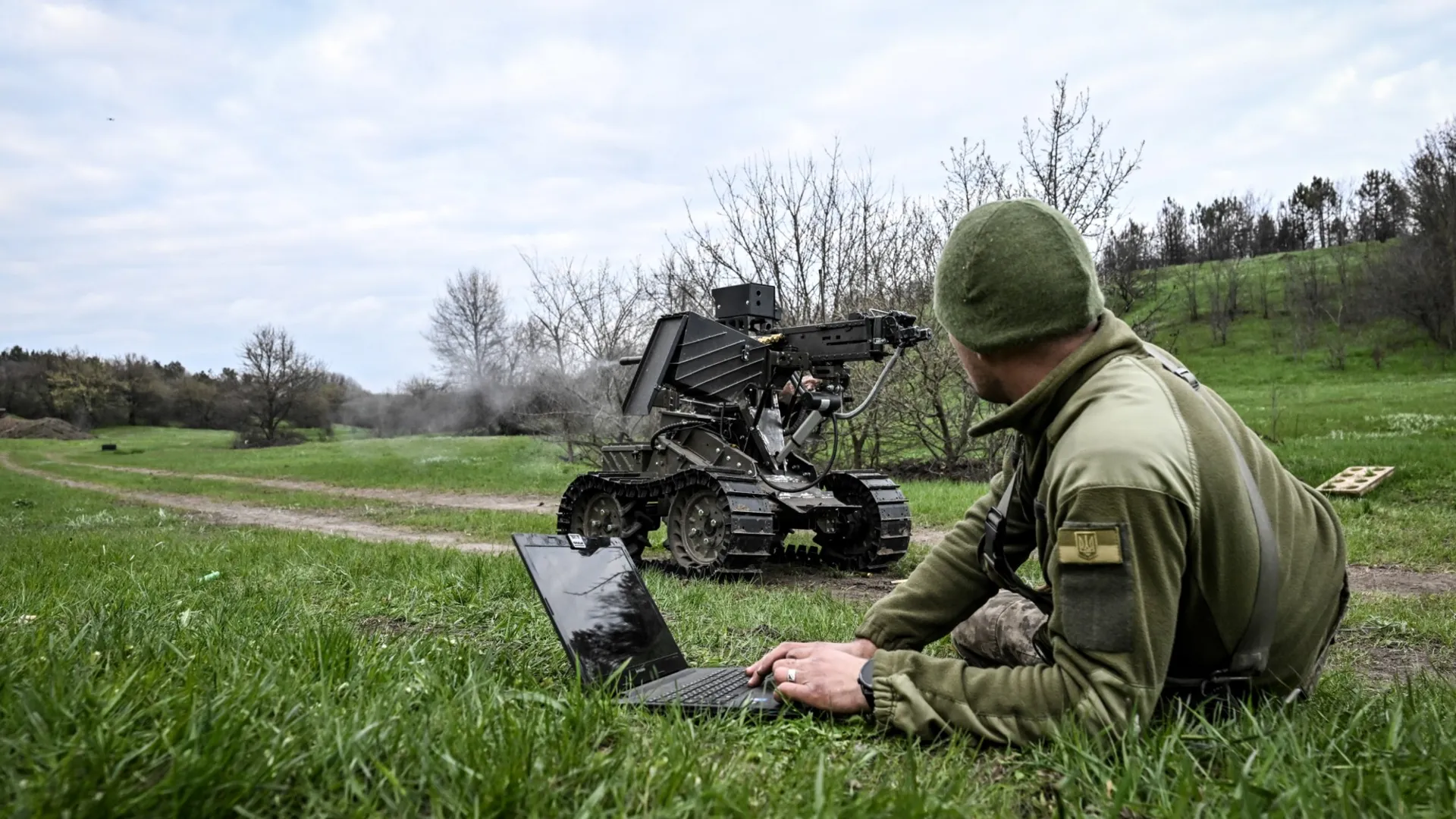
With the Russo-Ukrainian War in its fourth year, both sides are dealing with critical troop shortages, and Ukrainian officials think they’ve found a solution. The country has started using remotely controlled robots in combat to account for these shortages and also reduce casualties. But some experts are also downplaying the effect these robots could have on the war.
‘Seize Russian positions solely with automated weapons’
The robots, which often feature mounted machine guns, can “help Ukrainian troops carry gear, lay mines, evacuate the wounded and attack Russian positions,” said Business Insider. At least 280 companies are working to develop these robots, many of which are used to transport ordnance because they can “carry more than roughly 10 servicemen can,” Oleksandr Yabchanka, the head of robotic systems for Ukraine’s Da Vinci Wolves army regiment, told Business Insider.
The robots are a key part of Ukraine’s fight because of their offensive capabilities. One video during combat, filmed last summer, showed several Ukrainian robots that “each carried 66 pounds of explosives,” said The New York Times. One of these robots drove into a Russian stronghold and “blew itself up, while the others held back, monitoring the position.” Several Russian soldiers surrendered, and these kinds of attacks show “that the Ukrainian military can now seize Russian positions solely with automated weapons.”
The Week
Escape your echo chamber. Get the facts behind the news, plus analysis from multiple perspectives.
SUBSCRIBE & SAVE
Sign up for The Week's Free Newsletters
Join more than 350,000 subscribers and keep yourself informed with a selection of The Week’s most interesting, enlightening and entertaining stories - plus daily puzzles.
Join more than 350,000 subscribers and keep yourself informed with a selection of The Week’s most interesting, enlightening and entertaining stories - plus daily puzzles.
Latest Videos FromThe Week US
Of course, human soldiers remain the key demographic on the battlefield, but Ukraine is “eager to highlight its advances to show Western partners that its outnumbered army can stay in the fight,” said the Times, while also promoting the country’s “homegrown defense industry.” During the first three months of 2026, Ukraine’s ground robots “carried out more than 22,000 missions on the front lines,” said Business Insider, citing data from Ukrainian President Volodymyr Zelenskyy.
‘The reality is more nuanced and far less futuristic’
There are drawbacks to using robots, as they “can still fall prey to enemy drones and also face challenges in traversing battle-scarred landscapes,” said Ars Technica. Though they may be good for frontline combat, at least one Ukrainian battalion reported that robots “attempting to evacuate wounded soldiers failed to reach the positions in four out of five cases due to complicating factors.” Ukraine’s efforts are also in “competition with the Russian military, which has similarly increased its use of robots on the frontlines.”
The narrative has largely been that Ukrainian robots will eventually supersede most of the country’s soldiers, but the “reality is more nuanced and far less futuristic,” said the Kyiv Post. The expansion of these battlefield robots is mostly part of an effort to “support troops not replace them.” And even though the stories of killer robots dominate the headlines, much of the “work performed by these robots remains logistical,” encompassing the delivery of “supplies, including food, ammunition, water and equipment, to frontline positions.”
But even non-offensive missions using robots “can save lives, as they replace tasks that would otherwise require soldiers to move on foot under fire,” a senior operator of ground robotic systems from Ukraine’s 13th Brigade told the Kyiv Post. It remains “far better to send a robot on a mission. If it is destroyed, you lose equipment. But if you send two or three soldiers and they are killed, it is a much greater loss, both emotionally and for the unit’s combat capability.”