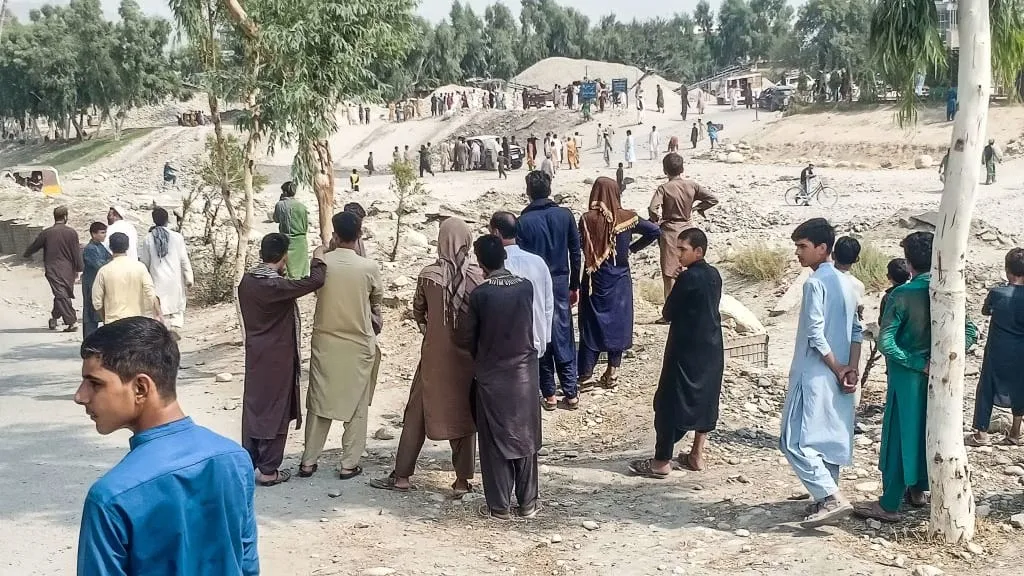
ISIS claims responsibility for string of deadly attacks in eastern Afghanistan
The Islamic State is stepping up its attacks in eastern Afghanistan, claiming responsibility for multiple recent roadside bombings that targeted Taliban fighters but left civilians dead as well.
The bombings took place in Jalalabad, an ISIS stronghold, and purposely went after Taliban vehicles. On Sunday, eight people were killed in the blasts, including some Taliban militants, and dozens more injured. Additional explosions were heard in Jalalabad on Monday, and The Associated Press says there are unconfirmed reports that additional Taliban fighters were killed.
After assuming control of Afghanistan in August, the Taliban told world leaders it would not let terrorist groups use the country as a base to plan overseas attacks. Before the U.S. finished its withdrawal last month, an ISIS attack at the Kabul airport killed 13 U.S. service members and 169 Afghan civilians.
The Week
Escape your echo chamber. Get the facts behind the news, plus analysis from multiple perspectives.
Sign up for The Week's Free Newsletters
From our morning news briefing to a weekly Good News Newsletter, get the best of The Week delivered directly to your inbox.
The Taliban and ISIS are rivals with different goals: While the Taliban wants to control Afghanistan with its strict interpretation of Islamic law, ISIS wants to have an Islamic empire across several countries. There are many more Taliban fighters in Afghanistan than ISIS militants, but research analyst Ibraheem Bahiss told AP these new attacks show ISIS is "making a very dramatic comeback. There could be a long-term struggle between the groups."
Feda Mohammad's 18-year-old brother and 10-year-old cousin were killed in one of the Sunday blasts, and he told AP that after years of war, Afghans believed "that since the Taliban have come, peace will come. But there's no peace, no security. You can't hear anything except the news of bomb blasts killing this one or that."
A free daily email with the biggest news stories of the day – and the best features from TheWeek.com
Catherine Garcia has worked as a senior writer at The Week since 2014. Her writing and reporting have appeared in Entertainment Weekly, The New York Times, Wirecutter, NBC News and "The Book of Jezebel," among others. She's a graduate of the University of Redlands and the Columbia University Graduate School of Journalism.
-
The Night Manager series two: ‘irresistible’ follow-up is ‘smart, compelling’ TVThe Week Recommends Second instalment of the spy thriller keeps its ‘pace’, ‘intrigue’ and ‘sly sexiness’
-
11 hotels opening in 2026 to help you reconnect with natureThe Week Recommends Find peace on the beaches of Mexico and on a remote Estonian island
-
Zimbabwe’s driving crisisUnder the Radar Southern African nation is experiencing a ‘public health disaster’ with one of the highest road fatality rates in the world
-
Maduro pleads not guilty in first US court hearingSpeed Read Deposed Venezuelan leader Nicolás Maduro and his wife Cilia Flores pleaded not guilty to cocaine trafficking and narco-terrorism conspiracy
-
Iran’s government rocked by protestsSpeed Read The death toll from protests sparked by the collapse of Iran’s currency has reached at least 19
-
Israel approves new West Bank settlementsSpeed Read The ‘Israeli onslaught has all but vanquished a free Palestinian existence in the West Bank’
-
US offers Ukraine NATO-like security pact, with caveatsSpeed Read The Trump administration has offered Ukraine security guarantees similar to those it would receive from NATO
-
Hong Kong court convicts democracy advocate LaiSpeed Read Former Hong Kong media mogul Jimmy Lai was convicted in a landmark national security trial
-
Australia weighs new gun laws after antisemitic attackSpeed Read A father and son opened fire on Jewish families at Sydney’s Bondi Beach, killing at least 15
-
How Bulgaria’s government fell amid mass protestsThe Explainer The country’s prime minister resigned as part of the fallout
-
Normalising relations with the Taliban in AfghanistanThe Explainer The regime is coming in from the diplomatic cold, as countries lose hope of armed opposition and seek cooperation on counterterrorism, counter-narcotics and deportation of immigrants