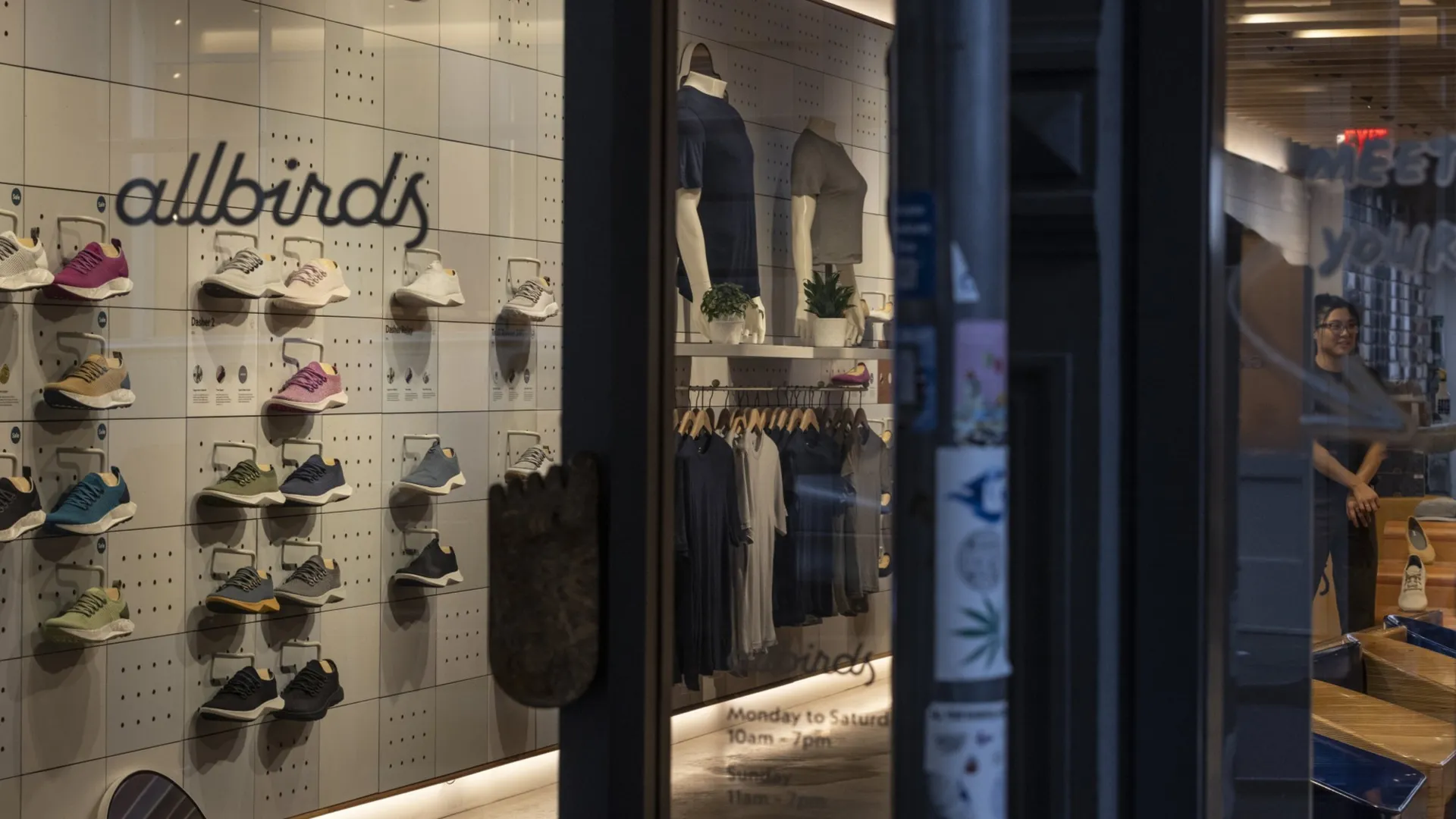
People who want to grab a once-trendy pair of shoes in person will have to go somewhere else: Allbirds announced it has closed all of its stores and struck a deal to sell its assets. The sell-off marks a massive fall from grace for the shoe company, which began as a direct-to-consumer fashion brand before opening brick-and-mortar locations. Allbirds is merely the latest DTC company to find itself drowning, and experts say its shuttering may point to larger problems with the business model.
From $4 billion to $39 million
Allbirds once represented the pinnacle of tech-bro fashion and became known as the “eco-friendly shoe company that won over Silicon Valley,” said the Los Angeles Times. The brand is best recognized for its high-end wool shoes that were “initially embraced by celebrities like Leonardo DiCaprio, who invested in the company in 2018.” Following a slew of successes with the DTC model, Allbirds “peaked at a $4 billion valuation when it went public in 2021.”
But the company’s remaining assets were sold in March for $39 million, representing only “1% of its peak market capitalization,” said Fortune. The 99% plunge in value was due to “major strategic missteps in trying to sustain its once meteoric growth.” A trend “doesn’t always translate to enduring brand value,” and in Allbirds’ case, the company “believed its growth would last forever, not quite understanding that its distinctive shoes were in fact a fad.”
The Week
Escape your echo chamber. Get the facts behind the news, plus analysis from multiple perspectives.
SUBSCRIBE & SAVE
Sign up for The Week's Free Newsletters
Join more than 350,000 subscribers and keep yourself informed with a selection of The Week’s most interesting, enlightening and entertaining stories - plus daily puzzles.
Join more than 350,000 subscribers and keep yourself informed with a selection of The Week’s most interesting, enlightening and entertaining stories - plus daily puzzles.
Latest Videos FromThe Week US
However, the Allbirds C-suite is seemingly confident that things will turn around. Allbirds “has evolved into a lifestyle footwear brand known for modern design, innovative materials and unparalleled comfort,” Joe Vernachio, the company’s CEO, said in a statement. The sale “builds on the foundational work already completed and sets up the brand to thrive in the years ahead.”
Hit a ceiling
The collapse of Allbirds now has some people asking larger questions about the viability of DTC. Many of these companies “sought to build their customer bases through physical retail and banked on opening stores to boost balance sheets,” said CNBC. As “rents rise, physical retail loses its shine and being digitally native becomes more important, Allbirds and other DTC companies have begun to shift their focus” to a more online strategy.
Many of these early-2010s DTC brands are “suffering from slow sales,” said Marketplace. DTC wasn’t a completely new idea when it arrived, as the business model largely replaced mail-order catalogs. But the “internet refreshed the strategy,” as “anyone with an idea was relatively easily able to present it,” Mark Cohen, the former director of retail studies at Columbia Business School, told Marketplace. There is also a “dichotomy between coming up with a brilliant idea and then managing it brilliantly after it’s been noticed by consumers.”
Most brands “do need physical retail to grow their customer base,” Kevin Mullaney, the CEO of retail consultancy The Grayson Company, said to Marketplace. Yet many of these brands, including companies like mattress seller Casper and skincare brand Glossier, were caught “trying to do everything, everywhere, all at once. Meanwhile, the direct-to-consumer space was getting more competitive.” DTC is a “great concept, but it hit a ceiling,” Jessica Ramirez, a co-founder of the advisory firm The Consumer Collective, told Marketplace. Companies “can only go so far with concepts like that.”