Sign up to get Today’s Best Articles in your inbox
Join 350,000+ subscribers and keep yourself informed with a selection of
The Week’s most interesting, enlightening and entertaining stories - plus daily puzzles.
You are now subscribed
Your newsletter sign-up was successful
Want to add more newsletters?
An account already exists for this email address, please log in.
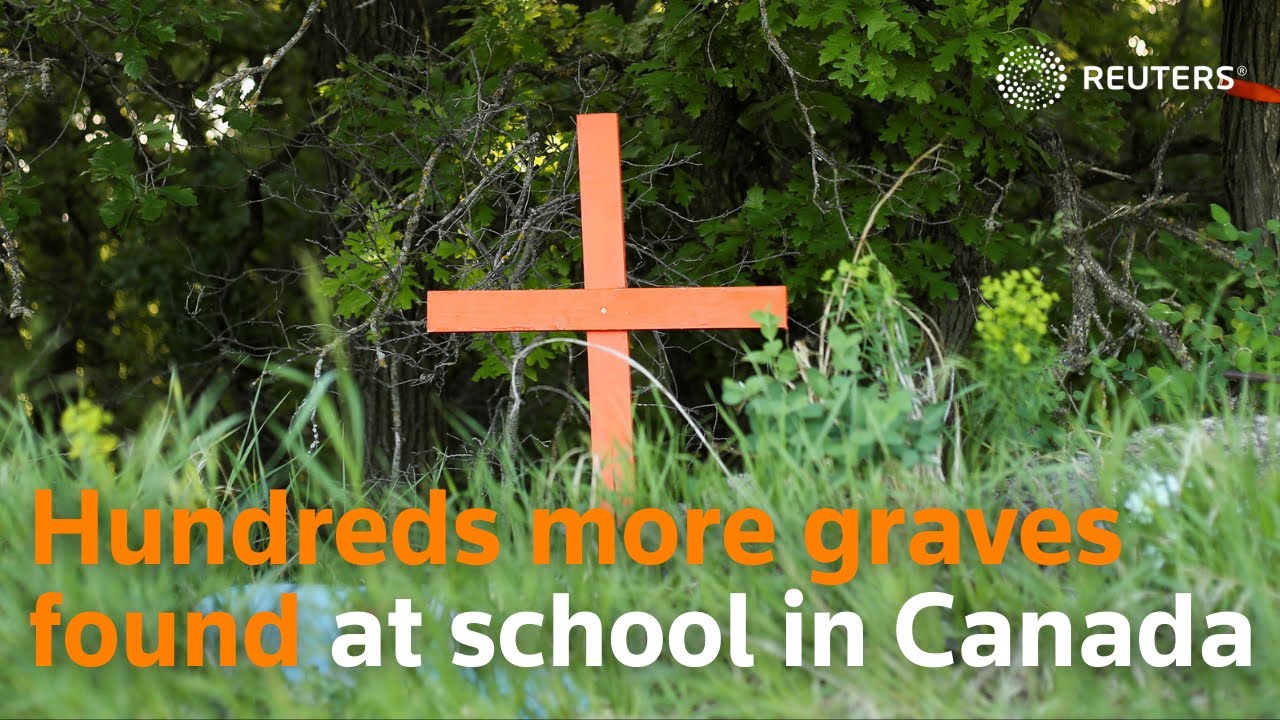
Canada Indigenous group finds at least 600 unmarked graves at former residential school
A search of the former Marieval Indian Residential School grounds in Saskatchewan, Canada, had uncovered at least 600 unmarked graves, leaders of Indigenous groups said Thursday. Ground-penetrating radar had 751 "hits," but "we want to make sure when we tell our story that we're not trying to make numbers sound bigger than they are," said Chief Cadmus Delorme of the Cowessess First Nation. "I like to say over 600, just to be assured." In May, 215 bodies were discovered at the Kamloops Indian Residential School in British Columbia.
The Marieval and Kamloops boarding schools were among more than 130 funded by the Canadian government to forcibly assimilate Indigenous children. About 70 percent of the schools, including Marieval, were operated by Roman Catholic missionary congregations, and the Canadian government has acknowledged that physical and sexual abuse were rampant. More than 150,000 Indigenous children were taken from their families and placed in these schools between 1863 and 1998, and an estimated 6,000 of those children died in the squalid facilities.
The Marieval Indian Residential School, torn down in 1999, operated from 1899 to 1997. Chief Delorme said it's not yet clear how many of the newly discovered graves hold the remains of children, or if they are all tied to the school, but he said his nation "didn't remove these headstones," which is a crime, "and we are treating this like a crime scene at the moment." According to oral history, he said, the Catholic Church removed the headstones in the 1960s, and he's "optimistic" the church will help uncover the truth.
The Week
Escape your echo chamber. Get the facts behind the news, plus analysis from multiple perspectives.
Join more than 350,000 subscribers and keep yourself informed with a selection of The Week’s most interesting, enlightening and entertaining stories - plus daily puzzles.
Join more than 350,000 subscribers and keep yourself informed with a selection of The Week’s most interesting, enlightening and entertaining stories - plus daily puzzles.
Archbishop Don Bolen of Regina, Saskatchewan's capital, reiterated on Thursday the archdiocese's apology two years ago for the "failures and sins of church leaders in the past," and pledged "to do what we can to turn that apology into meaningful concrete acts — including assisting in accessing information that will help to provide names and information about those buried in unmarked graves."
Prime Minister Justin Trudeau tweeted that his "heart breaks for the Cowessess First Nation," adding, "We will tell the truth about these injustices." The Canadian government apologized for the forced assimilation program in 2008, after a landmark National Center for Truth and Reconciliation report found the practice amounted to cultural genocide.
U.S. Interior Secretary Deb Haaland said this week her department will search for graves and other "unspoken traumas" at U.S. Indian boarding schools.
Sign up to get Today’s Best Articles in your inbox
A free daily email with the day’s biggest news and analysis – and the best features from TheWeek.com
Peter has worked as a news and culture writer and editor at The Week since the site's launch in 2008. He covers politics, world affairs, religion and cultural currents. His journalism career began as a copy editor at a financial newswire and has included editorial positions at The New York Times Magazine, Facts on File, and Oregon State University.