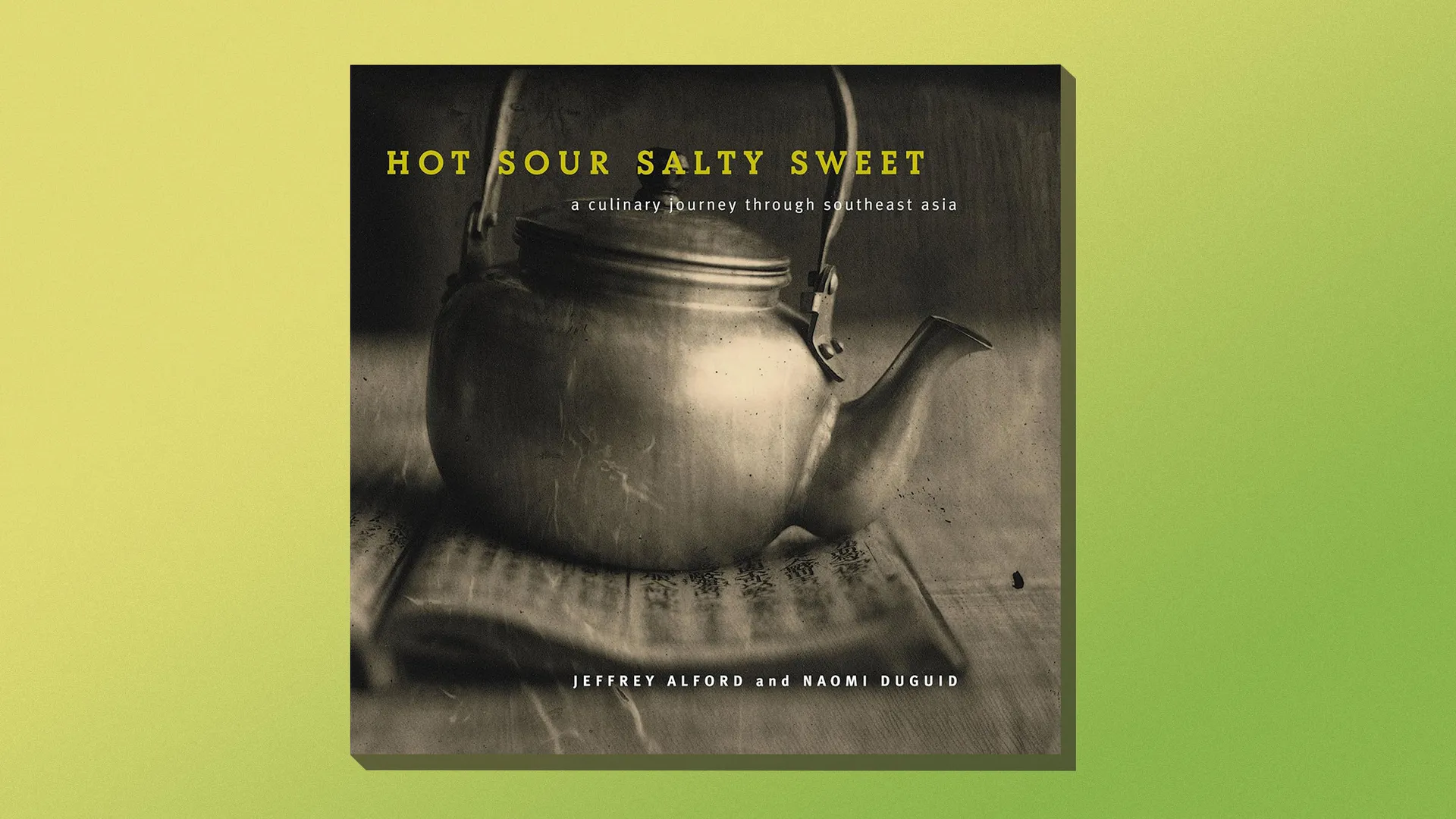
The best cookbooks feature throughlines. These days, the threads in new cookbooks star the people behind the books, functioning as mirrors that showcase a cook’s technique, their family story or the kind of food the author likes to make. “Hot Sour Salty Sweet,” published in 2000, looks out, not in.
While researching the text, its authors, Jeffrey Alford and Naomi Duguid, traveled along the Mekong River in Southeast Asia over a few decades. The pair visited villages, snapped photos and documented recipes from both sides of the monumental body of water that defines and feeds parts of Vietnam, Cambodia, Laos, Thailand, Myanmar and China. The book is epic, like the tome’s size, its 330-plus pages loaded into a format that’s far wider than it’s tall. “Hot Sour Salty Sweet” is not easy to hold in one’s hand, much like the region’s diverse grandeur.
Variations of a common theme
The cookbook’s 12 chapters wander from Sauces, Chile Pastes and Salsas to Sweets and Drinks, with moorings at Simple Soups, Salads, Rice and Rice Dishes, Noodles and Noodle Dishes, Mostly Vegetables, Fish and Seafood, Poultry, Beef, Pork, Snacks and Street Food. Each chapter is a head-spinning exercise in dissimilarity, with so many common ingredients treated wildly unalike.
The Week
Escape your echo chamber. Get the facts behind the news, plus analysis from multiple perspectives.
SUBSCRIBE & SAVE
Sign up for The Week's Free Newsletters
Join more than 350,000 subscribers and keep yourself informed with a selection of The Week’s most interesting, enlightening and entertaining stories - plus daily puzzles.
Join more than 350,000 subscribers and keep yourself informed with a selection of The Week’s most interesting, enlightening and entertaining stories - plus daily puzzles.
Latest Videos FromThe Week US
Take the seafood chapter. A recipe from Tonle Sap, Cambodia’s “great inland lake,” melds smoked fish and unripe mangoes with a dressing of vinegar, shallots, galangal and fish sauce — tart, funk, spunk, pop. In tom thit heo, from southern Vietnam, shrimp and thin slices of pork shoulder frolic in a stir-fry heady with lemongrass and black pepper. Simplest of all, salt-grilled catfish has its flesh slashed and loaded with coarse salt before a turn on a grill. Each dish and recipe howls with a common sense of place. Listen closely, and you hear the soft noise of distinguishability.
The personal as point of entry
There’s no foolhardy attempt at comprehensiveness in “Hot Sour Salty Sweet.” An essay about a border town on the edges of Laos, Thailand and Myanmar; a return to the village Sangkhom in northeastern Thailand to visit pals; a profile of a Laotian rice noodle maker working from her home on stilts near the Chinese border — Alford and Duguid covered thousands of miles of territory, but their experiences there are theirs alone.
Decades before the notion of the “exotic” was proscribed, rightfully, and white journalists began learning how to remove themselves from the center of every story, Alford and Duguid, who are both white, liaised with more than 15 Southeast Asian ethnic groups for “Hot Sour Salty Sweet.” They did so with curiosity, capturing their subjects with careful research, stirring photos and clear-eyed writing. This is documentation as honoring.