Sign up to get Today’s Best Articles in your inbox
Join 350,000+ subscribers and keep yourself informed with a selection of
The Week’s most interesting, enlightening and entertaining stories - plus daily puzzles.
You are now subscribed
Your newsletter sign-up was successful
Want to add more newsletters?
An account already exists for this email address, please log in.
Tired of the crowds but still want a cultural eye-opener? Head to these 7 lesser-known international destinations.
It pays travel dividends to look beyond the big names
Avoiding crowds while still experiencing the best of a culturally dynamic city is a win-win. At these seven spots, you will have more elbow room to see the sights and more chances to connect with locals and dive into their way of life.
Bisbee, Arizona
Artists have been drawn to Bisbee since the 1970s
(Image credit: DenisTangneyJr / Getty Images)
This former mining town changed its fortune, reinventing itself to become an artists’ haven. During the early 1900s, when copper, gold, zinc and silver production was booming, Bisbee prospered. By the 1970s, the mines dried up and shuttered.
Artists soon started to arrive and turned Bisbee into a creative community. Its downtown looks “straight out of a storybook,” and is a “wonderfully walkable” area, said Travel and Leisure. There are “alfresco art galleries” throughout Bisbee, and the sounds of “near-constant live music” fill the air.
The Week
Escape your echo chamber. Get the facts behind the news, plus analysis from multiple perspectives.
Join more than 350,000 subscribers and keep yourself informed with a selection of The Week’s most interesting, enlightening and entertaining stories - plus daily puzzles.
Join more than 350,000 subscribers and keep yourself informed with a selection of The Week’s most interesting, enlightening and entertaining stories - plus daily puzzles.
In the mountains of northern Peru sits Chachapoyas, a city named in honor of the civilization that lived here from 800 to 1470. The Chachapoyas, or “Warriors of the Clouds,” built several important sites in the area, including Kuélap.
This ancient fortress, built around 500 AD, comprises “towering defensive walls, over 420 circular dwellings and panoramic views,” said Time Out. A cable car sweeps visitors to Kuélap in about 20 minutes. After exploring the ruins, head back to Chachapoyas for a relaxing stroll through the historic city center, dating back to the 1500s.
Hue, Vietnam
The Hue Citadel was used by the Nguyen Dynasty from the early 1800s to 1945
(Image credit: Anadolu / Getty Images)
Ornate palaces, pavilions, statues and royal tombs are waiting to be explored in Hue. This is where Vietnam’s last imperial dynasty lived in “extravagant regal splendor” and built a “citadel, gilded in bronze, enamel and lacquer,” said The Times of London.
Visitors can also receive the royal treatment once it’s dinner time. Restaurants in Hue serve the “1,000-plus dishes of the imperial household,” like banh beo (steamed rice cakes), com hen (clam rice), bun bo Hue (spicy beef noodle soup) and nem lui (lemongrass pork skewers).
Sign up to get Today’s Best Articles in your inbox
A free daily email with the day’s biggest news and analysis – and the best features from TheWeek.com
Matera, Italy
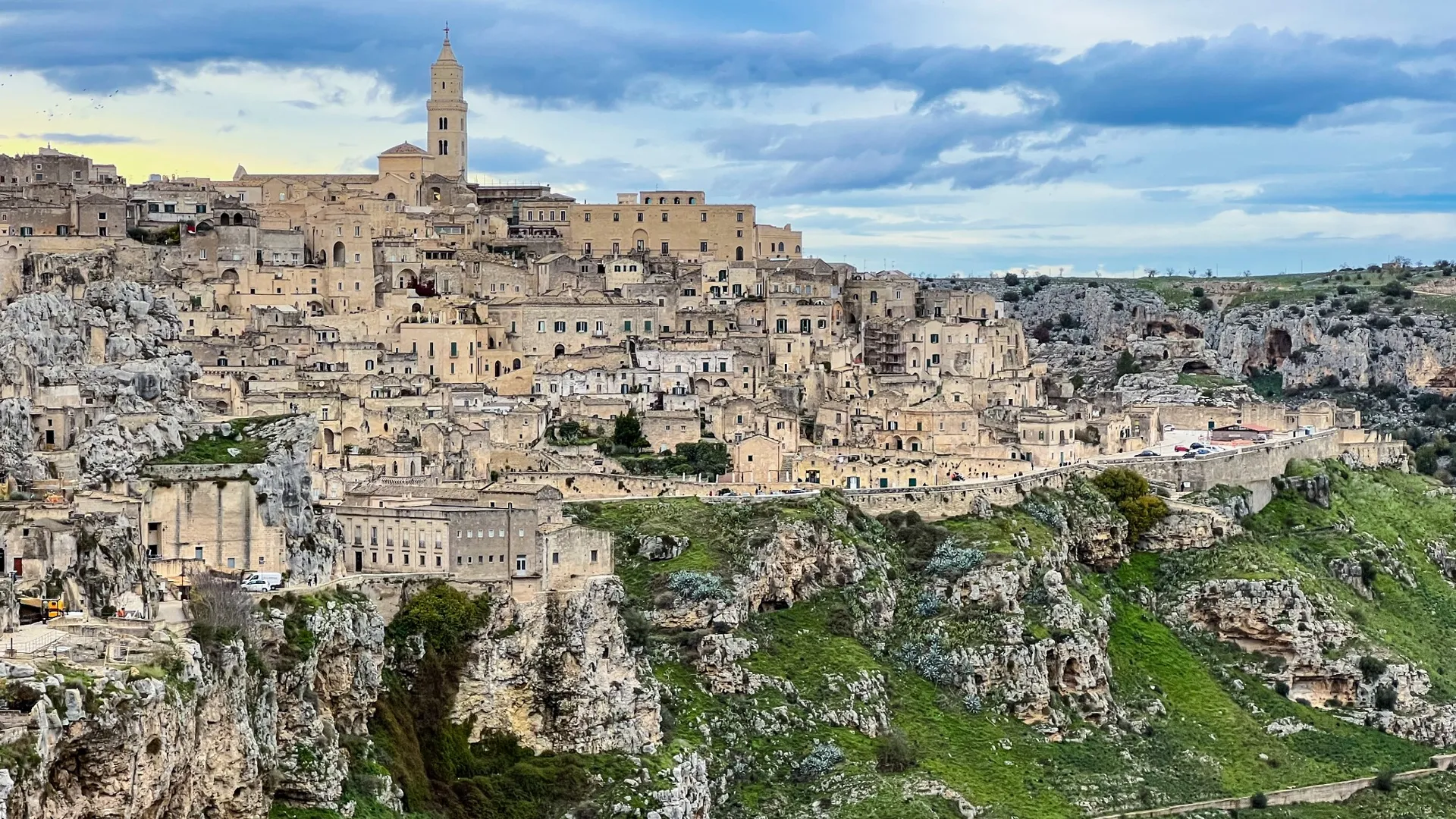
Sassi di Matera is a UNESCO World Heritage Site
(Image credit: Istvan Kadar Photography / Getty Images)
Known as the City of Stone, Matera offers visitors a glimpse of what life was like in this region 10,000 years ago. Sassi di Matera, a network of cave dwellings carved into limestone, is its centerpiece.
The extraordinary settlement is a UNESCO World Heritage Site and features more than 100 rupestrian churches. The Crypt of Original Sin underwent “painstaking” restoration work and is “sure to take your breath away,” said National Geographic Traveler. Considered the “Sistine Chapel of cave art,” its frescoes are the “best in the region.” Artifacts dating to the Paleolithic era fill the Domenico Ridola Archeological Museum, while the Museum-Workshop of the Peasant Culture reconstructs a cave house, public wine cellar, and blacksmith, cobbler and cabinetmaker studios.
For a “relaxed slice of authentic Moroccan life,” head to Meknes, said Lonely Planet. It may be calmer here, but there’s plenty to do, starting with a trek to the “buzzy” Place El Hedim to see the Bab Mansour gate and wander the Dar Jamai Museum housed in a 19th century palace.
The Mausoleum of Moulay Ismail, Morocco’s longest-ruling sultan, is a “dazzling” display of mosaic tiles and “ornate” cedarwood, and though non-Muslims can’t enter the tomb, they can “peer through the doorway” and observe two clocks given to the sultan by King Louis XIV. Inside the medina are several souks dedicated to specific wares, like leather goods, carpets and spices.
Polonnaruwa, Sri Lanka
Polonnaruwa’s ruins provide a fascinating look at the past
(Image credit: NurPhoto / Getty Images)
More than 800 years ago, when Polonnaruwa was Sri Lanka’s capital, it was a “thriving” religious and commercial center, said Lonely Planet. After a series of invasions and natural disasters, the capital was abandoned, but the “glories of that age” remain.
Polonnaruwa’s archeological “treasures” include hundreds of temples, statues, tombs and stupas in a “compact core.” The sacred Quadrangle, home to many important Buddhist structures, is alone “worth the trip” to Polonnaruwa.
Wroclaw, Poland
Wroclaw’s Market Square is surrounded by colorful buildings
(Image credit: Juana Mari Moya / Getty Images)
The historic city of Wroclaw, spread across 12 islands connected by over 100 bridges, shows off its “cultural credentials” through beautiful design and ample opportunities to attend live performances, said The Times of London. “Gorgeous” Market Square offers examples of colorful gothic, baroque, art nouveau and contemporary architecture, and sharp-eyed visitors will have fun spotting hundreds of small bronze gnomes scattered around the city. Music lovers will appreciate spending an evening at the National Forum of Music, with its renowned acoustics, or attending free, open-air JazzOVO concerts in the courtyard of OVO Wroclaw during summer Fridays.
Catherine Garcia has worked as a senior writer at The Week since 2014. Her writing and reporting have appeared in Entertainment Weekly, The New York Times, Wirecutter, NBC News and "The Book of Jezebel," among others. She's a graduate of the University of Redlands and the Columbia University Graduate School of Journalism.



 talking pointsAfter Pike disaster, is it time to rethink death penalty?
 QUOTE OF THE DAY‘What it actually means in the American context is you want to replace American workers with foreign workers and you want boys to play in girls’ sports.’
 the explainerJustice Dept. launches largest-ever effort to strip citizenship