Sign up to get Today’s Best Articles in your inbox
Join 350,000+ subscribers and keep yourself informed with a selection of
The Week’s most interesting, enlightening and entertaining stories - plus daily puzzles.
You are now subscribed
Your newsletter sign-up was successful
Want to add more newsletters?
An account already exists for this email address, please log in.
How 'Over the Garden Wall' satisfies people's desire for comfort and nostalgia right now
The cult series that many people fall into every autumn
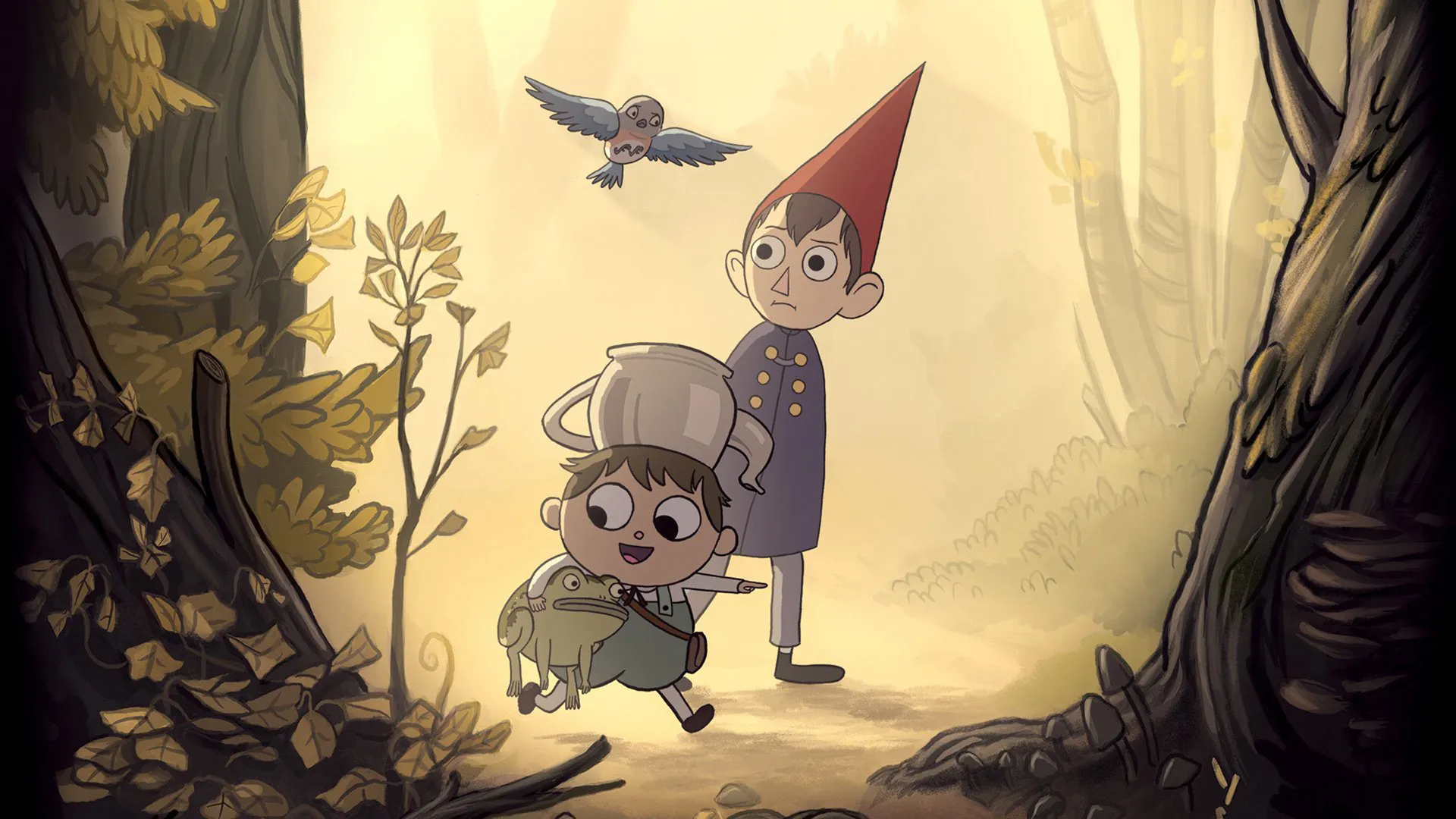
Over the last 10 years, the Cartoon Network's miniseries "Over the Garden Wall" has become something of a fall tradition — or necessity. With beautiful 2D animation, celebrity voices, strange songs accompanied by folk, blues and jazz music and a homey-but-creepy autumnal vibe, the show is a staple binge-watch in many households. When the creator, Patrick McHale, posted on X that his show was set to leave Hulu at the end of September, there was a social media uproar; this resulted in the series staying put on the streaming service indefinitely.
"Over the Garden Wall" turned 10 on November 3, and Cartoon Network released a three-minute stop-motion short to celebrate the occasion. The highly-anticipated anniversary special begs the question: Why do thousands of people so dutifully watch and rewatch the original program every fall?
Admiration of autumn and spooks
Widely acclaimed upon release, "Over the Garden Wall" is now an "annual favorite" for those who "watch it each and every October," said Vox. McHale's series has become "true seasonal programming," said Polygon. This has much to do with its autumn vibes — and the degree to which U.S. viewers apparently love this time of year. In a 2023 survey, 45% of Americans named fall as their favorite season, nearly double the amount that chose the runner-up (summer).
The Week
Escape your echo chamber. Get the facts behind the news, plus analysis from multiple perspectives.
Join more than 350,000 subscribers and keep yourself informed with a selection of The Week’s most interesting, enlightening and entertaining stories - plus daily puzzles.
Join more than 350,000 subscribers and keep yourself informed with a selection of The Week’s most interesting, enlightening and entertaining stories - plus daily puzzles.
The series follows young half-brothers Wirt and Greg, who find themselves lost in a surreal forest called The Unknown. "Becoming lost in the woods is a primeval story in almost all cultures but particularly in the United States, where the earliest European colonizers who landed on these shores saw enormous, deep, dark woods and were intimidated by their shadows," said Vox. And yet the show's lucky viewers are safe inside, probably snuggled in a blanket, watching other people on an adventure. One recent survey found that 87% of Americans have a comfort show they rewatch.
"New England's fall foliage was cited as a major influence on the look and environment of the show," said Vulture. "Episodes begin with lingering shots of a burnt-umber leaf trembling on a branch, or plump orange and red trees along a riverbank." The evocative animation style and atmosphere has been compared to Japanese master Hayao Miyazaki, who makes films that dazzle both children and adults: "uncanny mild horror," said Vulture, about "Over the Garden Wall." The show feels cozy despite its haunted happenings, akin to fairy tales children delight in for all their darkness.
The pull of nostalgia
We live in oft-disturbing — some would say "unprecedented" — times. It is logical then that viewers would be drawn to childlike or nostalgic programming that is reminiscent of simpler times. (This may also explain the prevailing popularity of '90s silly-scary flicks like "Hocus Pocus," "Halloweentown" and "The Addams Family.") "Over the Garden Wall" is eerie enough to fit the Halloween spirit, but the series' threats are eventually neutralized and most of The Unknown's creatures are misunderstood.
The miniseries' animation also pays homage to influences that viewers will recognize. McHale makes great "use of Americana that has slipped out of common usage," said Vox. "In particular, many of the series' images are taken from vintage postcards from the late 19th and early 20th centuries, which were exchanged by friends and family on occasions such as Halloween and Christmas. Thus, the series looks like a dream you maybe had once because it captures not images you've seen a million times before, but the much older images that inspired the more familiar ones." There are "numerous nods to stories you've maybe heard before," with influences including Brothers Grimm fairy tales, early Walt Disney, German Expressionism, Max Fleischer ("Popeye" and "Betty Boop"), Washington Irving and Nathaniel Hawthorne.
Sign up to get Today’s Best Articles in your inbox
A free daily email with the day’s biggest news and analysis – and the best features from TheWeek.com
It is no surprise that people appreciate nostalgic-feeling film and TV. "Familiar fare requires less mental energy to process," said The Atlantic. Some studies have shown nostalgia to be a helpful coping mechanism. But nostalgia also "promotes progress, helps people resolve their dissatisfaction and encourages feelings of hope," said Business Insider. It is "more about envisioning the future than longing for the past." Viewers who return to this series to relish its folksy Americana or autumn comforts are perhaps finding their own way out of the stress-filled woods of election week.
Anya Jaremko-Greenwold has worked as a story editor at The Week since 2024. She previously worked at FLOOD Magazine, Woman's World, First for Women, DGO Magazine and BOMB Magazine. Anya's culture writing has appeared in The Atlantic, Jezebel, Vice and the Los Angeles Review of Books, among others.