The Week The Week
flag of US
US
flag of UK
UK
https://cdn.mos.cms.futurecdn.net/flexiimages/jacafc5zvs1692883516.jpg

SUBSCRIBE & SAVE

Less than $3 per week

Sign in
  • View Profile
  • Sign out
  • The Explainer
  • The Week Recommends
  • Newsletters
  • Cartoons
  • From the Magazine
  • The Week Junior
  • Student Offers
  • More
    • Politics
    • World News
    • Business
    • Health
    • Science
    • Food & Drink
    • Travel
    • Culture
    • History
    • Personal Finance
    • Puzzles
    • Photos
    • The Blend
    • All Categories
  • Newsletter sign up Newsletter
  • The Week Evening Review
    Converging wars, a West Bank archaeology fight, and ‘friendly fraud’

     
    TODAY’S BIG QUESTION

    Could the Iran and Ukraine wars converge?

    Russia’s war against Ukraine would seem to be an entirely separate conflict from the hostilities between the U.S. and Iran. But Ukraine last month attacked an Iranian cargo ship in the Caspian Sea, raising fears the two regional conflicts could merge and spiral into something bigger and more destabilizing to the world.

    What did the commentators say?
    The Caspian Sea attack “underscored the links between the wars,” said The New York Times. Russia has “launched swarms” of Iran-made drones at Ukraine, the outgrowth of a decades-long “close military relationship” between Moscow and Iran. (Ukraine said the Iranian ship was carrying a new supply of drones. Iran denied the accusation.) Ukraine, meanwhile, has “brought its hard-earned expertise” in drone warfare to the task of defending Gulf states from Iranian attacks after the U.S. launched its war.

    The Ukraine-Iran conflicts are “beginning to overlap,” Gideon Rachman said at the Financial Times. The wars “now span two continents” in Europe and Asia and are “influencing conflicts in Africa.” Ukraine has “ample reasons” to want to hit Iranian shipments of drones that “killed a great many Ukrainians,” but leader Volodymyr Zelenskyy may also “see an opportunity to dramatically improve relations with the Trump administration” by assisting in the U.S. war. The 20th century proved that “regional conflicts and great-power miscalculation can be a deadly combination.”

    Zelenskyy appears to seek a “merging” of the two wars into a “single strategic theater,” Trita Parsi said at Responsible Statecraft. The Ukrainian leader has spent the war urging NATO to “move beyond supplying weapons and intelligence” and take a more direct role in defending his country. The Iran war now presents Ukraine with the opportunity to offer itself as a “strategic asset capable of helping Washington turn a military debacle into a splendid victory.” It is a “dangerous gambit” and could “pave the way for a disaster.”

    What next?
    Iran and Russia may want no part of a larger war. Tehran and Moscow seek a “pragmatic partnership without entangling themselves in each other’s regional wars,” Barnard College’s Alexander Cooley said to Newsweek. Ukraine may continue to “strike ships it believes are helping Russia,” said USA Today, but would otherwise “gain little from a full-scale confrontation with Iran.” Ukraine’s top priority “remains Russia,” Chatham House’s Neil Quilliam told the outlet.


    QUOTE OF THE DAY

    ‘Our laws protect New Yorkers from illegal and predatory gambling. Kalshi chose to ignore them. Now they’re being held accountable.’

    New York Gov. Kathy Hochul (D), in a post on X, on the lawsuit the state has filed against the prediction market. It is seeking $36 billion stemming from alleged illegal gambling activity due to operating without a gambling license.


    The explainer

    Israel digs in on control of ancient West Bank sites

    The next major fight between Israel and Palestine might be fought not on the ground but below it. Israel is currently attempting to seize the land around archaeological sites throughout the West Bank. But Palestinian officials believe Israel is claiming these areas illegally, and they are revving up for a political battle.

    Why is Israel going after these sites?
    Israel is “undertaking a major drive to develop and expand archaeological sites in the occupied West Bank” because officials believe it is “incumbent upon Jewish citizens to connect to their history and heritage,” said The Forward. The two most prominent locations are Sebastia, a small village near the West Bank city of Nablus, and Jericho, another West Bank city that is home to the ancient Hasmonean Palaces.

    Sebastia in particular is serving as a “flashpoint in a fight between Israeli and Palestinian authorities over land, heritage and narrative,” said CNN. The town’s history “goes back at least 3,000 years” to when it was the capital of the ancient Kingdom of Israel. The archaeological site “lies under full Israeli civil and security control,” while the town itself is “under mixed Palestinian-Israeli jurisdiction.” Israel’s parliament has proposed a bill to create a new Israeli body in the West Bank, which would have the “power to conduct excavations, declare sites, expropriate lands and more,” said Haaretz.

    What has the Palestinian response been?
    The Israeli bill, as well as Israel’s overall push near the sites, has “drawn criticism from Palestinians and Israeli rights groups who say it is tantamount to annexation of occupied land,” said Reuters. Israel’s actions are “intended to expand control in these areas, deep inside Palestinian territories,” Hani Al-Hayek, the Palestinian Authority’s tourism minister, told the outlet.

    Palestinian officials are taking action. At their urging, UNESCO recently designated Sebastia a full “World Heritage site, hoping it will prevent Israel extending ​its control,” said Reuters. Some Israelis seem to agree that their government is being overzealous. The digs are “another way of weaponizing. That is, you attach more importance to a certain kind of heritage, and less importance to other kinds of heritage,” Rafi Greenberg, an archaeology professor in Israel, told CBS News.


    Statistic of the day

    4 million: The estimated number of people who lost their Supplemental Nutrition Assistance Program (SNAP) benefits between July 2025 and April 2026, according to new federal data. The food stamp shift coincides with the month the One Big Beautiful Bill Act, a “sweeping Republican tax and spending package,” became law, said NPR.


    IN THE SPOTLIGHT

    Customers are embracing ‘friendly fraud’ to get free stuff

    Disputing credit card charges may be the new way to stick it to corporations. More consumers are engaging in friendly fraud, in which they dispute real charges or purchases to get their money back. The trend reflects a distrust in corporations as well as overall economic instability.

    ‘Expensive, onerous process’
    Friendly fraud involves the use of charge-backs, which are “when a customer goes to their bank, as opposed to the merchant, to dispute a charge,” said NerdWallet. “When the customer requests their money back, the bank contacts the business’s payment processor.”

    Then the “bank verifies whether the charge-back request is legitimate” and reverses the charge if it is, said NerdWallet. Transaction disputes have also “traditionally been used to address certain types of crimes committed against consumers,” like if “someone steals your wallet and goes on a shopping spree, or if you put a deposit on a wedding venue that goes out of business before the big day,” said Bloomberg. The credit card issuer “claws the funds back from the offending merchant’s bank, on top of a charge-back penalty fee,” which is an “expensive, onerous process.”

    ‘Retaliate against retailers’
    What was once an accidental error or a way to stop theft is now sometimes a tool to obtain free merchandise. Friendly fraud is a “costly form of charge-back abuse in which consumers dispute legitimate credit card transactions to recover their money while keeping the purchased goods or services,” said the technology publication Tekedia. Though the phenomenon is not new, it is becoming more common. There were “158 million transaction disputes in 2025, an increase of 29% from 2021, significantly outpacing general growth in card transactions,” said Bloomberg.

    The rise of friendly fraud is directly tied to growing distrust of companies and corporations. Friendly fraud is a “way to retaliate against retailers over poor customer service, delayed deliveries, strict return policies or dissatisfaction with purchases,” said Tekedia.
    Economic circumstances also contribute to the rise of stealing and fraud. 

    While engaging in friendly fraud may sound intriguing, it is “unethical and, in some jurisdictions, may constitute fraud.” Plus, “repeated abuse can result in account closures, damaged relationships with financial institutions and even legal consequences.”


    Good day 🏝️

    … for indigenous language. Nauru, the island country in the South Pacific, has changed its name to the Republic of Naoero to better match its “spelling and pronunciation in the national language,” said The Guardian. The change seeks to “more faithfully honor our nation’s heritage, our language and our identity,” said President David Adeang.


    Bad day 🎤

    … for Arianators. Ariana Grande will take a “step back” from public life when her world tour ends next month due to “endless, ongoing” scrutiny, said a representative in a statement. Speculation had been rife following last week’s release of her eighth studio album, “Petal,” which features lyrics about widespread criticism of her appearance and weight.


    Picture of the day

    Ruff waters

    Rusty competes during the World Dog Surfing Championships in Pacifica, California. The event helps local charities raise money by sponsoring a contestant or a team, with a portion of the proceeds going to dog, environmental and surfing nonprofit organizations.
    Godofredo A. Vásquez / AFP / Getty Images


    Puzzles

    Daily sudoku

    Challenge yourself with The Week’s daily sudoku, part of our puzzles section, which also includes guess the number

    Play here


    The Week recommends

    Dig in at these delectable hotel breakfasts

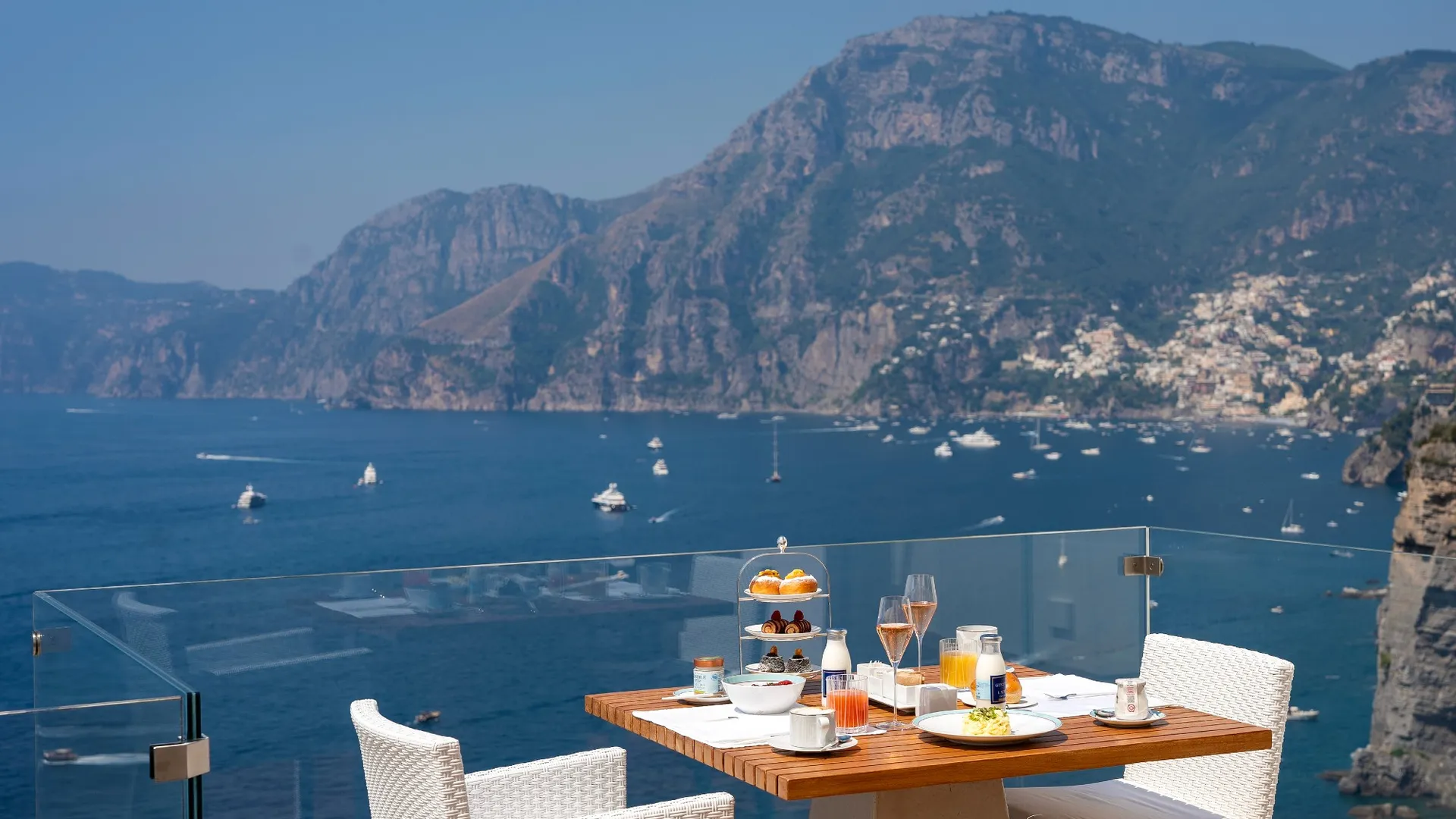
    While on vacation, eating a comforting hotel breakfast helps start your day off right. Plates of house-made pastries, lavish egg dishes and pancake stacks and a tall glass of freshly-squeezed juice will fuel you for hours of sightseeing, shopping or hanging out at the pool. A breakfast worth getting out of bed awaits at these properties.

    Casa Angelina, Praiano, Italy
    When it comes to breakfast with a view, Casa Angelina (pictured above) takes it to the “next level,” said Forbes Travel Guide. This stunning Amalfi Coast boutique hotel overlooks the Tyrrhenian Sea, and guests can enjoy their complimentary meal on a serene terrace.

    The Federal Inn, Maumee, Ohio
    Breakfasts at The Federal Inn are as eclectic as this charming B&B’s decor. No two meals are the same; each morning’s plate depends on what is fresh and at its seasonal peak. Guests who check in on Friday and Saturday rave about the flaky pastries baked every weekend. After breakfast, pick up a book from the inn’s library, or choose a record from its curated collection to spin.

    JW Marriott Mumbai Juhu, Mumbai, India
    If you want it, they’ve got it at the JW Marriott Mumbai Juhu’s expansive breakfast buffet. While it specializes in the flavors of India, there is also a substantial Western section, and it’s not unusual to see plates piled high with stuffed parathas, idli, dosa, sausage, bacon and eggs Benedict. Fruit, pastries, meat and cheese platters, cereals and a fresh juice bar complement the hot offerings.

    Read more


    Poll watch

    The majority of Americans (80%) are more likely to support a candidate who champions maternal health reform regardless of party affiliation, according to a national survey of 1,001 adults by Healthy Moms, Healthy Babies America. In a “deeply polarized era,” particularly around women’s health issues, maternal health is a “rare area of bipartisan agreement,” said Axios. 


    INSTANT OPINION

    Today’s best commentary

    ‘Kids lose more than just books when school is on a screen’
    Sarah Schneider Kavanagh and Katie A. Danielson at The Washington Post
    Parents “don’t realize how different many aspects of elementary school have become,” say Sarah Schneider Kavanagh and Katie A. Danielson. Screens “organize the school day,” and “these technological changes in elementary classrooms might look like progress.” But “attention span in particular is weakened when schools prioritize constant stimulation over intellectual endurance.” As “technology becomes more powerful, distinctly human capacities become more valuable, not less.” Children “need a place designed for other aims, such as conversation instead of consumption.”

    ‘Clinical trials aren’t the only way to know if flu shots work’
    Christopher M. Worsham and Anupam Jena at Time
    It is “correct to note that observational studies of annual flu shots suffer from various statistical biases,” say Christopher M. Worsham and Anupam Jena. Randomized trials have “earned their reputation as the ‘gold standard’ because they address a real statistical problem,” and “true randomized controlled trials remain the most rigorous form of evidence.” But this “can be drawn from the data we already have.” The “efficacy of flu shots in children is just one of thousands of questions we could answer this way.”

    ‘The New York-ification of media keeps growing, warts and all’
    Justin Fox at Bloomberg
    The “nation’s media capital is in many ways far less central to the national conversation than it used to be,” says Justin Fox. But in the “production of certain kinds of media — journalism in particular — New York is more dominant than ever.” The “New York-ification of media has for the most part continued to grow.” The “journalists who remain are increasingly concentrated in a city that, while wonderful, is utterly different from most of the rest of the country.”


    WORD OF THE DAY

    gazundering

    A real estate practice in which a homebuyer unexpectedly lowers their agreed-upon offer on a house at the last minute before contracts can be exchanged. The word may be historic, but the housing market phenomenon is “now rampant,” said The Standard. In a buyers’ market, with “very little moving,” the buyer “calls the shots.”


    Evening Review was written and edited by Theara Coleman, Catherine Garcia, Scott Hocker, Anya Jaremko-Greenwold, Justin Klawans, Joel Mathis, Summer Meza and Devika Rao, with illustration by Stephen Kelly.

    Image credits, from top:  Illustration by Stephen P. Kelly / Shutterstock / Getty Images; Nasser Ishtayeh / SOPA Images / LightRocket / Getty Images; Nuthawut Somsuk / Getty Images; Casa Angelina
     

    Recent editions

    • Morning Report

      Blanche kills ‘anti-weaponization fund’

    • Sunday Shortlist

      The sexual anxiety of Gen Z

    • Saturday Wrap

      Are Republicans doomed?

    VIEW ALL
    TheWeek
    • About Us
    • Contact Future's experts
    • Terms and Conditions
    • Privacy Policy
    • Cookie Policy
    • Advertise With Us
    • FAQ
    Add as a preferred source on Google Add as a preferred source on Google

    The Week is part of Future US Inc, an international media group and leading digital publisher. Visit our corporate site.

    © Future US, Inc. Full 7th Floor, 130 West 42nd Street, New York, NY 10036.