Sign up to get Today’s Best Articles in your inbox
Join 350,000+ subscribers and keep yourself informed with a selection of
The Week’s most interesting, enlightening and entertaining stories - plus daily puzzles.
You are now subscribed
Your newsletter sign-up was successful
Want to add more newsletters?
An account already exists for this email address, please log in.
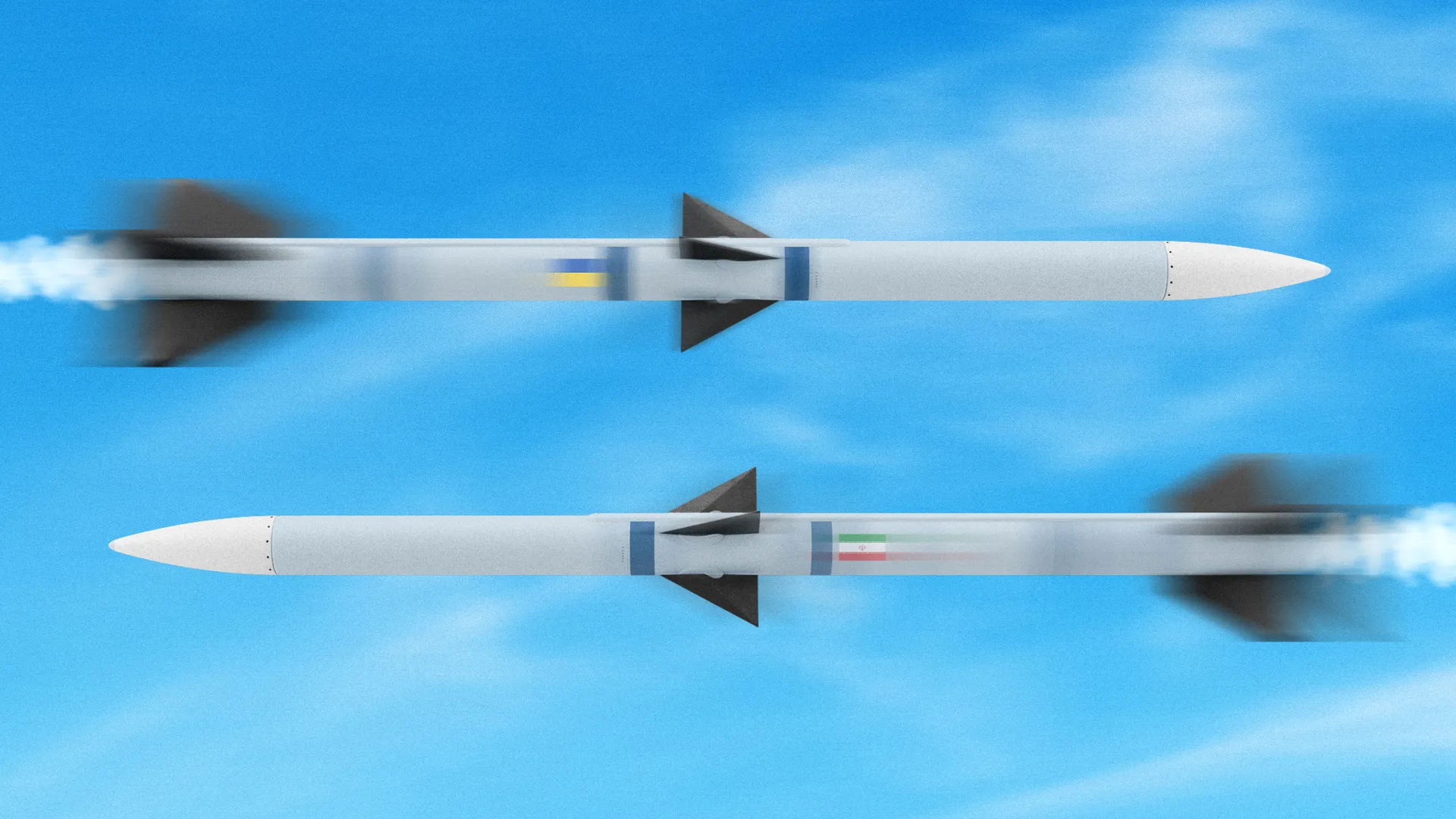
Russia’s war against Ukraine would seem to be an entirely separate conflict from the hostilities between the U.S. and Iran. But Ukraine last month attacked an Iranian cargo ship in the Caspian Sea, raising fears the two regional conflicts could merge and spiral into something bigger and more destabilizing to the world.
What did the commentators say?
The Caspian Sea attack “underscored the links between the wars,” said The New York Times. Russia has “launched swarms” of Iran-made drones at Ukraine, the outgrowth of a decades-long “close military relationship” between Moscow and Iran. (Ukraine said the Iranian ship was carrying a new supply of drones. Iran denied the accusation.) Ukraine, meanwhile, has “brought its hard-earned expertise” in drone warfare to the task of defending Gulf states from Iranian attacks after the U.S. launched its war.
The Ukraine-Iran conflicts are “beginning to overlap,” Gideon Rachman said at the Financial Times. The wars “now span two continents” in Europe and Asia and are “influencing conflicts in Africa.” Ukraine has “ample reasons” to want to hit Iranian shipments of drones that “killed a great many Ukrainians,” but leader Volodymyr Zelenskyy may also “see an opportunity to dramatically improve relations with the Trump administration” by assisting in the U.S. war. This is a fraught moment. The 20th century proved that “regional conflicts and great-power miscalculation can be a deadly combination.”
The Week
Escape your echo chamber. Get the facts behind the news, plus analysis from multiple perspectives.
Join more than 350,000 subscribers and keep yourself informed with a selection of The Week’s most interesting, enlightening and entertaining stories - plus daily puzzles.
Join more than 350,000 subscribers and keep yourself informed with a selection of The Week’s most interesting, enlightening and entertaining stories - plus daily puzzles.
Zelenskyy appears to seek a “merging” of the two wars into a “single strategic theater,” Trita Parsi said at Responsible Statecraft. The Ukrainian leader has spent the war urging NATO to “move beyond supplying weapons and intelligence” and take a more direct role in defending his country. The Iran war now presents Ukraine with the opportunity to offer itself as a “strategic asset capable of helping Washington turn a military debacle into a splendid victory.” It is a “dangerous gambit” and it could “pave the way for a disaster.”
The Ukraine strike comes as the war in the Middle East appears to be expanding into a regional conflict that includes Saudi Arabia, Jordan, Yemen and Iraq. It is a “glimpse of just how apocalyptic” the war could become, Spencer Ackerman said at Forever Wars. There is increasingly a risk of the conflict “spiraling” beyond its current limits. “There is no mechanism at present to stop its growth.”
What next?
Iran and Russia may want no part of a larger war. Tehran and Moscow seek a “pragmatic partnership without entangling themselves in each other's regional wars,” Barnard College’s Alexander Cooley said to Newsweek. Ukraine could continue to “strike ships it believes are helping Russia,” said USA Today, but would otherwise “gain little from a full-scale confrontation with Iran.” Ukraine’s top priority “remains Russia,” Chatham House’s Neil Quilliam told the outlet.
Sign up to get Today’s Best Articles in your inbox
A free daily email with the day’s biggest news and analysis – and the best features from TheWeek.com
Joel Mathis is a writer with 30 years of newspaper and online journalism experience. His work also regularly appears in National Geographic and The Kansas City Star. His awards include best online commentary at the Online News Association and (twice) at the City and Regional Magazine Association.



 talking pointsA leadership power vacuum may await Republicans
 QUOTE OF THE DAY‘What kind of culture looks at sexual violence and sees an opportunity for profit? This is rape culture. And it should disturb every single one of us.’
 today’s big questionHow long can US consumers continue their spending spree?