Sign up to get Today’s Best Articles in your inbox
Join 350,000+ subscribers and keep yourself informed with a selection of
The Week’s most interesting, enlightening and entertaining stories - plus daily puzzles.
You are now subscribed
Your newsletter sign-up was successful
Want to add more newsletters?
An account already exists for this email address, please log in.
Ed Miliband resigns after Labour's election 'bloodbath'
Harriet Harman to become caretaker leader of Labour party after 'disappointing and difficult' night
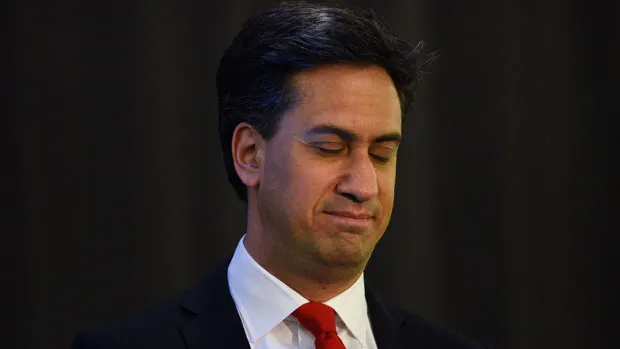
Ed Miliband has resigned as Labour leader after apologising for a "very disappointing and difficult" election night.
Results continue to come through, but it is already clear that Labour suffered a crushing defeat in Scotland and has lost a string of seats to the Tories south of the border.
The Conservatives are on course to win a majority, with Labour winning far fewer seats than predicted in pre-election polls, and performing even worse than they did under Gordon Brown in 2010.
The Week
Escape your echo chamber. Get the facts behind the news, plus analysis from multiple perspectives.
Join more than 350,000 subscribers and keep yourself informed with a selection of The Week’s most interesting, enlightening and entertaining stories - plus daily puzzles.
Join more than 350,000 subscribers and keep yourself informed with a selection of The Week’s most interesting, enlightening and entertaining stories - plus daily puzzles.
Speaking at lunchtime, Miliband told supporters: "I'm truly sorry I did not succeed. I've done my best for five years. We've come back before and this party will come back again."
He said he took "absolute and total responsibility for the result", and announced that Labour deputy Harriet Harman will take over as caretaker leader.
Miliband's resignation comes after Liberal Democrat leader Nick Clegg and Ukip leader Nigel Farage both stepped down. Describing it as a "dark hour" for the party, Clegg said he always expected the results to be difficult but said it was "immeasurably more crushing and unkind" than he feared.
The highest profile Labour casualty was shadow chancellor Ed Balls, who sensationally lost his Morley and Outwood seat to Conservative candidate Andrea Jenkins by 422 votes.
Sign up to get Today’s Best Articles in your inbox
A free daily email with the day’s biggest news and analysis – and the best features from TheWeek.com
Shadow foreign secretary Douglas Alexander also lost his Paisley and Renfrewshire South seat to 20-year-old SNP candidate Mhairi Black, while Scottish Labour Party leader Jim Murphy was ousted from his East Renfrewshire seat, ending his 18-year career as an MP.
Miliband retained his own seat in Doncaster North, but said he was "deeply sorry" for what happened in Scotland.
"We have not made the gains we wanted in England and Wales, and in Scotland we have seen a surge of nationalism overwhelm our party," he said.
The Daily Express, which predicted that Miliband would be gone by lunchtime, described Labour's defeat as a "bloodbath".
Labour MP John Mann tweeted earlier in the day: "Can't say that Labour leadership weren't warned repeatedly – those who even bothered to meet that is. Never hurts to listen."
Mann had said it would be "inconceivable" for Miliband to continue to the next election.
Kevin Maguire, associate editor of the Daily Mirror, which backed Labour in the 2015 election, said Miliband fought a "spiky six-week campaign and earned plaudits" but voters remembered four-and-a-half years of "flickering rather than shining". The Labour leader embodied what voters view as Labour's lack of economic credibility, he said.
The Mirror thinks the leadership battle will be between the old generation – Yvette Cooper, Andy Burnham – and the new – Chuka Umuna, Rachel Reeves, Tristram Hunt and Dan Jarvis.
The New Statesman says Stella Creasy and Liz Kendall might also be in the running.