Google didn't believe Bard AI was 'really ready' for a product yet

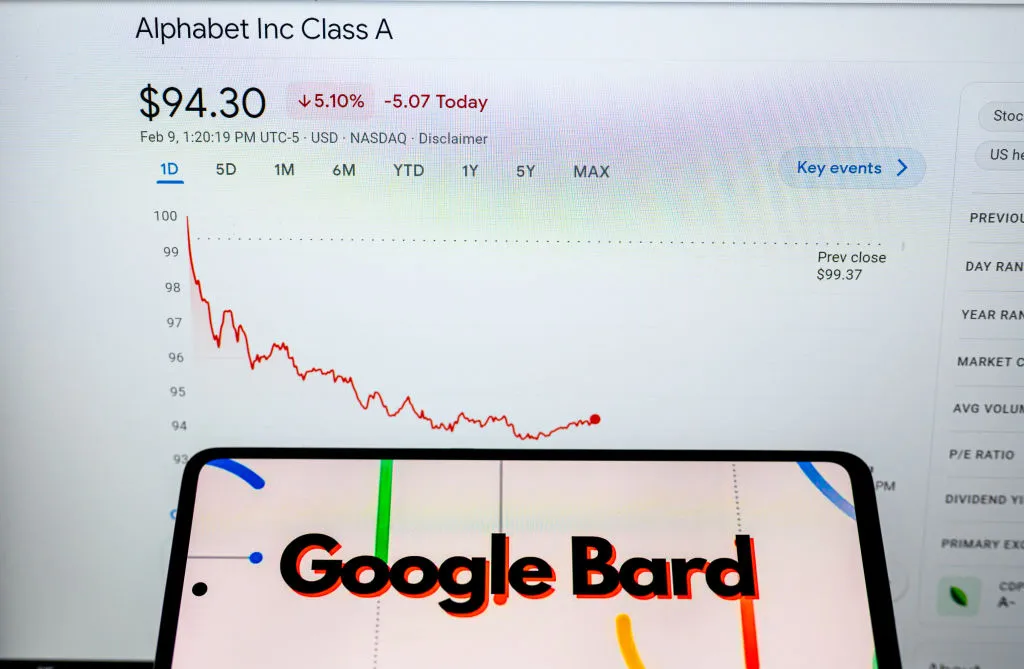
Google's preview of its experimental AI chatbot Bard hit a snag after a factual error in a promo ad led to a drop in its parent company's market share. In a recent interview with CNBC, parent company Alphabet's Chair John Hennessy admitted that the technology is not product-ready yet.
Last week, Google launched Bard in response to the viral popularity of rival chatbot ChatGPT from start-up company OpenAI. The Paris reveal event happened a day before Microsoft announced it was integrating ChatGPT into Bing's search engine. At the reveal, Bard showed an incorrect response to a question about NASA's James Webb Space Telescope, leading to a 9 percent drop in Alphabet's stock. Google employees also chimed in, criticizing CEO Sundar Pichai while referring to the presentation as "rushed" and "botched."
The Week
Escape your echo chamber. Get the facts behind the news, plus analysis from multiple perspectives.

Sign up for The Week's Free Newsletters
Join more than 350,000 subscribers and keep yourself informed with a selection of The Week’s most interesting, enlightening and entertaining stories - plus daily puzzles.
Join more than 350,000 subscribers and keep yourself informed with a selection of The Week’s most interesting, enlightening and entertaining stories - plus daily puzzles.

-
-
 talking pointsA leadership power vacuum may await Republicans
 -
 QUOTE OF THE DAY‘What kind of culture looks at sexual violence and sees an opportunity for profit? This is rape culture. And it should disturb every single one of us.’
 -
 today’s big questionHow long can US consumers continue their spending spree?
-
-
-
talking pointsA leadership power vacuum may await Republicans
-
QUOTE OF THE DAY‘What kind of culture looks at sexual violence and sees an opportunity for profit? This is rape culture. And it should disturb every single one of us.’
-
today’s big questionHow long can US consumers continue their spending spree?
-