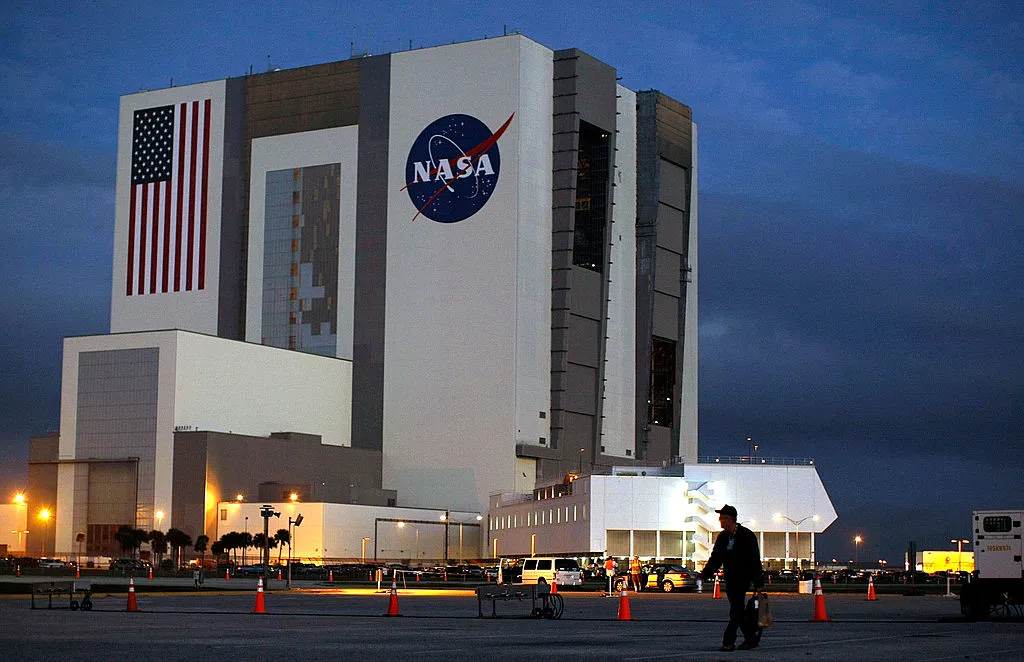
Is the truth out there? A new NASA team is on the case.
NASA says it has commissioned an independent study examining unidentified aerial phenomena, otherwise known as UFOs. The team will aim to identify how NASA can use data to "move the scientific understanding" of UAPs forward, the agency said.
"NASA believes that the tools of scientific discovery are powerful and apply here also," said NASA's Thomas Zurbuchen. "We have access to a broad range of observations of Earth from space — and that is the lifeblood of scientific inquiry. We have the tools and team who can help us improve our understanding of the unknown."
The Week
Escape your echo chamber. Get the facts behind the news, plus analysis from multiple perspectives.
SUBSCRIBE & SAVE
Sign up for The Week's Free Newsletters
Join more than 350,000 subscribers and keep yourself informed with a selection of The Week’s most interesting, enlightening and entertaining stories - plus daily puzzles.
Join more than 350,000 subscribers and keep yourself informed with a selection of The Week’s most interesting, enlightening and entertaining stories - plus daily puzzles.
Latest Videos FromThe Week US
The announcement comes weeks after the House of Representatives conducted its first hearing on UFOs since the 1960s. Rep André Carson (D-Ind.), chair of the House Subcommittee on Counterterrorism, said Unidentified Aerial Phenomena "are a potential national security threat" and "need to be treated that way." In its Thursday announcement, though, NASA emphasized that "there is no evidence UAPs are extra-terrestrial in origin."
An Unidentified Aerial Phenomena Task Force was previously established at the Department of Defense, but this new NASA study team will be separate from that.
Astrophysicist David Spergel, who will lead the team, said "we will be identifying what data — from civilians, government, non-profits, companies –— exists, what else we should try to collect, and how to best analyze it." The study will last around nine months beginning this fall, after which a public report will be issued.