Sign up to get Today’s Best Articles in your inbox
Join 350,000+ subscribers and keep yourself informed with a selection of
The Week’s most interesting, enlightening and entertaining stories - plus daily puzzles.
You are now subscribed
Your newsletter sign-up was successful
Want to add more newsletters?
An account already exists for this email address, please log in.
How has the GOP’s position on LGBTQ+ rights shifted in the Trump era?
Many Republican-led states are looking to Pride Month alternatives and more
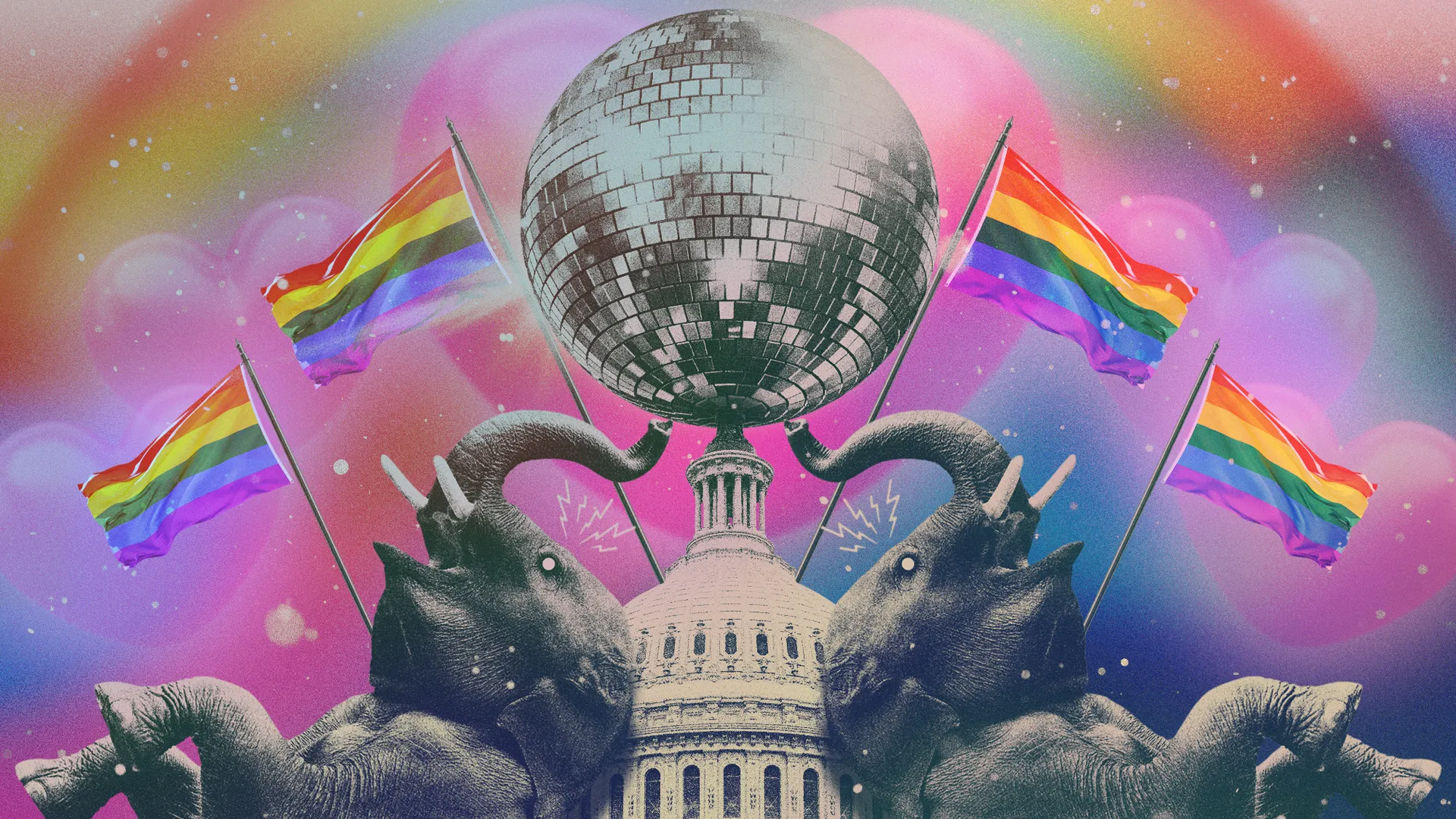
As Pride Month begins in the U.S., numerous Republican governors have “bestowed alternative titles” for Pride Month that “both supporters and opponents view as counterprogramming,” said The Associated Press. But this is just one of several ways the current Republican Party’s stance on LGBTQ+ rights has revealed itself during President Donald Trump’s time in office.
What did the commentators say?
The GOP governors of both Indiana and Tennessee “rebranded June as Nuclear Family Month to celebrate units made up of ‘one husband, one wife and any biological, adopted or fostered children,’” said the AP. Alabama deemed June Strong Families Month, whose “proclamation says fathers are ‘the head of the household.’” And Utah and Arkansas christened June as Fidelity Month, which “emphasizes fidelity to faith, country and family.” The “contest over the month of June reflects decades-long culture war questions, exacerbated by partisan polarization and a sense that red and blue states increasingly represent different values,” said Deseret News.
The current White House has also attempted to “enact a nationwide ban on transgender girls participating in girls’ sports,” expel transgender service members from the military and prevent “transgender Americans from having their gender on their passport,” said Roll Call. These efforts are a result of “rank animus against transgender people,” Jessica Clarke, a law professor at the University of Southern California, told the outlet. The “legislation dovetails with administration efforts and state laws intended to curb the rights of transgender Americans,” said Roll Call.
The Week
Escape your echo chamber. Get the facts behind the news, plus analysis from multiple perspectives.
Join more than 350,000 subscribers and keep yourself informed with a selection of The Week’s most interesting, enlightening and entertaining stories - plus daily puzzles.
Join more than 350,000 subscribers and keep yourself informed with a selection of The Week’s most interesting, enlightening and entertaining stories - plus daily puzzles.
While both of Trump’s presidencies have been defined by anti-LGTBQ+ stances, his second term efforts are “more far-reaching and extreme than those he put in place during his first term,” said The 19th. Civil rights groups pushed back against Trump’s anti-trans executive orders during his first four years in office, but the courts are “not as friendly as they once were,” Mike Zamore, the national director of policy and governmental affairs at the American Civil Liberties Union, told the outlet. These groups shouldn’t assume that a court case “that was successful in the first Trump administration would necessarily prevail this go around.”
What next?
The Republican ramp-up against the LGBTQ+ movement is likely here to stay, as “every Democratic president since Bill Clinton in 1999 has signed a Pride proclamation each year — and no Republican president has,” said the AP. There also appear to be changing public views on whether same-sex marriage should be legal, which is “largely because more Republicans oppose them” now than before Trump retook office.
Approval of “same-sex marriage, moral acceptance of gay and lesbian relations and endorsement of gender changes are all down from peaks reached in the early 2020s,” according to a recent Gallup survey. The poll of 1,001 adults found that 65% of Americans support same-sex marriage. While this still represents a majority of Americans, it is also “down six percentage points from the peak in 2022 and 2023.”
Many people also appear to be going back on their acceptance of the transgender community, according to Gallup’s results. The “share of Americans who consider changing one's gender morally acceptable has declined eight points over the past five years, to 38%,” said Gallup.
Sign up to get Today’s Best Articles in your inbox
A free daily email with the day’s biggest news and analysis – and the best features from TheWeek.com
Justin Klawans has worked as a staff writer at The Week since 2022. He began his career covering local news before joining Newsweek as a breaking news reporter, where he wrote about politics, national and global affairs, business, crime, sports, film, television and other news. Justin has also freelanced for outlets including Collider and United Press International.