Sign up to get Today’s Best Articles in your inbox
Join 350,000+ subscribers and keep yourself informed with a selection of
The Week’s most interesting, enlightening and entertaining stories - plus daily puzzles.
You are now subscribed
Your newsletter sign-up was successful
Want to add more newsletters?
An account already exists for this email address, please log in.
Artemis II: back to the Moon
Four astronauts will soon be blasting off into deep space – the first to do so in half a century
It’s been a long time coming. No human has ventured into deep space since the final Apollo mission in 1972, but that is about to change. Four astronauts – three Americans and a Canadian – will soon be heading back to the Moon as part of Nasa’s Artemis II programme, possibly as early as 6 February and “no later than April”, according to the space agency. While they won’t land on our rocky satellite during the 10-day mission, they will pass just a few thousand miles from it, in a mission that promises to unlock valuable lessons for future missions – to the Moon and beyond.
What is the Artemis programme?
Artemis began in 2017. Nasa’s aim was to return astronauts to the Moon and ultimately establish a permanent lunar base.
In November 2022, Artemis’s Space Launch System (SLS) rocket – the most powerful rocket Nasa has built – and its Orion capsule were launched on a 25-day crewless test flight, Artemis I, that circled the Moon only 80 miles from its surface.
The Week
Escape your echo chamber. Get the facts behind the news, plus analysis from multiple perspectives.
Join more than 350,000 subscribers and keep yourself informed with a selection of The Week’s most interesting, enlightening and entertaining stories - plus daily puzzles.
Join more than 350,000 subscribers and keep yourself informed with a selection of The Week’s most interesting, enlightening and entertaining stories - plus daily puzzles.
Artemis II was originally scheduled to launch between 2019 and 2021 but delays kept pushing it back. In September last year, Nasa was finally able to say that the SLS rocket was “ready to fly crew”, and in November the Orion capsule was “stacked atop the rocket for a final series of tests”, said New Scientist.
What is Artemis II’s mission?
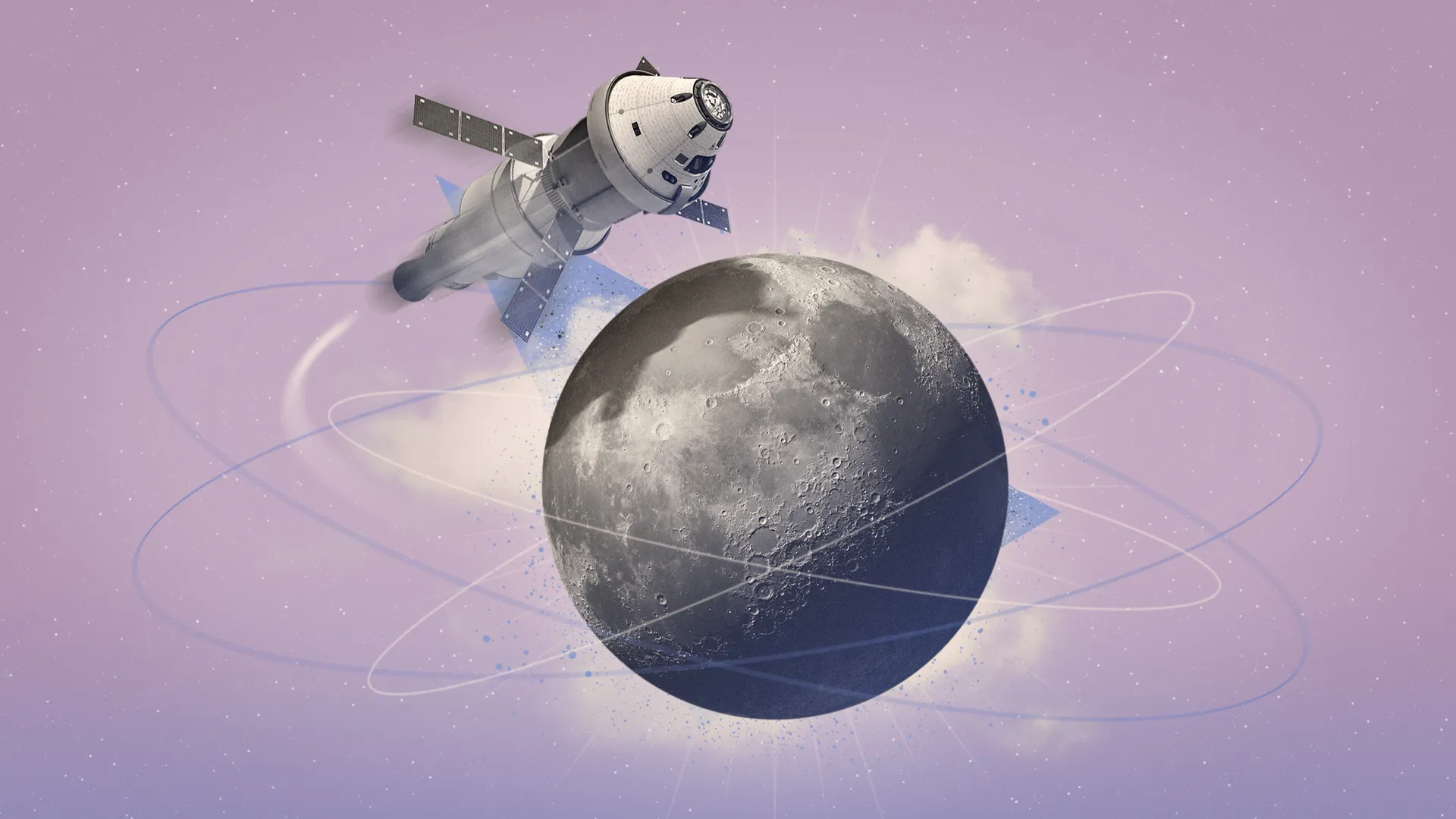
The four astronauts will lift off from Nasa’s Kennedy Space Center in Florida and spend the first two days orbiting the Earth, testing their life-support systems. Then the Orion capsule will fire up its main thruster and shoot off towards the Moon on its 240,000-mile, four-day journey. It will follow a figure-of-eight path, looping around the far side of the Moon, before beginning the four-day return trip and splashing down in the Pacific Ocean.
Orion’s heat shield will be put to the “ultimate test”, said CNN, having suffered “abnormal wear and tear” on the Artemis I mission. Nasa then spent a year trying to iron out the problems amid much “controversy and criticism”. “We feel very confident that we are going to be able to bring our crew back safely for Artemis II,” said Nasa’s Lakiesha Hawkins.
Three of the four astronauts are Nasa’s own – Reid Wiseman, the commander of the mission, Victor Glover and Christina Koch – the latter of whom would be the first woman to fly to the Moon. They have all been to space once before. The fourth member of the crew, Canadian Jeremy Hansen, will be on his maiden flight.
Sign up to get Today’s Best Articles in your inbox
A free daily email with the day’s biggest news and analysis – and the best features from TheWeek.com
As well as testing the various systems on board, the crew will be test subjects themselves, helping Nasa understand the effects that space travel has on their cognition, sleep, stress, immune responses and cardiovascular health. Koch spoke of their excitement about the historic experience. “Doing something we haven’t done in over 50 years, is just absolutely phenomenal.”
What’s the next goal?
If all goes well, then Artemis III will be next. Slated for 2027, it would be the first Moon landing since 1972 and the first chance for a human to set foot on the Moon since Eugene Cernan from Apollo 17. Nasa originally planned for the crew of Artemis III to include a woman and a person of colour to set moonwalk firsts, but the plans have been dropped amid the Trump administration’s clampdown on diversity initiatives.
Artemis III will use SpaceX’s Starship lander to ferry the crew to the lunar surface, but Elon Musk’s company has been having problems with its launch vehicle and spacecraft, putting the 2027 date in doubt.
Further afield, in time and space, is the prospect of a Mars mission. The Artemis programme “will lay the groundwork for future missions to the lunar surface and to Mars”, said Nasa’s Sean Duffy.