About 60 years ago, Russian physicist Lev Artsimovich said nuclear fusion “will be ready when society needs it”.
For decades, scientists have tried to recreate the fusion reaction that powers the sun, hoping to produce potentially unlimited clean energy. But recent advances in science and technology, and funding from tech companies desperate to power the artificial intelligence boom, now make fusion a “realistic option”, said Fortune.
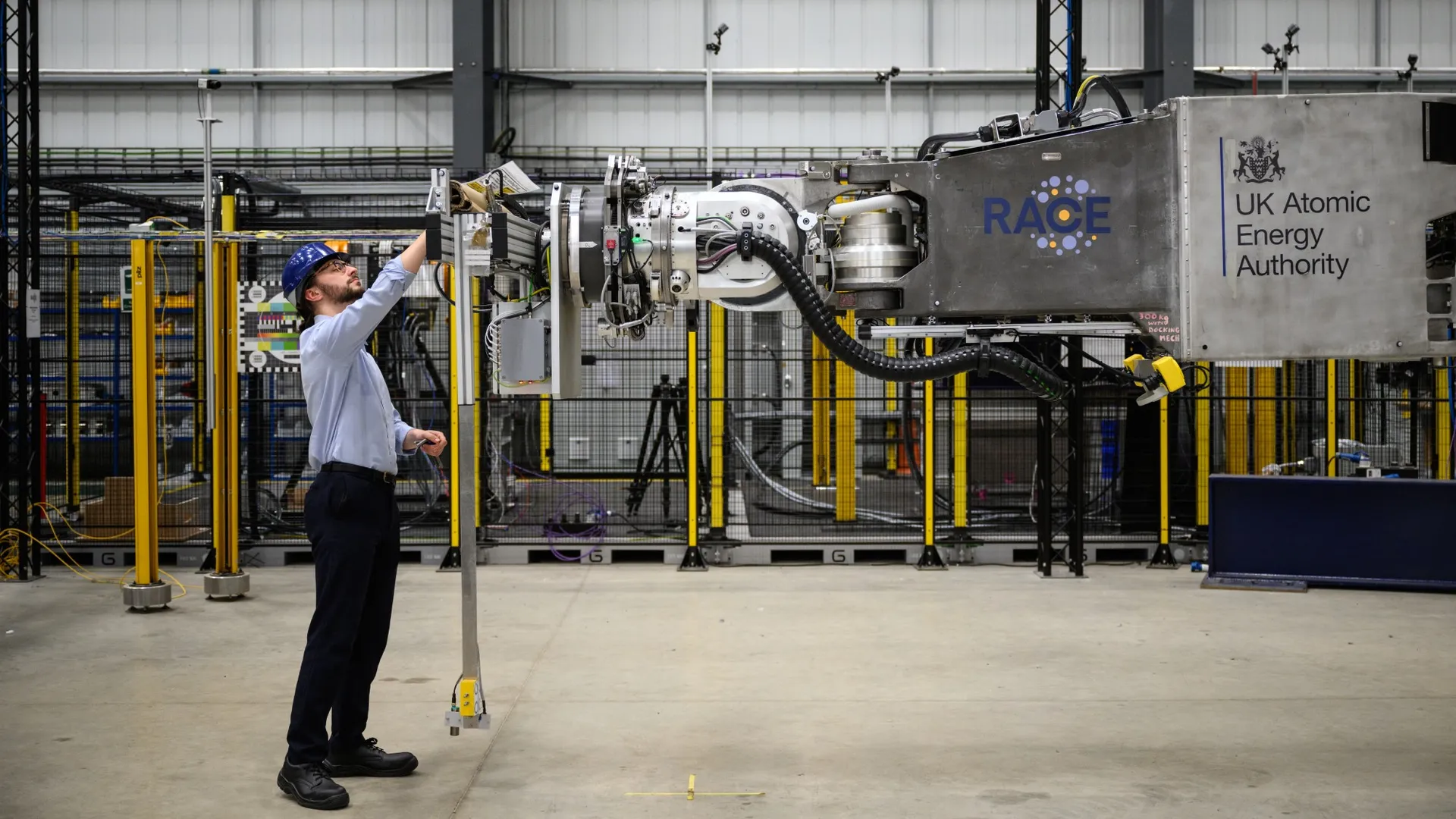
The UK has achieved a “major breakthrough for fusion energy research”, the UK Atomic Energy Authority announced last week. Researchers there stabilised the fusion process in a spherical tokamak – a more compact fusion machine than those used by most researchers – for the first time. This is a “significant step forward”.
The Week
Escape your echo chamber. Get the facts behind the news, plus analysis from multiple perspectives.
SUBSCRIBE & SAVE
Sign up for The Week's Free Newsletters
Join more than 350,000 subscribers and keep yourself informed with a selection of The Week’s most interesting, enlightening and entertaining stories - plus daily puzzles.
Join more than 350,000 subscribers and keep yourself informed with a selection of The Week’s most interesting, enlightening and entertaining stories - plus daily puzzles.
Latest Videos FromThe Week US
What is fusion?
When most people think of nuclear power, they are thinking of nuclear fission. Fission creates energy by splitting heavy atoms – but fusion creates energy by fusing light atoms together.
In fusion, hydrogen isotopes are heated to extremely high temperatures until they form plasma – superheated, electrically charged gas. The atoms’ nuclei then have enough energy to overcome their repulsion and fuse together, forming helium.
In the process, they lose a small amount of mass, which is converted into a massive amount of energy. It’s the same reaction that powers the stars.
Why is it so attractive?
Fusion promises a “virtually limitless, carbon-free source of energy”, said The Times. It is the “holy grail of energy”, nuclear physicist Annie Kritcher told Fortune.
Scientists estimate that one glass of fusion fuel could produce enough energy to power a home for more than 800 years, according to the Financial Times. Unlike fission, it produces no long-lived radioactive waste, and couldn’t cause a runaway nuclear accident like Chernobyl.
“If you know how to build a fusion power plant, you can have unlimited energy anywhere and forever,” said Bill Gates on his Gates Notes website this month. Nuclear fusion could not only meet the soaring global energy demand, but some scientists suggest it could also power a carbon-capture system that could remove CO2 from the atmosphere, helping to reverse climate change.
Why is fusion so difficult to recreate?
Stars can fuse hydrogen because their massive gravity creates extreme pressure and heat in their core. On Earth, recreating those conditions remains one of science’s toughest – and most expensive – challenges.
British scientists first achieved nuclear fusion in 1934, using a particle accelerator, but commercial fusion “remained a distant dream”, said the International Atomic Energy Agency’s Bulletin magazine. Achieving controlled fusion, the kind that could one day power a reactor, remained elusive. To sustain fusion, hydrogen isotopes must be heated to tens of millions of degrees until they form plasma. This is so hot, hotter than the surface of the Sun, that it can’t touch any solid surface; it must be contained by powerful magnetic fields or using laser pulses.
Soviet physicists developed the first fusion machine in the 1950s, known as a tokamak – short for a Russian acronym that translates as “toroidal chamber with magnetic coils”. These doughnut-shaped vacuum chambers use powerful magnets to spin and heat the hydrogen, then trap the plasma while it can fuse and release energy.
But for 70 years, no experiment produced more energy from fusion than was put into the fuel. Then, in 2022, scientists at the US Lawrence Livermore National Laboratory achieved a landmark breakthrough: their reaction released more energy than the process consumed. It was the “Wright brothers’ moment”, said Kritcher, the project’s designer.
So when might we see fusion deliver power to the grid?
The world’s biggest fusion experiment, the International Thermonuclear Experimental Reactor, is under way in France. It’s a publicly funded project backed by 33 countries, including China, Russia and the US – but it has “suffered multiple delays and setbacks” and isn’t expected online before 2035, said the B1M. It’s also “basically a big experiment” to show how feasible fusion is at scale: it won’t generate electricity.
But the private sector fusion race is “heating up”, said the FT. Tech companies are pouring money into fusion start-ups, hoping for energy to power their data centres. Fusion companies have also received huge private investment – “largely from billionaires” like OpenAI’s Sam Altman – and public funding.
And they are making fast progress. One start-up in the US, Commonwealth Fusion Systems, is building a nuclear fusion power plant it aims to turn on in 2027. It is hoped that it will supply electricity to the grid in the early 2030s, which has never been done before. Many private and state-backed Chinese enterprises are also “racing to build a commercial fusion reactor by 2035 or sooner”, said the South China Morning Post.
But even if the most ambitious timelines are achieved, fusion power plants are not likely to be widespread until at least the 2040s.