Scientists discover that tiny crystals are behind a chameleon's ability to change colors

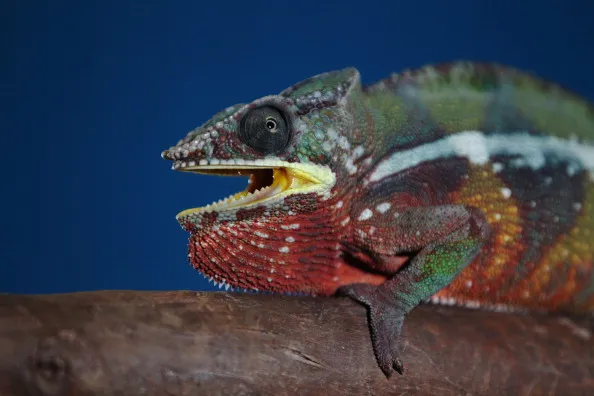
Scientists have found that a chameleon is able to rapidly change color because of tiny crystals directly under the skin that act as mirrors.
In a study published Tuesday in Nature Communications, researchers shared that panther chameleons have crystals called iridophores that contract or expand if the chameleon is feeling excited or stressed, and reflect different wavelengths of light. "Light will bounce on them only for specific wavelengths," co-author Michel Milinkovitch told BBC Earth. "The other wavelengths will not bounce on these cells."
The Week
Escape your echo chamber. Get the facts behind the news, plus analysis from multiple perspectives.

Sign up for The Week's Free Newsletters
Join more than 350,000 subscribers and keep yourself informed with a selection of The Week’s most interesting, enlightening and entertaining stories - plus daily puzzles.
Join more than 350,000 subscribers and keep yourself informed with a selection of The Week’s most interesting, enlightening and entertaining stories - plus daily puzzles.



