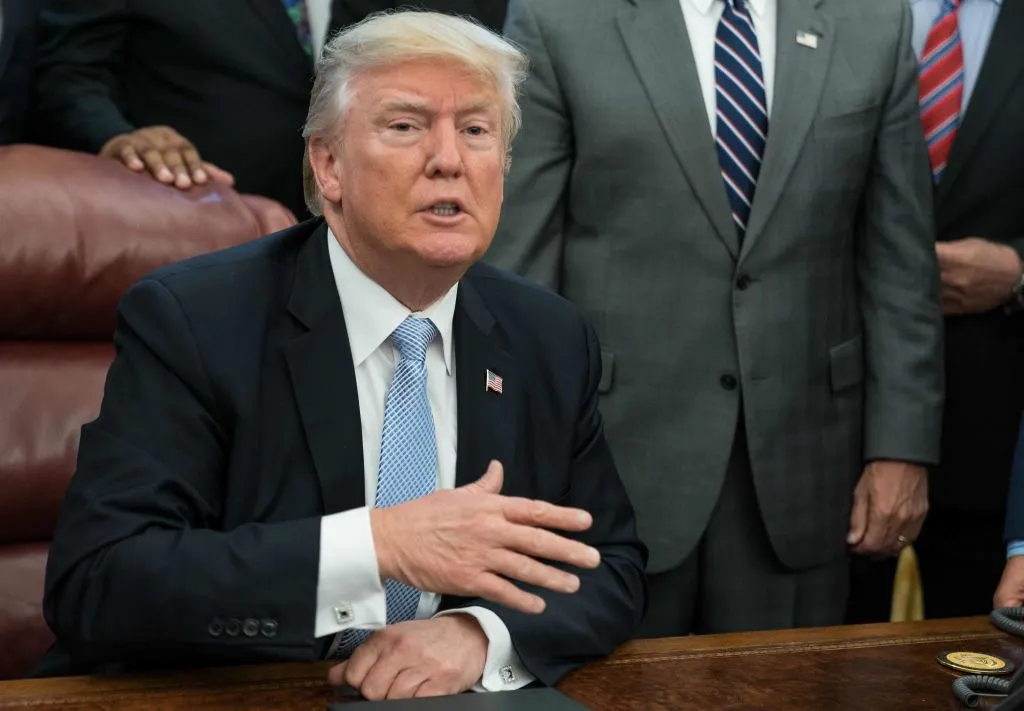
After days of uncertainty, President Trump made it official Tuesday that the Deferred Action for Childhood Arrivals (DACA) program is being rescinded. Attorney General Jeff Sessions said in an announcement that the program, which former President Barack Obama introduced via executive action in 2012 to protect individuals brought to the U.S. as children, was "unconstitutional."
The Department of Homeland Security will no longer accept new applications for DACA's renewable, two-year work permits. New applications that were received by Tuesday will still be considered on a case-by-case basis. DHS will also now stop issuing "advanced parole notices," which allowed DACA recipients to leave and re-enter the U.S., though those that were already issued will be honored.
For those already enrolled in DACA, renewal applications for those whose two-year work permits expire between now and March 5, 2018 will still be accepted, as long as they're submitted by Oct. 5. Those whose permits expire after March 5, 2018, will be allowed to continue working until their two-year period is up.
The Week
Escape your echo chamber. Get the facts behind the news, plus analysis from multiple perspectives.
SUBSCRIBE & SAVE
Sign up for The Week's Free Newsletters
Join more than 350,000 subscribers and keep yourself informed with a selection of The Week’s most interesting, enlightening and entertaining stories - plus daily puzzles.
Join more than 350,000 subscribers and keep yourself informed with a selection of The Week’s most interesting, enlightening and entertaining stories - plus daily puzzles.
Latest Videos FromThe Week US
Trump emphasized in a statement that with the end of DACA, the administration's "enforcement priorities remain unchanged." "We are focused on criminals, security threats, recent border-crossers, visa overstays, and repeat violators. I have advised the Department of Homeland Security that DACA recipients are not enforcement priorities unless they are criminals, are involved in criminal activity, or are members of a gang," Trump said in a statement. However, The New York Times' Vivian Yee noted that while DACA holders may not be directly targeted, they will "be treated like anyone else in the country illegally — putting them at risk of deportation under Trump."
Now that the announcement has been made, the Trump administration will offer "a partial delay to give Congress a chance to address the issue," The Washington Post reported. It's not clear what the Trump administration's plan is if Congress doesn't pass immigration legislation within six months.