FDA gives emergency-use approval for Abbott's $5, 15-minute COVID-19 test, though not for home use

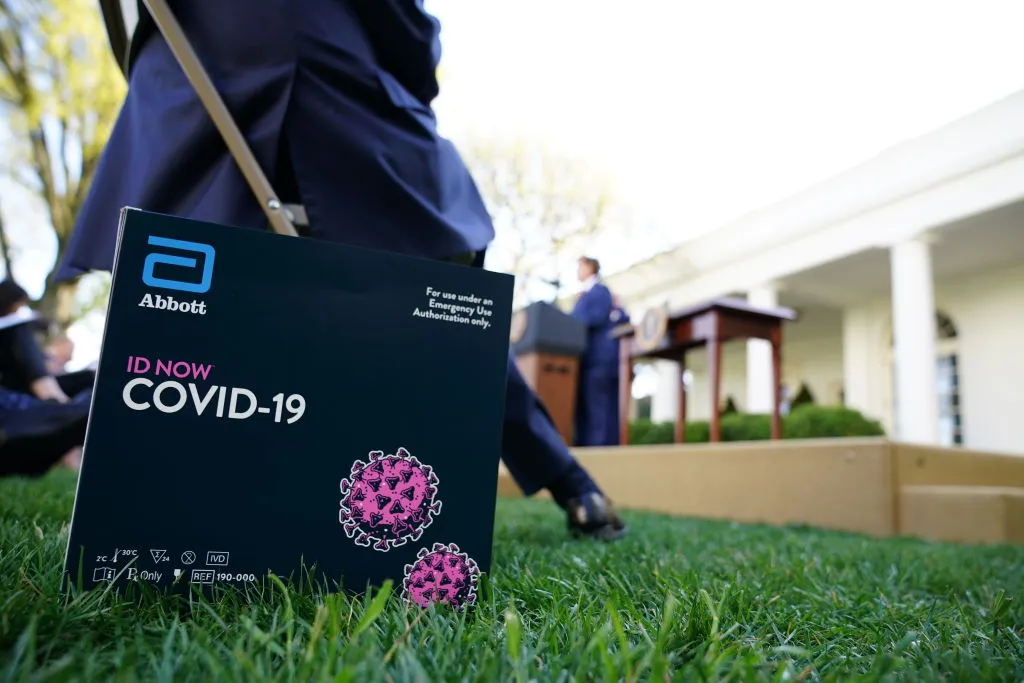
Abbott Laboratories said Wednesday that the Food and Drug Administration had granted it emergency-use authorization for its quick, inexpensive COVID-19 antigen test, and it plans to ship tens of millions of the tests in September. The test, called the BinaxNOW COVID-19 Ag Card, is about the size of a credit card, will cost $5 each, and returns results in about 15 minutes, Abbott says. It works kind of like a pregnancy test but still involves and nasal swab and needs to be administered by medical professionals, typically in a doctor's office or by a school nurse. It won't be sold directly to consumers for home use.
This isn't the first rapid COVID-19 test given a provisional green light by the FDA. Similar antigen tests are processed in boxlike machines and cost anywhere from $15 to $50, The Wall Street Journal reports. Abbott also makes a rapid-response molecular test used in the White House, though that was shown to be returning frequent false negatives. The newly approved antigen test has been shown to accurately detect positive cases about 97 percent of the time, Abbott said.
The Week
Escape your echo chamber. Get the facts behind the news, plus analysis from multiple perspectives.

Sign up for The Week's Free Newsletters
Join more than 350,000 subscribers and keep yourself informed with a selection of The Week’s most interesting, enlightening and entertaining stories - plus daily puzzles.
Join more than 350,000 subscribers and keep yourself informed with a selection of The Week’s most interesting, enlightening and entertaining stories - plus daily puzzles.


