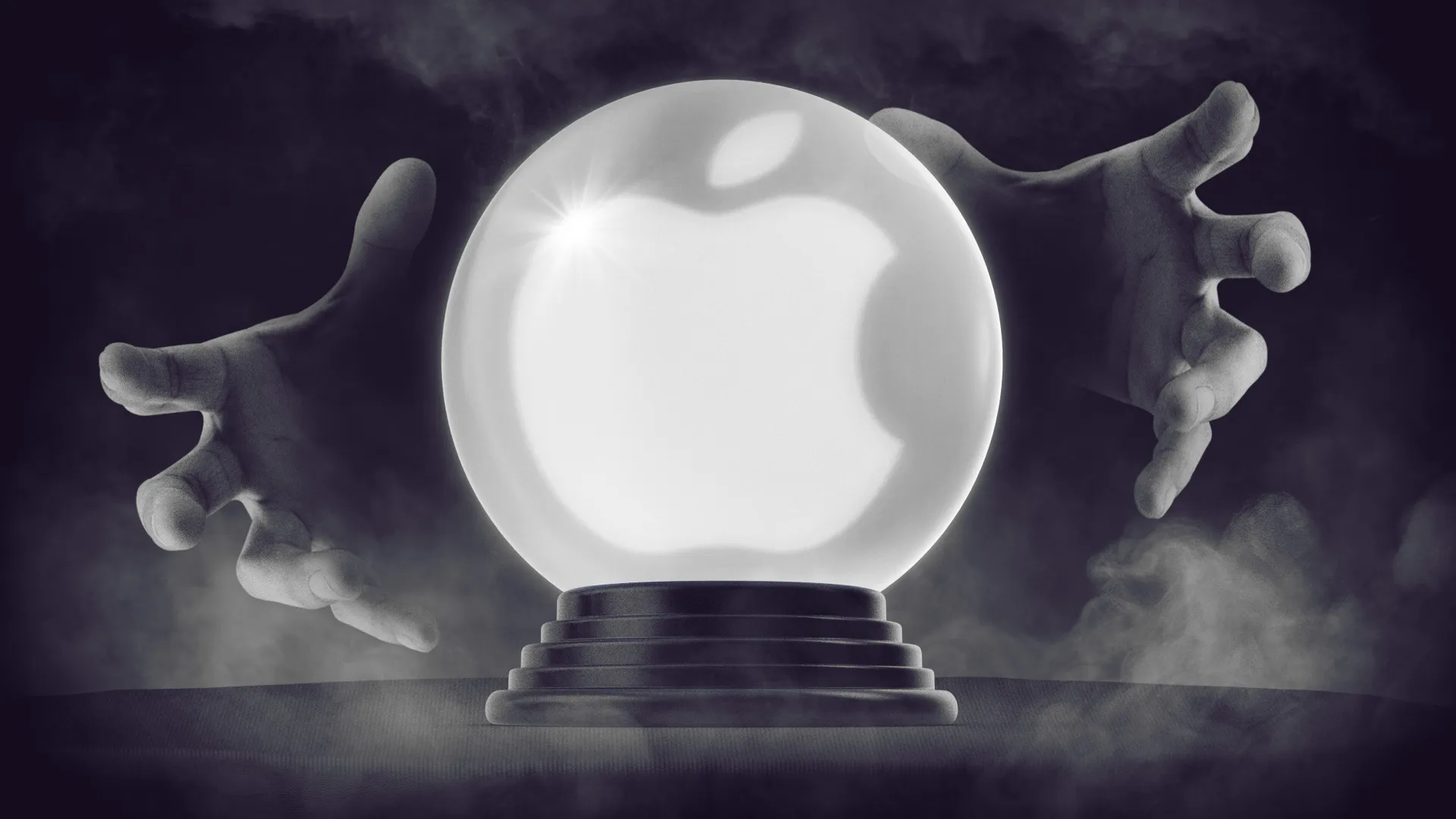
“If you look backward in this business, you’ll be crushed. You have to look forward,” said Apple co-founder and CEO Steve Jobs in 2008, a year after he introduced the first iPhone and changed the world forever.
Apple may indeed be “allergic to nostalgia”, said Steven Levy in Wired, but the company is still “begrudgingly engaging in a series of concerts and commemorations, and we’re being blitzed by books, articles and oral histories” to mark its 50th anniversary.
From an inauspicious start in Jobs’ California garage, the company he founded with Steve Wozniak in 1976 went on to pioneer the personal computer, transform the music market, and revolutionise how people use technology in the internet age. Apple is now valued at more than $3.6 trillion (£2.7 trillion), generating $400 billion (£301 billion) a year in revenue, with iPhone sales alone expected to bring in $1 million (£750 million) every 90 seconds. Across the world, 27% of the population – roughly 2.2 billion people – use one or more of its products.
The Week
Escape your echo chamber. Get the facts behind the news, plus analysis from multiple perspectives.
SUBSCRIBE & SAVE
Sign up for The Week's Free Newsletters
Join more than 350,000 subscribers and keep yourself informed with a selection of The Week’s most interesting, enlightening and entertaining stories - plus daily puzzles.
Join more than 350,000 subscribers and keep yourself informed with a selection of The Week’s most interesting, enlightening and entertaining stories - plus daily puzzles.
Latest Videos FromThe Week US
Tariffs, trade wars and anti-trust trials
“No country has been more central to Apple’s rise – or more fraught for its future – than China,” said France 24. CEO Tim Cook, who took over from Jobs after he died of pancreatic cancer in 2011, made China the primary manufacturing base for Apple devices. It is also one of Apple’s largest consumer markets but the company “faces mounting pressure” from “trade tensions and tariffs” accelerating efforts to diversify manufacturing elsewhere in Asia, while “competition from domestic rivals such as Huawei has eaten into Apple’s Chinese market share”.
To put it bluntly, “the world in which Apple once thrived no longer exists,” said former Financial Times editor Lionel Barber in The New Statesman. A “25-year-long process of hyper-globalisation in which money, technologies and ideas have flowed freely” is “now fading amid economic nationalism driven, in part, by a technological arms race between the US and China, and a global tariff offensive led by Donald Trump”.
Apple is also facing a threat to its dominance closer to home, in the form of a series of anti-trust cases against it. “In an industry full of sprawling multipronged tech empires”, the basic argument against Apple is “comparatively simple”, said Adi Robertson on The Verge: “it’s become the ultimate gatekeeper to billions of people’s primary computing hardware, and it keeps competitors locked out while levying a heavy toll on the developers it lets through”.
Regulators and courts have ordered changes, particularly around the App Store, “but those changes have been slow to arrive, in part because for a half-decade or more, Apple has dragged its feet at every turn”.
Artificial intelligence
Apple may have “absolutely owned” the internet and mobile era, said Wired, but “now the future belongs to AI” – a category where Apple seems to have been lacking.
Apple’s Siri lags behind the likes of Microsoft, OpenAI’s ChatGPT, Anthropic’s Claude and Google’s Gemini, let alone China’s DeepSeek.
This is, in part, because Apple is “limited by its ecosystem”, said Acuity Trading. AI systems “require vast amounts of data, public testing and continuous version launches” and so “cannot be perfected in a closed ecosystem, which is what Apple has built its reputation on”. But perhaps the “most limiting factor is that Apple takes its commitment to user privacy very seriously”, which “has hindered AI development by limiting the amount of data it can use for training AI models”.
This “obsession with user privacy and its premium hardware could position it to drive widespread adoption of personalised AI – and make it profitable, a goal that has proved elusive for much of the AI industry”, said France 24.
Succession planning
The demise of Apple has been predicted many times before; in the mid-1980s after Jobs was forced out and again in 2011 when he passed away. Having revived the company and driven the release of the iMac, iPod and iPhone, Jobs was “widely thought of as irreplaceable”, said Barber. But Cook has not only steadied the ship but also taken the company to new heights, in terms of revenue generation if not technological innovation.
While the 65-year-old has given no indication of an imminent transition, the most likely candidate to take over when he does decide to go is John Ternus, senior vice president for hardware engineering, who oversees development of the devices that generate roughly 80% of Apple’s revenue. “Known for his steadiness and political acumen”, Ternus, like Cook, is “risk averse” and would be a continuity hire rather than “someone more willing to shake things up”, said Bloomberg.
This matters because, while its products “helped define the past 50 years of consumer technology, thriving for another 50 will inevitably require the company to transform in ways that aren’t entirely clear today”.