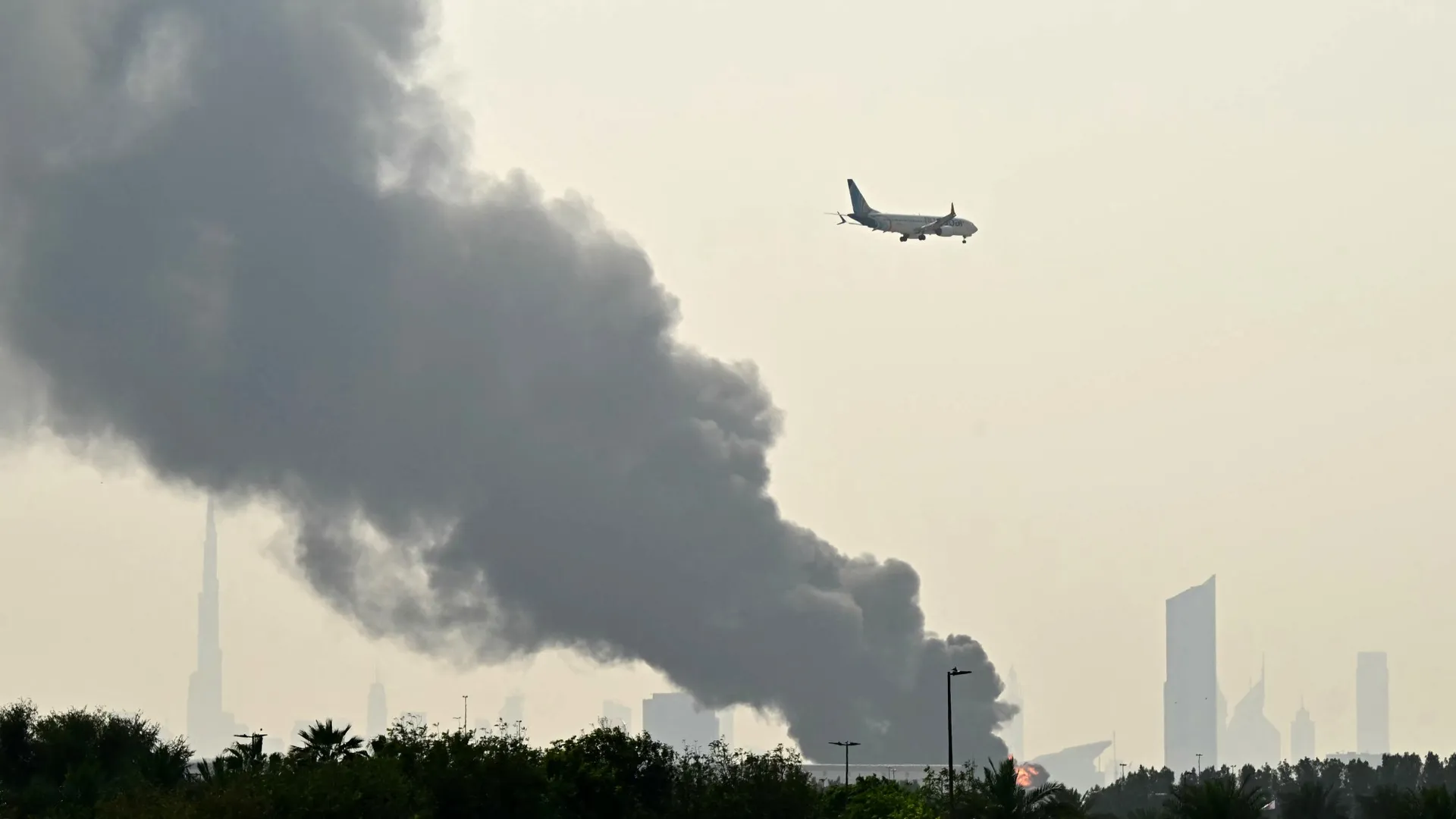
The war in Iran has caused airlines “their biggest test since the Covid-19 pandemic”, said The New York Times.
Air traffic has been “paralysed” and more than 52,000 flights to and from the Middle East have been cancelled since the war began – that is “more than half of all flights planned in the region”.
“Costs are adding up” and tourism in the region has “effectively ground to a halt”. For Emirates and the other Gulf airlines, who “have the highest profit margins in the industry”, continued disruption could take a “substantial” financial and reputational toll.
The Week
Escape your echo chamber. Get the facts behind the news, plus analysis from multiple perspectives.
SUBSCRIBE & SAVE
Sign up for The Week's Free Newsletters
Join more than 350,000 subscribers and keep yourself informed with a selection of The Week’s most interesting, enlightening and entertaining stories - plus daily puzzles.
Join more than 350,000 subscribers and keep yourself informed with a selection of The Week’s most interesting, enlightening and entertaining stories - plus daily puzzles.
Latest Videos FromThe Week US
‘Scrambling’ for alternatives
Since the first missiles were launched, air traffic controllers have been “shepherding passenger jets through safer but congested airspace on the edge of the war”, said the BBC. On a normal day, each individual controller would be responsible for around six aircraft “in their area at a time”. But in times of war it can easily be “double that”.
Shifts would normally be around “45-60 minutes long with 20-30 minutes off” but during times of conflict “they will likely only do a 20-minute stint and then break for the same length of time”. In times such as these, more controllers are brought in to manage the volume and “rotated more frequently to ensure they don’t become overwhelmed”.
Airlines “have been scrambling to find alternatives” to normal routes through Iranian airspace, and the effects are “rippling across the region”, said The New York Times. “Tens of thousands of flights” have been cancelled since war broke out, and the total numbers in the Gulf remain “well below normal levels”.
Airspace restrictions have become an “increasingly common challenge for airlines navigating a world shaped by geopolitical conflict”. The Russian invasion of Ukraine had a similar effect: the “Siberian corridor” over Russia used to be a “relatively direct connection” between Europe and Asia but is has become a “patchwork of workarounds”. Likewise, the airspace over Iran, Iraq, Syria, Bahrain and Qatar is now “largely devoid of commercial planes”. The war in the Middle East is “further fragmenting a once efficient and finely tuned global aviation network”.
As “established east-west routes are narrowing, the skies over Central Asia matter more than they did before”, said The Times of Central Asia. Countries like Uzbekistan and Kazakhstan are “not immune to the crisis” and cannot match the “far larger networks” and “deeper fleets” of other Gulf hubs.
But they can provide “overflight planning, air traffic management, and route resilience rather than headline passenger numbers”. Their “aviation systems clearly now carry far greater strategic and economic importance than they did only a few years ago”. Governments in the region have acknowledged the “strategic value of their territory for rail, road, and trade corridors”, but the disruption caused by the war in Iran has “added aviation to that argument”.
‘Ballooning cost’
The war in Iran has “exposed the fragility of modern travel”, said Bloomberg. As flight paths become “increasingly narrow”, airlines’ “long-term growth plans” have been thrown into “disarray”.
Diversions add many hours to flights so planes must carry more fuel, which is “an expensive burden in light of the spike in energy costs”. With shipping channels through the Strait of Hormuz “effectively shut”, the markets have been “driving up prices of crude and products like diesel and jet fuel”.
This will inevitably affect consumers. Carriers may “hike fares” and add “fuel surcharges to cover the ballooning cost”. Equally, airlines and other large energy consumers could begin to “panic buy oil derivatives contracts” to “shield them from wild price swings”.
In the longer term, continued instability could also change flight culture, with safety concerns “likely to remain front of mind for many travellers” for the foreseeable future. Higher inflation around the world could mean demand to fly is “reshaped”, even “spurring passengers to rethink long-haul trips” and “favour cheaper holidays closer to home”.