Sign up to get Today’s Best Articles in your inbox
Join 350,000+ subscribers and keep yourself informed with a selection of
The Week’s most interesting, enlightening and entertaining stories - plus daily puzzles.
You are now subscribed
Your newsletter sign-up was successful
Want to add more newsletters?
An account already exists for this email address, please log in.
How Middle East violence could fuel more war in Africa
Gulf states are backing opposite sides of Sudan’s civil war and the conflict is spreading to neighbouring countries
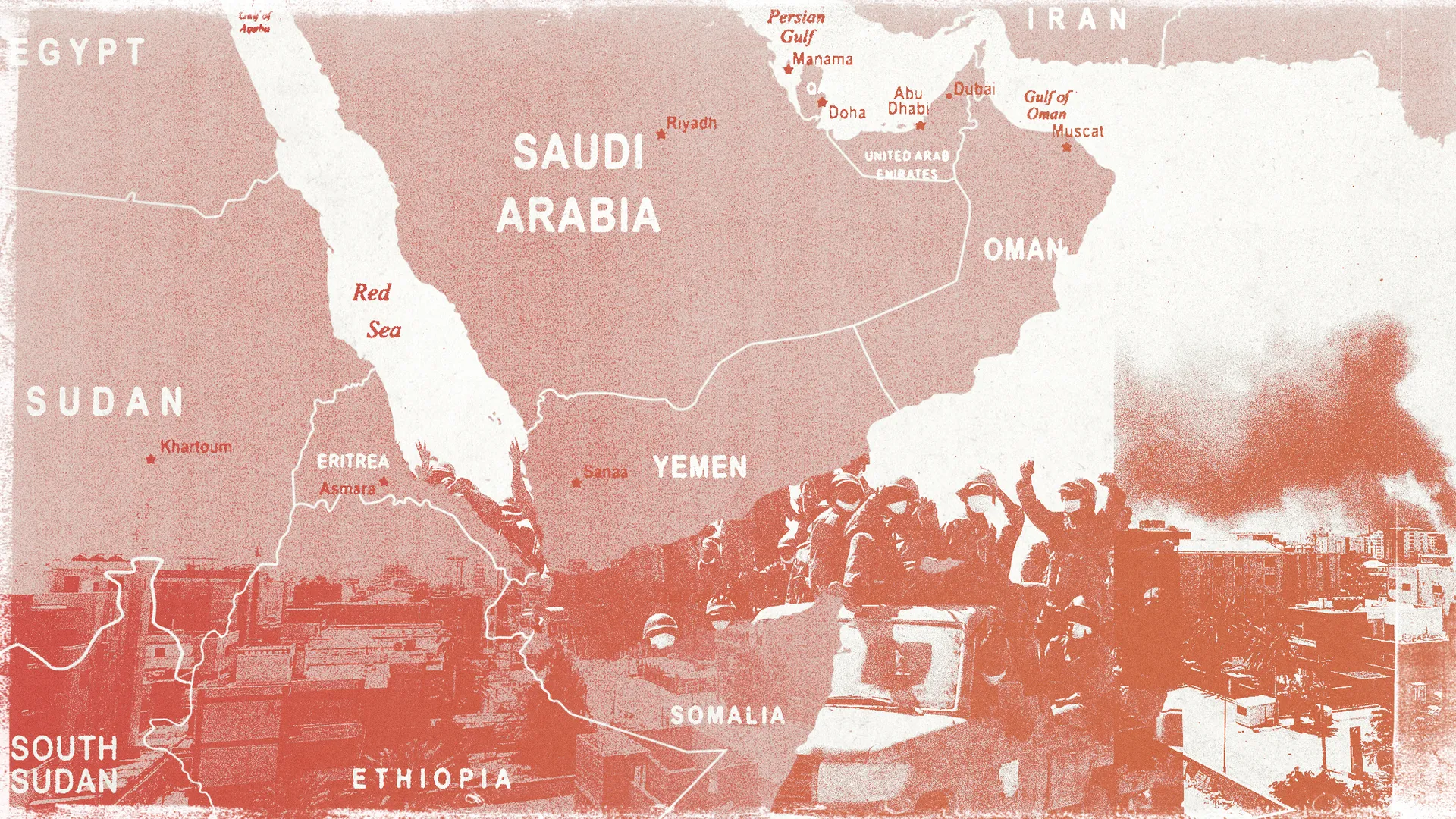
A power struggle in the Middle East is rippling across the Red Sea and fuelling Sudan’s bloody civil war.
Fighting between the Sudanese Armed Forces and the paramilitary Rapid Support Forces has “torn the country apart” since 2023, said The Times. Each side is backed by different Gulf countries and “their network of African allies”. Now, growing tension in the Gulf is causing the Sudan conflict to spread.
Violence on Sudan’s borders with Chad and Libya, increased fighting in South Sudan and massive troop mobilisation in neighbouring Ethiopia have been “raising the spectre of more conflicts”, ones marked with “the fingerprints of foreign actors”.
The Week
Escape your echo chamber. Get the facts behind the news, plus analysis from multiple perspectives.
Join more than 350,000 subscribers and keep yourself informed with a selection of The Week’s most interesting, enlightening and entertaining stories - plus daily puzzles.
Join more than 350,000 subscribers and keep yourself informed with a selection of The Week’s most interesting, enlightening and entertaining stories - plus daily puzzles.
“The war is getting worse, and way more complex because of regional dynamics,” said Sarra Majdoub, a former UN security council expert on Sudan. “I don’t think it’s a civil war any more.”
How are Gulf states involved in Sudan?
“Gulf states have become increasingly prominent in the squabbles, civil wars and inter-country tensions in the Horn of Africa over the past decade,” said Brendon J. Cannon, professor at Khalifa University, on The Conversation.
The UAE has long been accused of supporting the RSF with weapons and funds. Experts believe it uses its ties to neighbouring countries, such as Ethiopia, South Sudan, Libya and Chad, to support the paramilitaries. But Saudi Arabia and Qatar back the SAF, along with Turkey, Egypt and Eritrea. Even Iran has played a role, allegedly supplying Sudan’s army with drones and missiles.
What is their motivation?
The UAE has been “funding proxy groups and wars in Yemen, Libya and Sudan as a way of securing strategic influence and gold assets”, said Nesrine Malik in The Guardian. It has established itself as a “global trading hub in gold”, said Middle East Eye, and Sudan offers “untapped” gold reserves; it is already Africa’s third-largest producer.
Sign up to get Today’s Best Articles in your inbox
A free daily email with the day’s biggest news and analysis – and the best features from TheWeek.com
Access to Sudan’s ports is also an advantage in the “contest for control of the Red Sea”, Ahmed Soliman, from the Chatham House think tank, told The Times. Almost a third of global container shipping flows through the Suez Canal.
Sudan’s “geostrategic location” explains why “outside powers remain deeply invested”, said Shewit Woldemichael, International Crisis Group’s analyst for Sudan, on Al Jazeera. Sudan is “at the crossroads of the Red Sea, the Horn of Africa, the Sahel and North Africa”. For some countries, Sudan’s war is an opportunity to advance their own interests “in a rapidly changing and contested regional order”.
How is the conflict spreading?
The frontier with Chad is “the border to watch”, Majdoub told The Times, “because of cross-border communities and how heavily everyone is militarised”. Chad has closed the border, which experts say has been a major entry point for weapons and foreign fighters for the RSF.
But “the most worrying theatre for future conflict” is between Ethiopia and Eritrea, said The Times. The two signed a peace agreement in 2022, but Ethiopia has recently sent “tens of thousands of troops” north. Alliances have “crystallised” along the same lines as in Sudan: the UAE and Israel back Ethiopia, while Saudi Arabia and its allies have “thrown their weight behind Eritrea”.
What might happen?
Mounting tensions between Saudi Arabia and the UAE “overshadow” their joint peace proposal for Sudan and risk “merging multiple regional conflicts, with Sudan at the epicentre”, said Woldemichael
On the other hand, the crisis in the Middle East could also “create an opening”. Faced with the “unprecedented security threat” of Iran, the UAE and Saudi Arabia could "find reason to set aside some of their differences, including over Sudan” in the name of regional unity. This could “help revive stalled diplomatic efforts to end the war”.
Gulf states will “likely begin focusing inward on their own security” as the situation in the Middle East deteriorates, said Cannon on The Conversation. ”Sudan’s civil war may last even longer now that Gulf states are focused elsewhere. Neither side in the civil war will have the ability to land a knock-out punch.”
Harriet Marsden is a senior staff writer and podcast panellist for The Week, covering world news and writing the weekly Global Digest newsletter. Before joining the site in 2023, she was a freelance journalist for seven years, working for The Guardian, The Times and The Independent among others, and regularly appearing on radio shows. In 2021, she was awarded the “journalist-at-large” fellowship by the Local Trust charity, and spent a year travelling independently to some of England’s most deprived areas to write about community activism. She has a master’s in international journalism from City University, and has also worked in Bolivia, Colombia and Spain.