Sign up to get Today’s Best Articles in your inbox
Join 350,000+ subscribers and keep yourself informed with a selection of
The Week’s most interesting, enlightening and entertaining stories - plus daily puzzles.
You are now subscribed
Your newsletter sign-up was successful
Want to add more newsletters?
An account already exists for this email address, please log in.
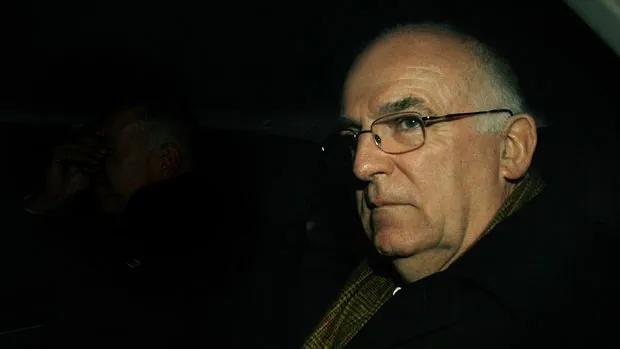
Isis threat to UK blown out of proportion, says ex-MI6 chief
Conflict 'essentially one of Muslim on Muslim' with West no longer main target, says Richard Dearlove
Addressing the Royal United Services Institute, a London-based security think-tank, he said that the West, including Britain, was only "marginally affected" following a fundamental change in the nature of Islamist extremism since the Arab spring.
He described the current Isis uprising as "essentially one of Muslim on Muslim" with the West no longer the main target of radical fundamentalism.
The Week
Escape your echo chamber. Get the facts behind the news, plus analysis from multiple perspectives.
Join more than 350,000 subscribers and keep yourself informed with a selection of The Week’s most interesting, enlightening and entertaining stories - plus daily puzzles.
Join more than 350,000 subscribers and keep yourself informed with a selection of The Week’s most interesting, enlightening and entertaining stories - plus daily puzzles.
Dearlove, who led MI6 at the time of the Iraq invasion, blamed the government and media for blowing the threat out of proportion and said that giving the extremists the "oxygen of publicity" was counter-productive. "It is surely better to ignore them," he said.
Earlier in the day ITV's Good Morning Britain broadcast an interview with Abdul Raqib Amin, a British Muslim brought up in Aberdeen who appeared in an Isis recruitment video last month, reports The Guardian. Amin told the programme he would stay and fight until the rule of Islam was established or until he dies.
Last night, Dearlove claimed the media was making monsters of "misguided young men, rather pathetic figures" who were getting more coverage "than their wildest dreams". He suggested it was time to move away from the "distortion" of the post-9/11 mindset and think rationally about the crisis in the Middle East.
His comments appear to contradict those made by Sir Malcolm Rifkind, the chairman of the Intelligence and Security Committee, who claimed the British public had grown complacent over the risk of a terrorist attack.
Sign up to get Today’s Best Articles in your inbox
A free daily email with the day’s biggest news and analysis – and the best features from TheWeek.com
Writing in the Sunday Telegraph ahead of the 7 July London bombings anniversary, Rifkind described the public's lack of vigilance as "seriously disturbing" and warned that Britain faces a new threat from jihadi bomb makers with "devilish technical skill".