The Week The Week
flag of US
US
flag of UK
UK
https://cdn.mos.cms.futurecdn.net/flexiimages/jzblygzdxr1769609154.gif

SUBSCRIBE

Try 6 weeks free

Sign in
  • View Profile
  • Sign out
  • The Explainer
  • Talking Points
  • The Week Recommends
  • Podcasts
  • Newsletters
  • From the Magazine
  • The Week Junior
  • More
    • Politics
    • World News
    • Business
    • Health
    • Science
    • Food & Drink
    • Travel
    • Culture
    • History
    • Personal Finance
    • Puzzles
    • Photos
    • The Blend
    • All Categories
  • Newsletter sign up Newsletter
  • The Week Evening Review
    Rise of the yuan, a GOP revolt, and Europe’s enduring heat wave

     
    TODAY’S BIG QUESTION

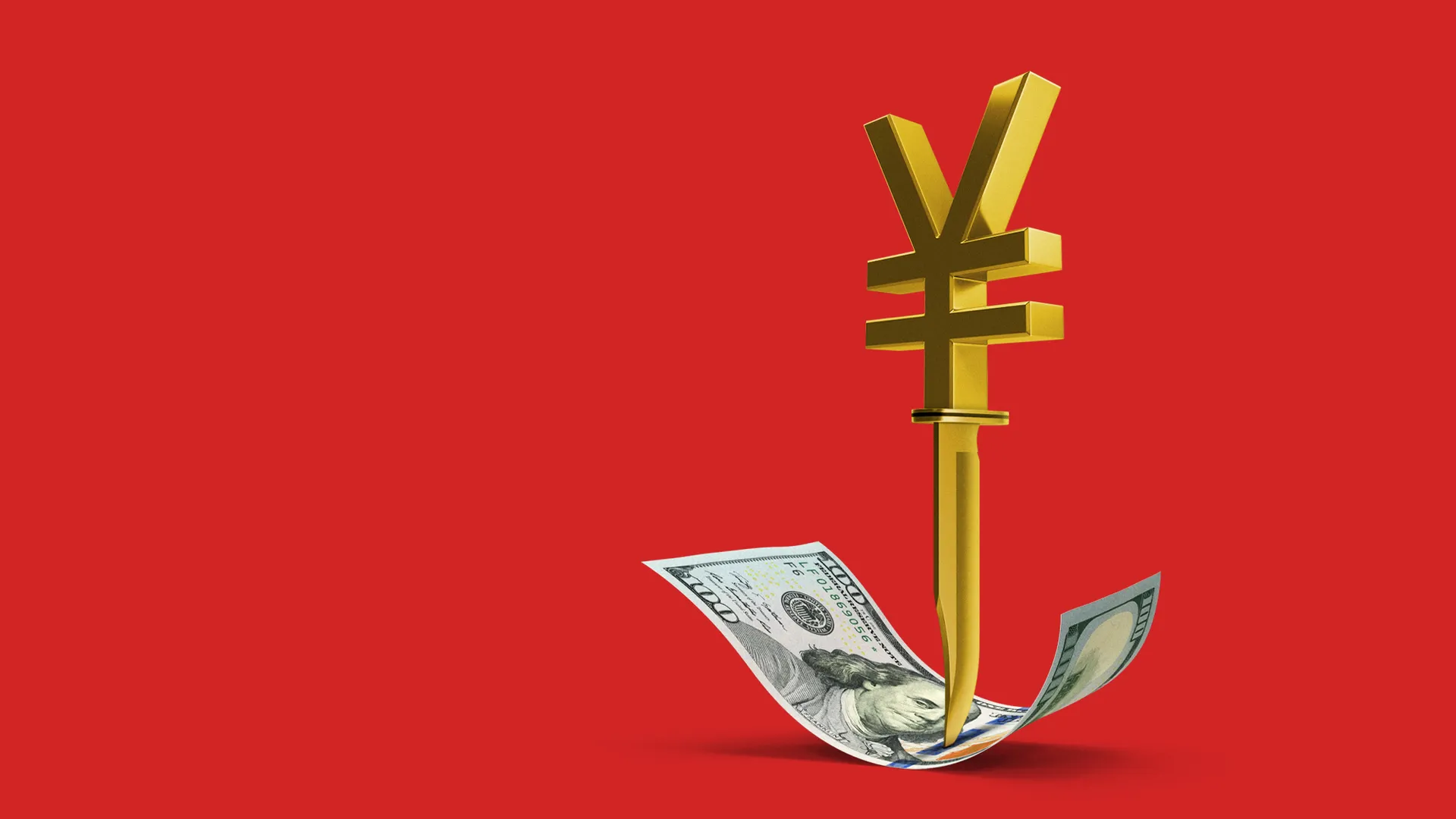
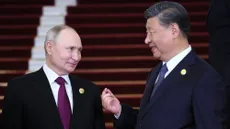
    Is China’s yuan replacing the almighty dollar?

    The dollar has long been the world’s primary currency, giving the U.S. unusual sway over international affairs. But China’s yuan is emerging as a small-but-growing competitor, with consequences for American power and influence.

    What did the commentators say?
    China is building an “alternative financial system” designed to weaken the U.S.’s “power to dictate world affairs,” said The Wall Street Journal. The dollar is still used in 80% of international trade, and that dominance has given the American government a “big advantage in policing global business.” 

    But transactions conducted using Chinese currency allow some businesses and rival countries to evade the U.S. banking system. That’s how Iran earned up to $43 billion in oil revenue in 2024 despite restrictive American sanctions. 

    The yuan is emerging as a “more important part of the global financial system,” said Robin Harding at the Financial Times. It does not yet threaten the dollar’s dominance, in part because China’s “economic model depends on its own relentless accumulation of dollar assets.” Beijing “wants to buy oil in its own currency,” but it also wants to maintain its “massive trade surpluses” with the rest of the world, and those transactions are conducted in dollars.”

    Beijing “cannot decree demand” for the yuan, said Agathe Demarais at Foreign Policy. While China has made “genuine progress in building alternative financial channels” to U.S.-dominated systems, it “cannot translate its rising global trade footprint into greater use of its currency.” That’s because China puts strict controls on the use of the yuan outside the country, making it “costly and impractical” for foreign firms to use.

    What next?
    The dollar is still the “dominant currency” for loans to “developing economies,” said Reuters. But there are signs of change. Last year, Kenya agreed to convert its debt to China (for loans to construct a railway) from dollars into yuan to “cut borrowing costs.” Now, countries like Ethiopia, Indonesia, Mozambique, Pakistan and Zambia that have taken loans from China Eximbank are considering similar restructuring, and the bank is “encouraging and in some cases requiring” national borrowers to “borrow in yuan rather than dollars.”


    QUOTE OF THE DAY

    ‘If Watergate happened tomorrow, it would be like a 12-hour news story. The idea that it would have taken down a presidency is crazy.’

    Vice President JD Vance while promoting his new book at the Richard Nixon Presidential Library in Yorba Linda, California. He added that the 37th president was targeted by “deep state” forces “not all that different from what the same groups of people, the same institutions” tried to do to Trump.


    IN THE SPOTLIGHT

    GOP senators more game to buck Trump’s priorities

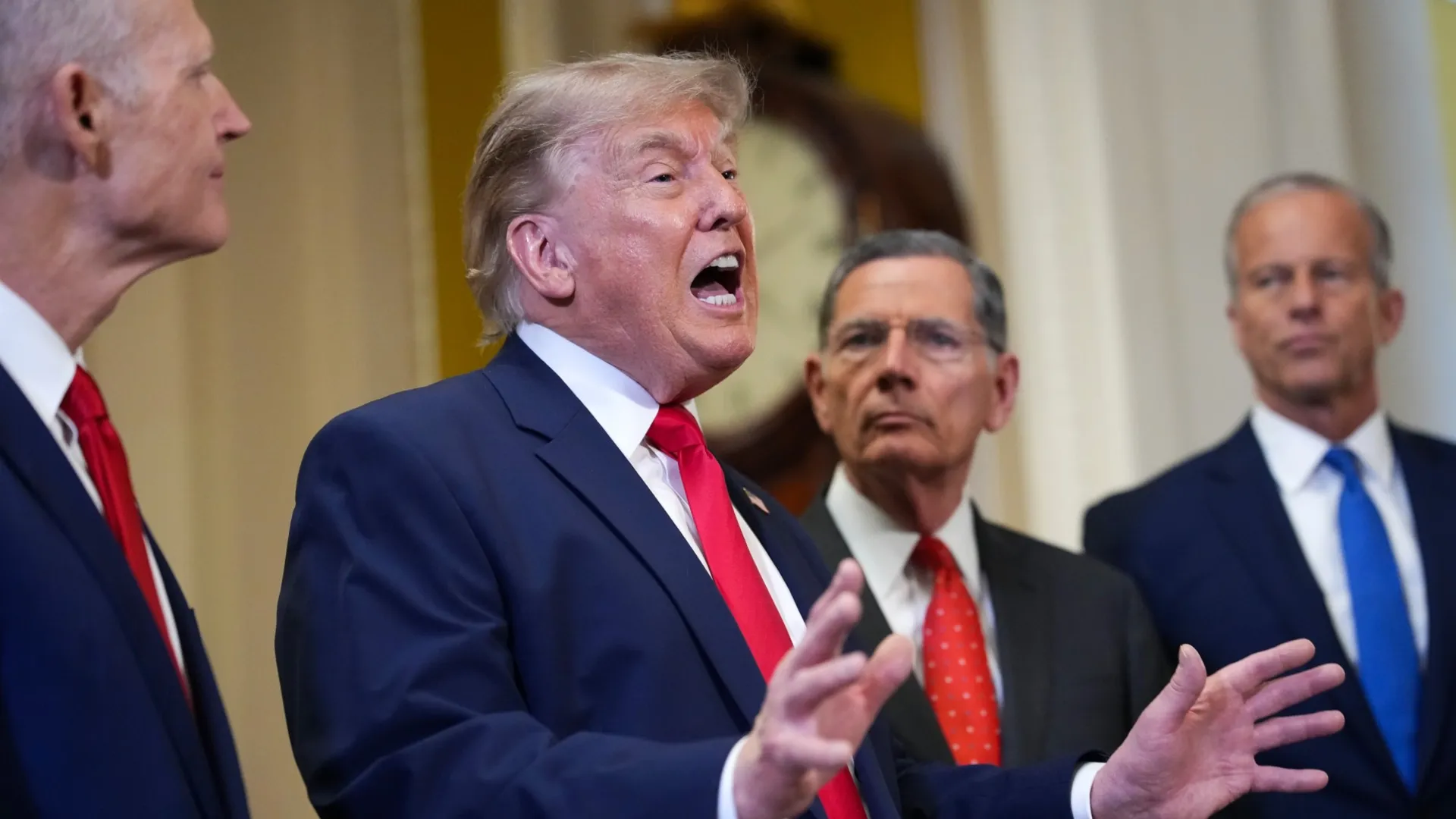
    Reports of President Donald Trump’s total capture of the Republican Party may be premature. Faced with plummeting popularity and whack-a-mole crises, the president has clashed with some of the most powerful members of his own coalition, Senate Republicans.

    Whether this conservative revolt becomes a logjam for the White House remains to be seen. As Republicans face midterm headwinds to keep their congressional majorities, is this nascent push for senatorial independence for real, or will Republicans once more adopt the MAGA party line?

    ‘Relationship appears to be fraying’
    Trump has “enjoyed unbending loyalty” from GOP lawmakers for years, said NPR. But the “strength of that relationship appears to be fraying,” particularly as some “departing members feel more uninhibited to push back” and others begin to imagine a post-Trump Washington. 

    Senators whom Trump had “written off, alienated or even helped defeat” are now opting to support “Senate traditions over his political demands,” said Axios. And the president’s decision this week to cancel the planned signing of bipartisan housing legislation “further inflamed weeks of tumult” that have marked an “increasingly bitter relationship between” him and high-profile Republican senators, said The New York Times. 

    During a closed-door lunch on Wednesday, which Republican senators hoped would “clear the air” between them and Trump, the president instead “vented his frustrations with the senators for more than an hour, leaving them no closer to detente,” said Politico. Trump “said something negative about me” in an attempt to “bully me from asking a question that I think the American people need to know,” said outgoing Louisiana Sen. Bill Cassidy to the outlet, after reports of an intense argument between him and the president during the meeting. “I’m not going to be bullied.”

    ‘Altar of Trump’
    Senate Republicans that same day “proved yet again that their spines are made of pudding,” after both Cassidy and Kentucky Sen. Rand Paul bowed to White House pressure and flipped previous votes to kill a resolution limiting Trump’s Iran war powers, said The New Republic. The waffling shows some conservative lawmakers who “claim to have principles” will “gladly sacrifice them at the altar of Trump.”


    Statistic of the day

    $900,000: The amount in fake bets placed on Polymarket between December and May by social media influencers paid by the company to “film themselves making fake trades and sometimes scoring fake wins,” said the Wall Street Journal. Polymarket built “near-perfect copies of its website” for creators to make simulated trades and “hide that they were being paid.”


    THE EXPLAINER

    Europe gets stuck with an ‘omega block’ weather pattern

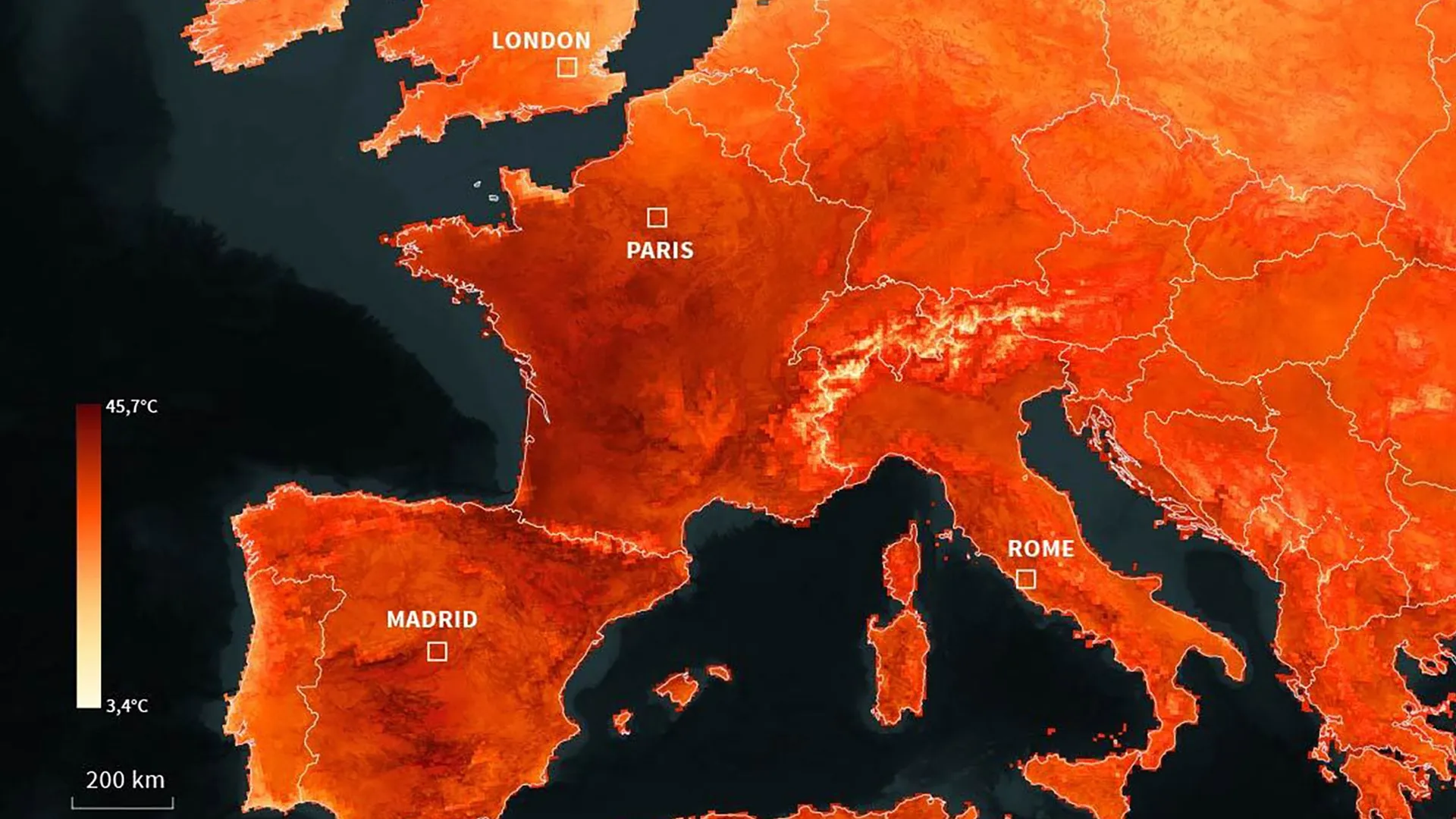
    Western Europe is experiencing a heat wave that has caused over 50 deaths in France alone. These unprecedented high temperatures, which can affect human, animal and plant health, as well as several industries, are due to a weather phenomenon known as an omega block.

    What’s an omega block?
    The weather pattern forms the shape of the Greek letter Ω, with a “bulge of warmer, settled high pressure held between two cooler low-pressure systems,” said Reuters. The high-pressure warmth is “blocked” by the low-pressure systems around it. As a result, “hot, still air gets lodged over the same area.” This high pressure also “suppresses cloud formation, resulting in sunny skies.” Omega blocks usually last between three ​and 10 days but can go on for longer.

    With the current omega block, a “surge of hot, dry air from North Africa has become trapped in the atmosphere over parts of Europe,” said Time. France “recorded its hottest day since records began nearly 80 years ago,” said CBC. In Paris, temperatures hit a June record of 105.62 F.

    Germany, Italy, Spain and the U.K. are also experiencing temperatures much hotter than normal. Across most of Western Europe, this month has been “warming faster than any other month,” said an analysis by World Weather Attribution. “Extreme heat is already reaching the limits of our societies’ ability to cope.”

    How will heat affect the future?
    Scientists have “not yet agreed upon how climate change is affecting the frequency of blocking events,” said Reuters. But the “consensus is ⁠clear” that climate change is “increasing the frequency and intensity of heat waves.”

    While temperatures are increasing everywhere, Europe is “heating up twice as fast as the global average,” said the BBC. And the current heat wave is the “most severe and widespread” to have “ever affected this large a region” on the continent, said Theodore Keeping, an extreme weather research associate at Imperial College London, to The Guardian.

    Extreme heat, especially when mixed with high humidity, poses “risks for public health and infrastructure, as well as transport, energy and water supply,” said Time. Many industries, including tourism, have been impacted. The Eiffel Tower and the Louvre, for instance, “announced early closing times,” said CBC.


    Good day 🪱

    … for organic drugs. Researchers have genetically modified hookworms to produce and secrete antibodies, according to a study published in Nature Communications. This is a “first step” toward creating “living pharmaceutical factories” that can release therapeutic proteins “directly inside the host,” said the study. It “paves the way for all sorts of injection-free biologic drug delivery,” said ZME Science.


    Bad day 🗑️

    … for overzealous fans. As a result of a viral video of Angie Baez taking a Knicks-themed trash can during the championship parade in New York City, she has been fired from her position as executive director for community and industry engagement at JPMorgan Chase, according to a company spokesperson. Baez was also fined $175 for littering and “impeding” sanitation operations.


    Picture of the day

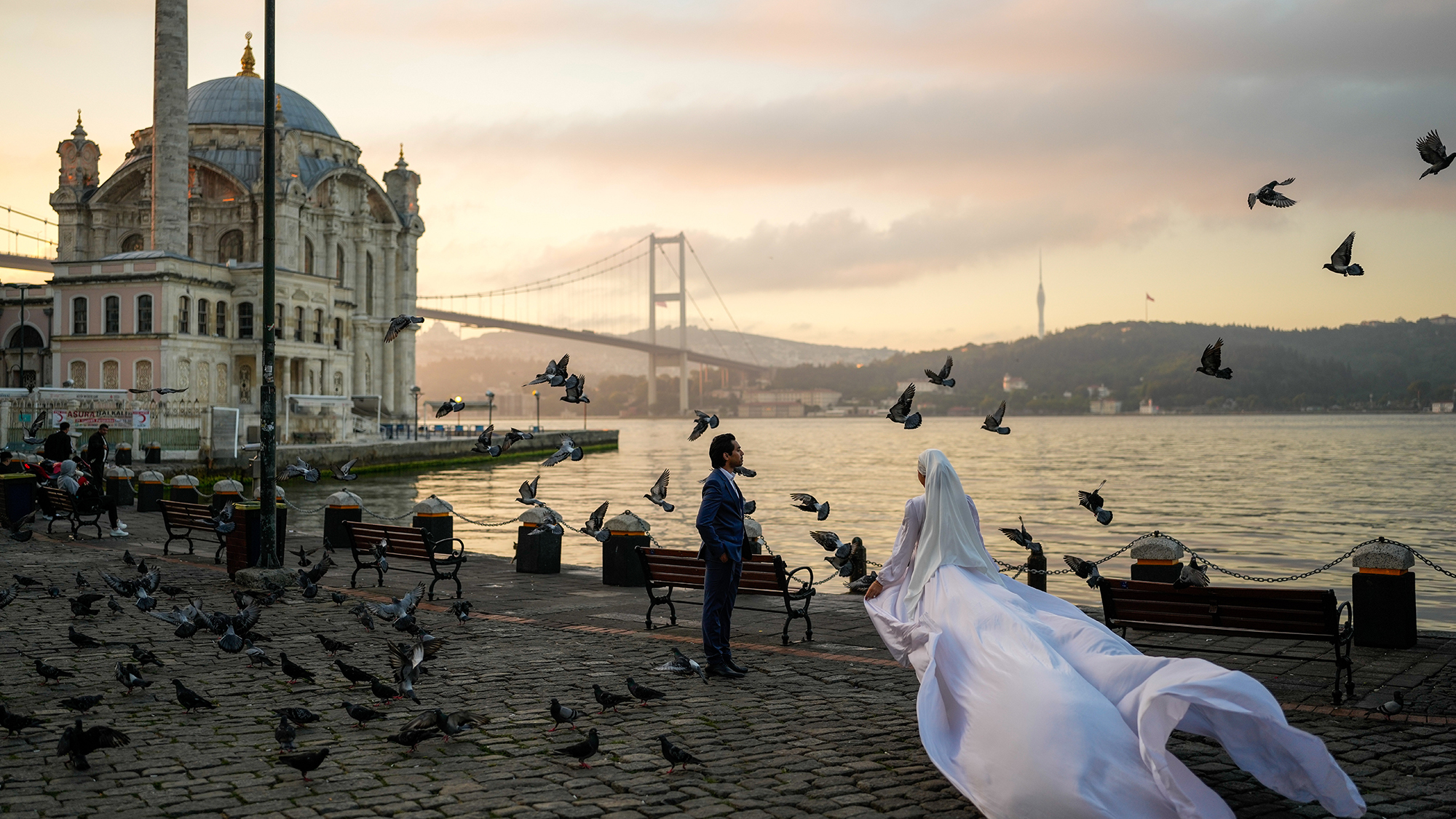
    Lovebirds

    A wedding couple poses for photographs on the promenade in Istanbul, Turkey, with the Ortakoy Mosque and Bosphorus Bridge in the distance. Completed in 1856, the mosque is “renowned for its elegant blend of baroque, rococo and neo-classical architectural styles,” said Travel Curious.
    Emrah Gurel / AP Photo


    Puzzles

    Daily sudoku

    Challenge yourself with The Week’s daily sudoku, part of our puzzles section, which also includes guess the number

    Play here


    The Week recommends

    Laugh it up this summer with these on-tour comedians

    There are plenty of chances to see some impressive live comedians this summer. Get a laugh or two with these talented stand-up comics currently zigzagging across the States.

    Mo Amer
    Amer’s shows are popular, but if you can’t get tickets, don’t panic. You can still enjoy his comedy in his critically acclaimed series “Mo” or his three specials on Netflix. Plus, there may be another chance to see him onscreen, said the Houston Chronicle, as Amer (pictured above) recently “teased plans for a feature-length film set in his hometown” of Houston, Texas. (through November)

    Ilana Glazer
    Well-known for their acclaimed Comedy Central series “Broad City,” Glazer has recently talked about how current events inform their stand-up. “We are in this anti-human, techno-fascist moment in the United States,” they told the Irish magazine Hot Press. The U.S. “feeds so much of global culture that I feel like it’s urgent to start having international conversations between real people in this way.” (through August)

    Emil Wakim
    Wakim endeared himself to fans during his turn on “Saturday Night Live” despite being on the show for only one season. He was also notably the first “SNL” cast member of Lebanese heritage. If you can’t catch him live during his current tour, you can see him on television soon enough, as he’s recording his first stand-up special for Netflix this fall. (through October)

    Read more


    Poll watch

    Most Gen Zers (66%) believe their life has meaning or that they have a sense of purpose (62%), according to a Gallup survey of 2,436 13‑ to 28‑year‑olds. But Gen Z adults (39%) are nearly twice as likely as those in middle or high school (22%) to indicate their lives lack meaning.


    INSTANT OPINION

    Today’s best commentary

    ‘Our clients fled dangerous regimes only to see similar tactics here’
    Sonya Funna Evelyn at The Minnesota Star-Tribune
    By 2025, asylum seekers were “already warning clinicians that what they were seeing with federal immigration enforcement — masked and armed agents taking people off the streets in unmarked vehicles — were the conditions they had seen back in the countries they fled,” says Sonya Funna Evelyn. The “tactics of the most dangerous regimes on Earth are being used on the streets in the U.S.” But there was an “extraordinary response from our communities” across the country.

    ‘Pentagon’s Indo-Pacific name change hurts the US and India’
    James Stavridis at Bloomberg
    The Pentagon will “change the name of its Indo-Pacific Command” by “reverting to its historical appellation of simply Pacific Command,” which will “ultimately be damaging to U.S. security,” says James Stavridis. The change “feels like a direct shot at India,” which is “sensitive to names and titles — this change will not sit well in New Delhi.” It will also be “unpopular with the other members” of the region who may see the name change as “devaluing the entire concept.”

    ‘This summer’s heat is only the beginning’
    Mark Hertsgaard at The Nation
    A “brutal heat wave is shattering heat records in Europe,” but it’s “worth recalling that last summer the same thing happened in Asia,” says Mark Hertsgaard. As “global warming driven mainly by burning fossil fuels continues to intensify, scientists say that record-breaking heat will become increasingly frequent throughout the world.” Journalists can “help limit the suffering by alerting the public to impending extreme weather and sharing tips for how to be safe.”


    WORD OF THE DAY

    metamorphism

    The transformation of igneous rocks (cooled and hardened lava or magma) or sedimentary rocks (compacted sediment) through exposure to extreme heat or high pressure. Garnet, a mineral found in Earth’s metamorphic rocks, has been discovered in a Mars meteorite sample for the first time, according to research published in Geochemical Perspectives Letters. This could reveal how the red planet evolved billions of years ago.


    Evening Review was written and edited by Theara Coleman, Nadia Croes, David Faris, Catherine Garcia, Scott Hocker, Anya Jaremko-Greenwold, Justin Klawans, Joel Mathis, Summer Meza, Devika Rao and Rafi Schwartz, with illustrations by Stephen Kelly.

    Image credits, from top: Illustration by Stephen P. Kelly / Shutterstock; Andrew Harnik / Getty Images; Sabrina Blanchard and Sylvie Husson / AFP via Getty Images; Charley Gallay / Getty Images for Peabody Awards
     

    Recent editions

    • Morning Report

      Iran asserts control over Hormuz with fresh strike

    • Evening Review

      What will Donald Trump make of Andy Burnham?

    • Morning Report

      Babies and mothers died after ‘systemic’ failings

    VIEW ALL
    TheWeek
    • About Us
    • Contact Future's experts
    • Terms and Conditions
    • Privacy Policy
    • Cookie Policy
    • Advertise With Us
    • FAQ
    Add as a preferred source on Google Add as a preferred source on Google

    The Week UK is part of Future plc, an international media group and leading digital publisher. Visit our corporate site.

    © Future Publishing Limited Quay House, The Ambury, Bath BA1 1UA. All rights reserved. England and Wales company registration number 2008885.