Sign up to get Today’s Best Articles in your inbox
Join 350,000+ subscribers and keep yourself informed with a selection of
The Week’s most interesting, enlightening and entertaining stories - plus daily puzzles.
You are now subscribed
Your newsletter sign-up was successful
Want to add more newsletters?
An account already exists for this email address, please log in.
Is China’s yuan replacing the almighty dollar?
Beijing is setting up an ‘alternative financial system’
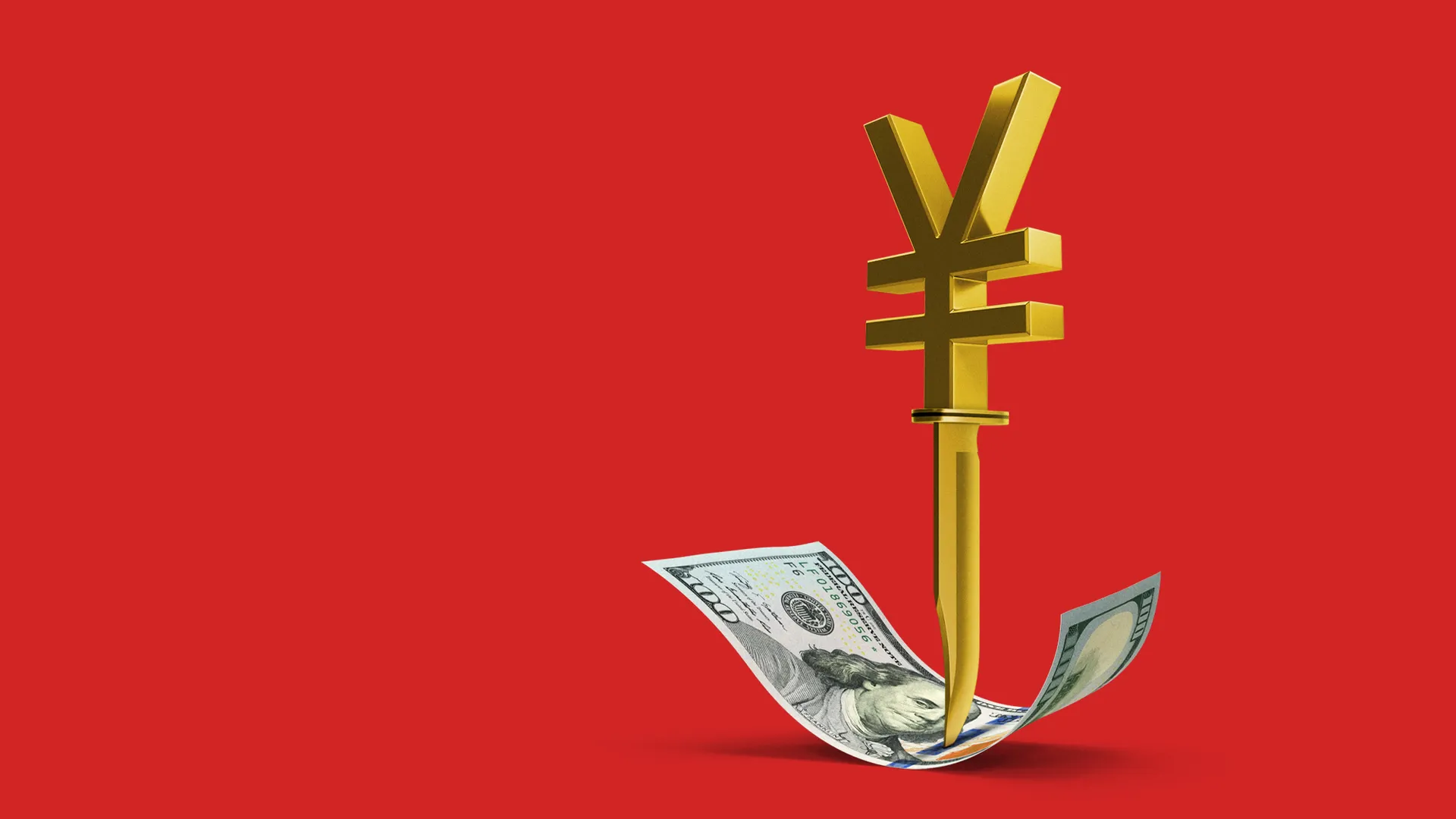
The dollar has long been the world’s primary currency, giving the U.S. unusual sway over international affairs. But China’s yuan is emerging as a small-but-growing competitor, with consequences for American power and influence.
What did the commentators say?
China is building an “alternative financial system” designed to weaken the United States’ “power to dictate world affairs,” said The Wall Street Journal. The dollar is still used in 80% of international trade, and that dominance has given U.S. governments a “big advantage in policing global business.” But transactions conducted using Chinese currency allow some businesses and rival countries to evade the U.S. banking system. That is how Iran earned up to $43 billion in oil revenue in 2024 despite restrictive American sanctions. And such examples are growing in number: The yuan’s share of global finance has “tripled over the past five years,” still well behind the dollar but ahead of the euro.
The yuan is emerging as a “more important part of the global financial system,” Robin Harding said at the Financial Times. But it does not yet threaten the dollar’s dominance, in part because “China’s economic model depends on its own relentless accumulation of dollar assets.” Beijing “wants to buy oil in its own currency,” but it also wants to maintain its “massive trade surpluses” with the rest of the world, and those transactions are conducted in dollars. There is “little sign of the dollar losing control of the global financial system.”
The Week
Escape your echo chamber. Get the facts behind the news, plus analysis from multiple perspectives.
Join more than 350,000 subscribers and keep yourself informed with a selection of The Week’s most interesting, enlightening and entertaining stories - plus daily puzzles.
Join more than 350,000 subscribers and keep yourself informed with a selection of The Week’s most interesting, enlightening and entertaining stories - plus daily puzzles.
Beijing “cannot decree demand” for the yuan, Agathe Demarais said at Foreign Policy. While China has “made genuine progress in building alternative financial channels” to U.S.-dominated systems, it “cannot translate its rising global trade footprint into greater use of its currency.” That is because China puts strict controls on the use of the yuan outside the country, making it “costly and impractical” for foreign firms to use. Absent a “massive shock,” it is unlikely the world will “embrace Chinese financial channels.”
Beijing “doesn’t need to displace the dollar” to weaken U.S. dominance over global finance, said The New York Times. But having an alternative “could expand China’s influence in a financial crisis.” And some countries will welcome that alternative. “There is a desperate desire in the world to escape the clutches” of the America-dominated system, Cornell University’s Eswar Prasad said to the outlet.
What next?
The dollar is still the “dominant currency” for loans to “developing economies,” said Reuters, but there are signs of change. Kenya last year agreed to convert its debt to China (for loans to construct a railway) from dollars into yuan to “cut borrowing costs.” Now countries like Ethiopia, Indonesia, Mozambique, Pakistan and Zambia that have taken loans from China Eximbank are considering similar restructuring, and the bank is “encouraging — and in some cases requiring” national borrowers to “borrow in yuan rather than dollars.”
Sign up to get Today’s Best Articles in your inbox
A free daily email with the day’s biggest news and analysis – and the best features from TheWeek.com
Joel Mathis is a writer with 30 years of newspaper and online journalism experience. His work also regularly appears in National Geographic and The Kansas City Star. His awards include best online commentary at the Online News Association and (twice) at the City and Regional Magazine Association.