The Week The Week
flag of US
US
flag of UK
UK
https://cdn.mos.cms.futurecdn.net/flexiimages/jzblygzdxr1769609154.gif

SUBSCRIBE

Try 6 weeks free

Sign in
  • View Profile
  • Sign out
  • The Explainer
  • Talking Points
  • The Week Recommends
  • Podcasts
  • Newsletters
  • From the Magazine
  • The Week Junior
  • More
    • Politics
    • World News
    • Business
    • Health
    • Science
    • Food & Drink
    • Travel
    • Culture
    • History
    • Personal Finance
    • Puzzles
    • Photos
    • The Blend
    • All Categories
  • Newsletter sign up Newsletter
  • The Week Evening Review
    The strengthening Russia-China bond, the best golden visas, and the danger of hot nights

     
    TODAY’S BIG QUESTION

    Why does a China-Russia alliance matter more than ever?

    Documents have emerged from “clandestine” meetings in 2023 between Russian and Chinese leaders about neutralizing the threat of Elon Musk’s Starlink in Ukraine, while revealing the growing military cooperation between the two nations. The joint investigation by The Insider, Der Spiegel and Le Monde exposes China’s “professed neutrality” in Ukraine as “fiction” and asks questions about the nature and targets of China and Russia’s Dragon-Bear alliance.

    What did the commentators say?
    The countries’ “no limits” alliance is “one of the world’s most consequential relationships,” said Brookings. The partnership is “stronger than it ever has been in decades, certainly since the post-Cold War period,” said policy expert Patricia Kim on The Beijing Brief podcast.

    Chinese President Xi Jinping and Russian President Vladimir Putin have described each other as “best friends” and “share vital interests,” but economically, the alliance is highly uneven, said Ankur Shah at the BBC. China is Russia’s “largest trading partner, while Russia makes up just 4% of China’s international trade.” 

    China is by far the dominant party, said The Economist. When Xi received visits just days apart from President Donald Trump and Putin, with both seeking economic stability, China appeared the singular “fulcrum of global geopolitics, dealing with America as an equal” while relegating Russia to a “junior partner.”

    But Trump’s war in Iran has given a “powerful impetus to strengthening Russo-Chinese ties,” said Leonid Ragozin at Al Jazeera. China has become “reliant” on Russian oil and, in turn, has funded the Russian war effort in Ukraine.

    But there are “important imbalances and points of friction,” said Christopher Walker in a Center for European Policy Analysis report. The two nations lack the “dense institutional connective tissue” that could match NATO. They act in “parallel play” rather than with lasting cohesion.

    What next?
    After the summit in Ankara, NATO unveiled defense initiatives in response to “security challenges posed by Russia and China,” said the South China Morning Post. These included a motion on raw materials and investment of $40 billion in the next five years into expanding modern warfare.

    China and Russia working together, along with North Korea, “should concern us all,” said NATO Secretary General Mark Rutte. They “do not have our best interests in mind.” To “meet the challenge, we need a “transatlantic defense industrial revolution.”


    QUOTE OF THE DAY

    ‘They have used the levers of power to intimidate and demonize professional journalists who report stories that are unfavorable to the administration’s desired narrative.’

    Former CNN Washington Bureau Chief Frank Sesno to The Associated Press on the subpoenas to five New York Times journalists who reported on security questions about the Air Force One aircraft gifted by Qatar. The subpoenas are “dangerous and uncharted territory,” he added.


    IN THE SPOTLIGHT

    The best visas for Americans looking for a change

    The so-called golden visa sits at the junction of several Venn diagram circles: climate, economic opportunity, length of stay, language and culture. It can offer anything from a new adventure for a limited span of months or a long-term residence far from the U.S.

    Croatia
    The Central European country is not the slightest bit demure with its welcoming of would-be digital nomads. The nation’s website on the topic sports the cocksure hashtag #CroatiaYourNewOffice. Croatia’s focus on this segment of travelers has been so successful that researchers there have published academic papers on the phenomenon. And the process for acquiring this kind of visa in the country is clear and smooth, just like the beloved waters surrounding its nearly 80 major islands.

    Thailand
    A Thai investment visa provides tax benefits and exemptions, plus the ability to include a spouse and dependents without a minimum stay requirement. And there are varied tiers of investment. The highest tiers can provide residency for up to 20 years. Lesser fiscal mortals can opt for a long-term visa, which grants up to 10 years of residency.

    Romania
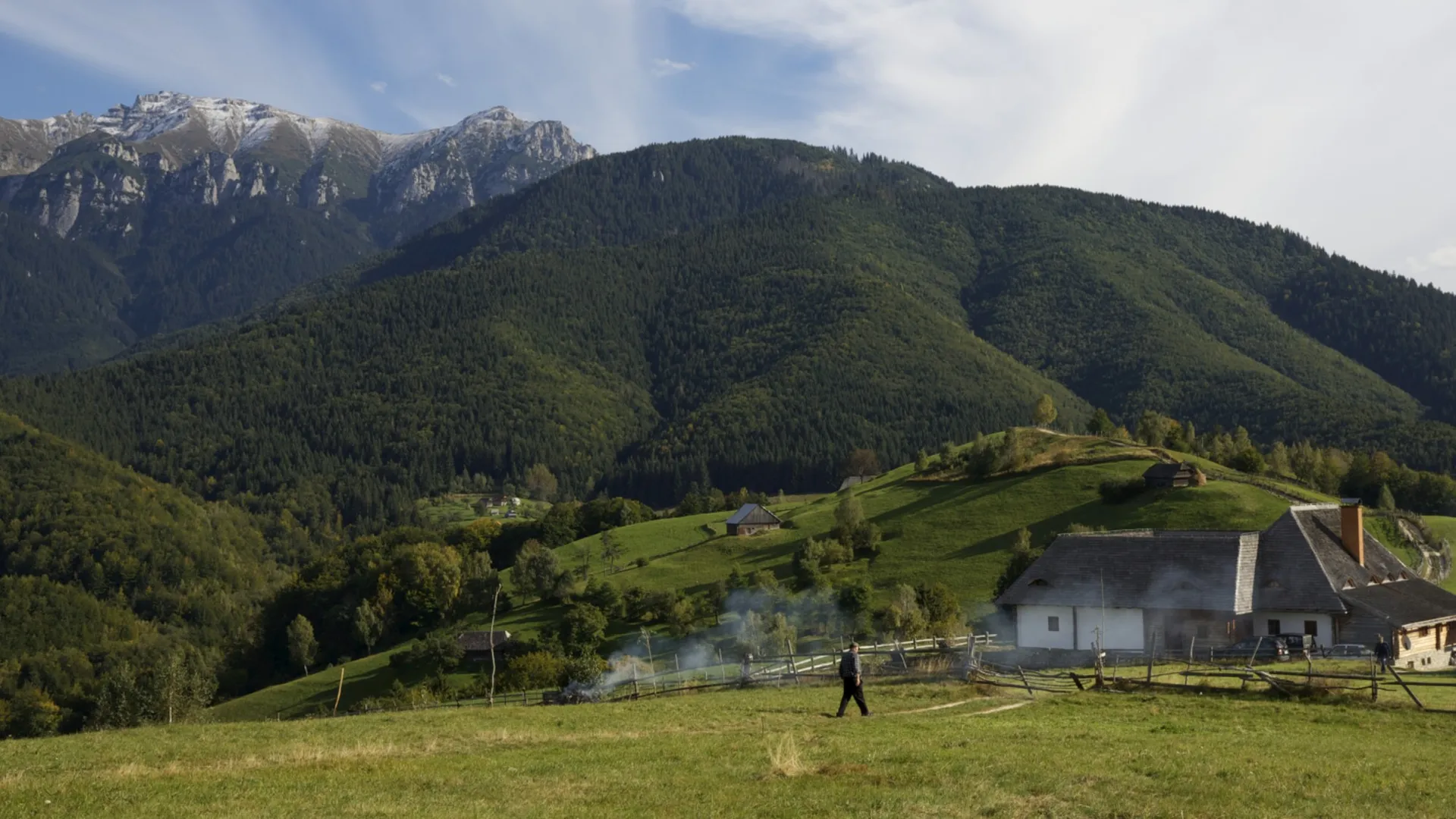
    All the nature, a live-wire capital, reasonable cost of living — Romania (pictured above) provides a touch of everything for a digitally nomadic life. It includes being in a country that not every other expat has stationed themselves in — a boon unto itself. 

    United Arab Emirates
    Many golden visas necessitate proof of out-of-country employment. Not so for the one offered by the UAE. According to the country’s visa website, “those with exceptional talent or rare specializations” (such as artists, doctors and athletes), “humanitarian pioneers or frontline heroes,” investors, entrepreneurs and outstanding students can be granted renewable visas good for five to 10 years.

    Read more


    Statistic of the day

    61%: The percentage by which gambling disorder diagnoses have increased in states that legalized sports betting between 2018 and 2026, according to Epic Research data on 197 million U.S. adults. In states that have not legalized sports betting, the rate has decreased by 29%.


    THE EXPLAINER

    Why hot nights can be worse for you than hot days

    People dealing with record summer heat waves across the U.S. and Europe aren’t getting much of a respite when the sun goes down. Climate change is causing temperatures to stay high at night, and scientists and health experts say hotter evenings may lead to social and medical consequences.

    Why are hotter nights a problem?
    Intense heat at night is “raising the risk of heat exhaustion and heat stroke even higher, especially for people without access to air conditioning,” said NPR. In cases where the temperature after sundown doesn’t drop below 75 to 80 degrees Fahrenheit, people are “not getting the opportunity for recovery overnight, as we have historically seen,” Ashley Ward, the director of the Heat Policy Innovation Hub at Duke University’s Nicholas Institute, said to NPR.

    It’s largely the fault of climate change that no nighttime recovery is occurring, as “each summer we are seeing more heat waves” and “more hot nights,” said NPR. The number of nights when the temperature “never falls below 70 degrees Fahrenheit is increasing everywhere in the U.S. except the Northern Great Plains,” said the 2023 Fifth National Climate Assessment. 

    Many people find sleeping in hot weather difficult, which could contribute to negative health effects. A heat wave in the U.K. last month resulted in nearly 65% of people saying they struggled to sleep, according to a YouGov survey, while about half said they lost at least three hours of sleep per night. When this happens, the “implications are significant: a drop in work performance, an increase in accidents, lower school test scores,” and a “decline in mental health,” said Dr. Laurence Wainwright, of the U.K.’s University of Oxford, to The Guardian.

    What’s the projected outcome?
    With the continually changing climate, nights will likely remain hot, especially during summer. “Heat-related deaths could rise sixfold by the end of the century, largely because of warmer nights, unless planet-warming pollution is significantly curbed,” according to a 2022 Lancet Planetary Health study, per The Sacramento Bee. Heat currently “kills more Americans in an average year than any other weather hazard.”


    Good day 🎼

    … for late career changes. Anthony Hopkins has launched himself as a classical music composer. Music was “my first desire, my first wish,” said the 88-year-old Oscar-winning actor, who has been playing piano since age 4. The first single from his album, “Life Is a Dream,” was inspired by his childhood in Wales.


    Bad day 📺

    … for media mergers. A group of 12 state attorneys general has filed a lawsuit challenging Paramount Skydance’s proposed acquisition of Warner Bros. Discovery. The collective seeks to “block the merger on antitrust concerns,” said CNBC. The deal would create the “largest portfolio of TV networks” in the U.S. and combine streaming platforms Paramount+ and HBO Max.


    Picture of the day

    Prayer session

    Worshippers arrive for a service at the Celestial Church of Christ International Headquarters in Lagos, Nigeria. Church members wear white one-piece garments during worship and must attend services barefoot.
    Olympia de Maismont / AFP / Getty Images


    Puzzles

    Daily sudoku

    Challenge yourself with The Week’s daily sudoku, part of our puzzles section, which also includes guess the number

    Play here


    The Week recommends

    Keep cool at one-of-a-kind indoor experiences

    Nothing feels better on a blazing hot day than a cold blast of AC, especially when it isn’t you paying the bill. Instead of going to the usual air-conditioned spots like the mall or movie theater, go for an immersive adventure. You can cool off while exploring a new world, learning about the galaxy or sinking a hole-in-one.

    Dorrance Dome, Phoenix
    Explore our galaxy and beyond without leaving your seat. The Arizona Science Center’s new Dorrance Dome gives visitors a “360-degree immersive experience,” said the Phoenix New Times. Multiple shows are presented at the dome, including “Worlds Beyond Earth,” narrated by Lupita Nyong’o, and “Orbital,” an animated look at life on Earth. 

    Hijinx Hotel, Irvine, California
    Leave your suitcase at home because the Hijinx Hotel (pictured above) isn’t for spending the night. It’s a place to “play, not stay,” filled with 15 challenge rooms, each offering a different interactive, whimsical experience, said the property’s website. The games test your memory, speed and aim, and scores are tracked electronically using a key card so you can see how your performance stacks up against other groups. 

    Paradox Museum, Miami
    Prepare to spend your time at the Paradox Museum totally confused and feeling topsy-turvy — that’s the point. The 70 interactive exhibitions and illusions exist to “mess with your head,” challenging perceptions by “distorting or redirecting what you are seeing,” said Time Out. One room is “literally upside-down,” while another makes it look like you are eating at a dining room table with “clones of yourself.”

    Read more


    Poll watch

    A majority (69%) of Americans support “forcing” the largest AI firms to transfer 50% of their stock to a public sovereign wealth fund, according to a survey of 1,690 adults by research firm Verasight. Last month, Sen. Bernie Sanders (D-Vt.) proposed the American AI Sovereign Wealth Fund Act, which would require such a transfer.


    INSTANT OPINION

    Today’s best commentary

    ‘The importance of stemming campus suicides’
    The Boston Globe editorial board
    “Suicide is complex,” and “teenagers and young adults nationwide have struggled with mental health, although some data suggest that’s improving,” says The Boston Globe editorial board. It “wouldn’t be appropriate to blame an institution” like a university for student deaths. But “one death of a student by suicide is too many” and “should serve as a reminder for all colleges to take student mental health seriously.” Colleges should be “running campaigns to destigmatize mental healthcare.”

    ‘Lindsey Graham’s hawkish ideology leaves a legacy of destruction’
    Moustafa Bayoumi at The Guardian
    The “sudden death” over the weekend of Sen. Lindsey Graham (R-S.C.) is “predictably inspiring a slew of tributes,” says Moustafa Bayoumi. But “through this thick, bipartisan forest of remembrances, however, lies Graham’s concrete legacy.” Nowhere has Graham’s legacy been “more consequential than in his constant push for a hawkish U.S. foreign policy.” His “desire to project U.S. and Israeli military might across the world, regardless of the cost, is an abject political and ethical failure.”

    ‘Mamdani’s socialism has no answer for New York homelessness’
    Stephen Eide at UnHerd
    Is there a “socialist way to clean up homeless encampments”? asks Stephen Eide. New York City Mayor Zohran Mamdani has “done this through promising and delivering a rent freeze and engaging in class warfare, all of which he thinks plays to his electoral strengths.” But “no politician can control the agenda forever.” New Yorkers “don’t want to wait decades for a solution to a problem cops and sanitation workers could clean up in hours.”


    WORD OF THE DAY

    Topolino

    Italian for “little mouse” and the name of Fiat’s two-seater electric car, now launching in the U.S. and U.K. At only 8.2 feet long and with a top speed of 28 mph, the Topolino is in “competition with a class of low-speed vehicles and upscale golf carts,” said The Wall Street Journal, rather than typical passenger cars.


    Evening Review was written and edited by Will Barker, Theara Coleman, Nadia Croes, Catherine Garcia, Scott Hocker, Anya Jaremko-Greenwold, Justin Klawans and Summer Meza, with illustrations by Stephen Kelly and Julia Wytrazek.

    Image credits, from top: Illustration by Stephen P. Kelly / Getty Images; Chris Caldicott / Design Pics Editorial / Universal Images Group / Getty Images; Selcuk Acar / Andalou / Getty Images; Hijinx Hotel
     

    Recent editions

    • Morning Report

      Terror police take over Widdecombe investigation

    • Evening Review

      Can anything salvage peace between US and Iran?

    • Morning Report

      Police keep ‘open mind’ on Widdecombe murder motive

    VIEW ALL
    TheWeek
    • About Us
    • Contact Future's experts
    • Terms and Conditions
    • Privacy Policy
    • Cookie Policy
    • Advertise With Us
    • FAQ
    Add as a preferred source on Google Add as a preferred source on Google

    The Week UK is part of Future plc, an international media group and leading digital publisher. Visit our corporate site.

    © Future Publishing Limited Quay House, The Ambury, Bath BA1 1UA. All rights reserved. England and Wales company registration number 2008885.