Sign up to get Today’s Best Articles in your inbox
Join 350,000+ subscribers and keep yourself informed with a selection of
The Week’s most interesting, enlightening and entertaining stories - plus daily puzzles.
You are now subscribed
Your newsletter sign-up was successful
Want to add more newsletters?
An account already exists for this email address, please log in.
Why Greenland’s natural resources are nearly impossible to mine
The country’s natural landscape makes the task extremely difficult
President Donald Trump has renewed his efforts to take over Greenland, and tapping into the Danish territory’s natural resources is a key part of the strategy. But even if Trump were to somehow make Greenland a U.S. territory (something Denmark vehemently opposes), experts say the island’s harsh climate and environment make mining Greenland’s natural resources an unachievable goal.
What natural resources does Greenland have?
Greenland has significant supplies of rare earth elements. These 17 metals, with “exotic-sounding names like terbium and neodymium, are vital for many everyday technologies,” said the BBC. Household items like televisions and smartphones would “not work without them.” Trump wants to tap into Greenland’s supply of rare earth minerals as part of an effort to overtake China, the country that currently “controls the world’s supply,” said Tony Sage, the CEO of Critical Metals, to the BBC.
But rare earth minerals are not Greenland’s only natural resource. Many “occurrences of graphite and graphite schist are reported from many localities on the island,” said Reuters. Other minerals commonly found in the territory include diamonds, gold, nickel, titanium, tungsten, zinc and more, according to Greenland’s Mineral Resources Authority.
The Week
Escape your echo chamber. Get the facts behind the news, plus analysis from multiple perspectives.
Join more than 350,000 subscribers and keep yourself informed with a selection of The Week’s most interesting, enlightening and entertaining stories - plus daily puzzles.
Join more than 350,000 subscribers and keep yourself informed with a selection of The Week’s most interesting, enlightening and entertaining stories - plus daily puzzles.
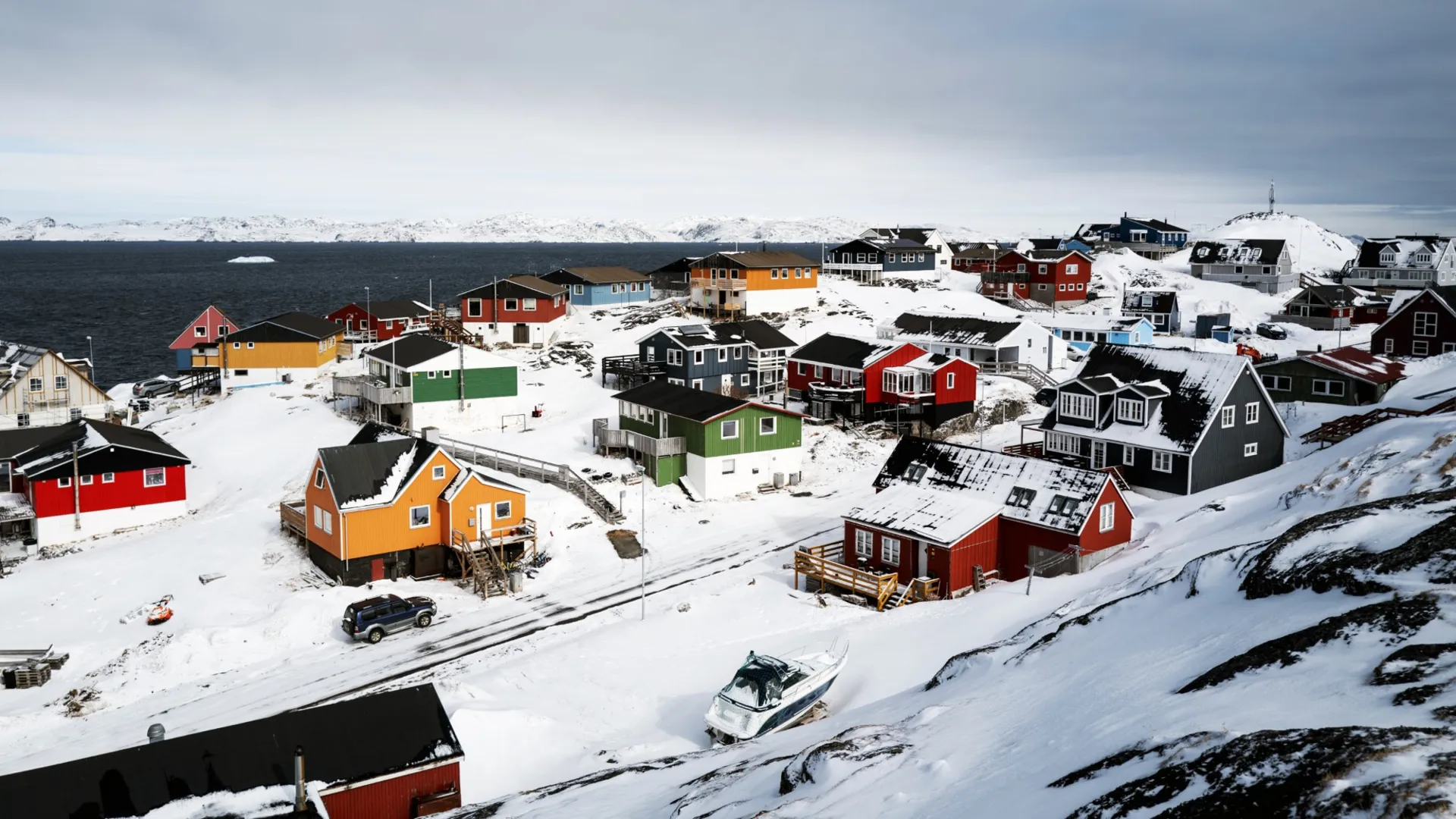
The island’s frigid, Arctic climate serves as the main culprit for challenging mining. Most of Greenland’s natural resources are “located in remote areas above the Arctic Circle, where there is a mile-thick polar ice sheet and darkness reigns much of the year,” said CNN. While people may understandably think neighboring Iceland is blanketed by ice, Greenland actually has the harsher climate; about “80% of Greenland is covered with ice,” and mining the “Arctic can be five to 10 times more expensive than doing it elsewhere on the planet.”
As a result, most of the efforts to mine Greenland’s minerals “generally haven’t advanced beyond the exploratory stage,” said The Associated Press. And beyond the weather playing a major factor, the remote areas where many of these elements are located also present a problem. Even in southern Greenland, where the island is “populated, there are few roads and no railways, so any mining venture would have to create these accessibilities,” said Diogo Rosa, an economic geology researcher with the Geological Survey of Denmark and Greenland, to the AP. There is also the question of power, as many of these remote areas don’t have consistent electricity.
As of now, Greenland only has one fully operational mine, which produces anorthosite and is “located deep inside a fjord system with no road access,” said Business Insider. All of the mine’s supplies, including the crew, “arrives by ship during the ice-free months or by helicopter when the fjord freezes over for months on end.” And there may not be another operational mine for a while; on average it “takes 16 years to develop a mine, right from the first idea to the actual mine,” Naaja Nathanielsen, Greenland’s minister responsible for natural resources, said to Business Insider.
It is clear that the “Trump administration might want to dominate the Arctic, not least to gain relative power over Russia and China,” Lukas Slothuus, a postdoctoral research fellow at the U.K.’s University of Sussex, said at The Conversation. But given the challenges with mining, any “natural resource extraction is unlikely to feature centrally.” If foreign powers did find a way to mine in Greenland, this would “reverberate in Copenhagen, as Greenland has a mining profit-sharing agreement with Denmark.”
Sign up to get Today’s Best Articles in your inbox
A free daily email with the day’s biggest news and analysis – and the best features from TheWeek.com
Justin Klawans has worked as a staff writer at The Week since 2022. He began his career covering local news before joining Newsweek as a breaking news reporter, where he wrote about politics, national and global affairs, business, crime, sports, film, television and other news. Justin has also freelanced for outlets including Collider and United Press International.