Sign up to get Today’s Best Articles in your inbox
Join 350,000+ subscribers and keep yourself informed with a selection of
The Week’s most interesting, enlightening and entertaining stories - plus daily puzzles.
You are now subscribed
Your newsletter sign-up was successful
Want to add more newsletters?
An account already exists for this email address, please log in.
Mecca Agreement invoked: what does it mean for the Middle East?
Pakistan and Turkey will send troops to Saudi Arabia in response to Houthi attacks, which could carry ‘deep symbolic weight’
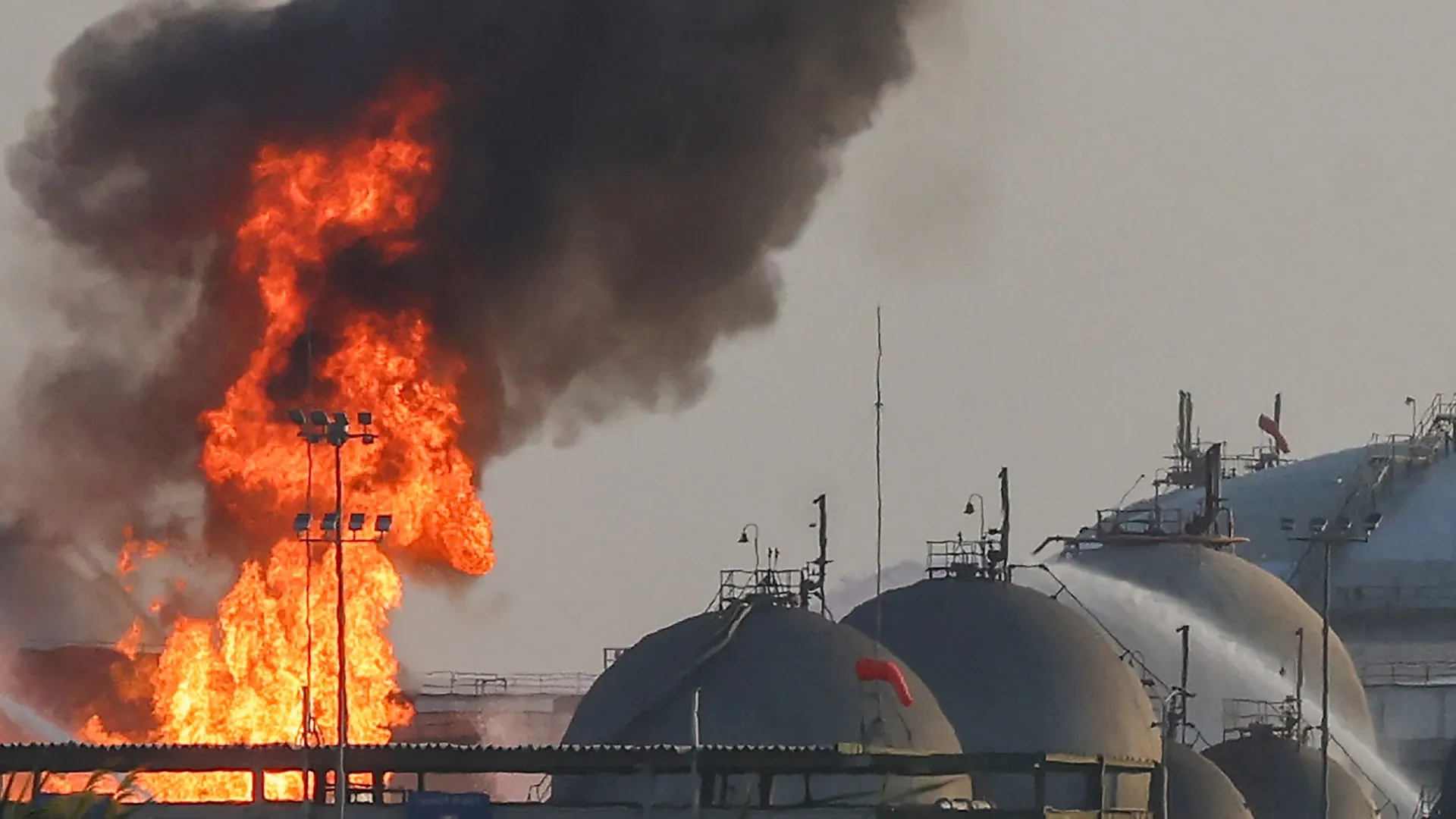
The Mecca Joint Defence Agreement has been invoked for the first time since it was signed in August, following Houthi-led attacks on Saudi infrastructure Mecca, Medina and the capital’s airport.
While not identifying the Yemeni group by name, the alliance, composed of Turkey, Pakistan and Saudi Arabia, will undertake a “rapid deployment” of troops to Saudi Arabia as part of their “collective defence commitments”.
Saudi Arabia is also supporting an offensive by the Yemeni government to take back the capital, Sanaa, held by the Houthis since 2014. Three people have been killed in attacks on Saudi Arabian airports over two days, as fighting spilled across the Yemen border into the Kingdom. It is unclear how Pakistan and Turkey will contribute to this action.
The Week
Escape your echo chamber. Get the facts behind the news, plus analysis from multiple perspectives.
Join more than 350,000 subscribers and keep yourself informed with a selection of The Week’s most interesting, enlightening and entertaining stories - plus daily puzzles.
Join more than 350,000 subscribers and keep yourself informed with a selection of The Week’s most interesting, enlightening and entertaining stories - plus daily puzzles.
As the US continues to focus on Iran, and has ruled out direct intervention in Yemen, the alliance’s success could redraw the lines of power and control in the region.
What did the commentators say?
“Even the threat of joint involvement could dramatically shift the Saudi-Houthi conflict,” said Foreign Policy. Although in its infancy, members of the Mecca Joint Defence Agreement boast nearly 1.4 million active troops combined, as well as “3,400 aircraft, 6,000 tanks, and more than 340 naval assets”. Pakistan has nuclear capabilities – “the only nuclear-armed Muslim-majority nation in the world” – and Turkey stands second only to the US for the largest armed forces in Nato.
Defence relations between the countries had already been close, even before the Mecca Accord was signed in August, said Abid Hussain on Al Jazeera. Pakistan has trained Saudi military personnel since 1967, and a declassified CIA assessment from 1985 estimated that 13,000 to 14,000 Pakistanis were serving in the Saudi army.
However, the Turkish “footprint is less clear”. And there is a potential sticking point, as Article 92 of Turkey’s constitution stipulates that the “authority to send troops abroad rests with the parliament, which has yet to ratify the Mecca pact”.
Sign up to get Today’s Best Articles in your inbox
A free daily email with the day’s biggest news and analysis – and the best features from TheWeek.com
The timing of the announcement also “carries deep symbolic weight”, said Sean Mathews in Middle East Eye. Pakistan has been positioning itself as an “honest broker” for peace in the region, mediating between the US and Iran in previous negotiations, and Turkey has overtly established its stance as a “rival to Israel”. And by invoking the pact, Saudi Arabia has demonstrated that it has the “support of the wider region in its counter-offensive against the Houthis” and, by extension, Iran.
In the grand scheme of things, the Mecca Accord should be perceived more as an “additional layer of regional security rather than a wholesale strategic realignment”, said international relations expert John Calabrese on The Conversation. Traditionally, states in the region have relied on external support to gain “greater strategic autonomy”. Yet, as the threats in the region become harder to “separate into discrete categories”, and suspicion of the conventional allies grows, Saudi Arabia is moving to “hedge” its bets to avoid becoming vulnerable.
What next?
Despite the invocation, a resolution in Yemen against the Houthis is “unlikely without a wider deal between the US and Iran”, said Samer Al-Atrush, The Times’ Middle East correspondent. Currently, however, Washington is intent on demanding “concessions” from Tehran by enforcing its own naval blockade.
Will Barker joined The Week team as a staff writer in 2025, covering UK and global news and politics. He previously worked at the Financial Times and The Sun, contributing to the arts and world news desks, respectively. Before that, he achieved a gold-standard NCTJ Diploma at News Associates in Twickenham, with specialisms in media law and data journalism. While studying for his diploma, he also wrote for the South West Londoner, and channelled his passion for sport by reporting for The Cricket Paper. As an undergraduate of Merton College, University of Oxford, Will read English and French, and he also has an M.Phil in literary translation from Trinity College Dublin.