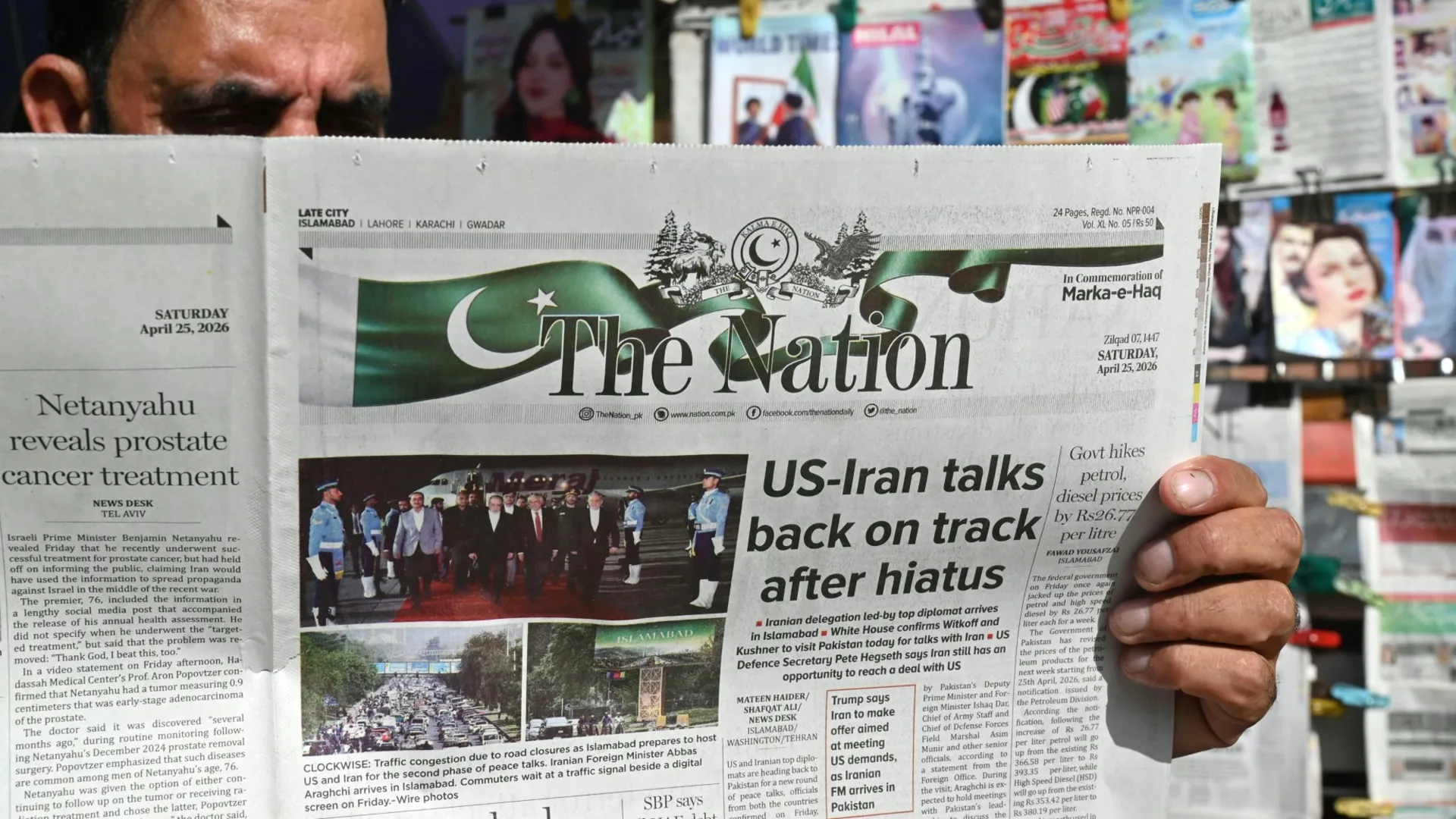
As the Trump administration scrambles to control its war with Iran, both countries have turned to an unexpected moderator: Pakistan, which has led multiple rounds of ceasefire negotiations between the two nations. Now, Pakistan is quietly growing its influence in the region while Washington and Tehran circle one another for another round of talks.
From ‘kind of a sideshow’ to being in Trump’s ‘favor’
Islamabad’s role as a major player in this conflict, for many observers, has “come as a surprise,” given Pakistan’s “global position, domestic challenges” and “volatile relationship” with the first Trump administration, said the Chicago Council on Global Affairs (CCGA). But “perhaps it shouldn’t,” the BBC said.
Pakistani Field Marshal Asim Munir “is in U.S. President Donald Trump’s favor,” with the president asserting that the Pakistani leader knows Iran “better than most.” Pakistan, in its own messaging, has hailed a “brotherly” relationship with neighboring Iran, with the two nations sharing “deep cultural and religious ties,” said the BBC.
The Week
Escape your echo chamber. Get the facts behind the news, plus analysis from multiple perspectives.
SUBSCRIBE & SAVE
Sign up for The Week's Free Newsletters
Join more than 350,000 subscribers and keep yourself informed with a selection of The Week’s most interesting, enlightening and entertaining stories - plus daily puzzles.
Join more than 350,000 subscribers and keep yourself informed with a selection of The Week’s most interesting, enlightening and entertaining stories - plus daily puzzles.
Latest Videos FromThe Week US
Although Pakistan was “kind of a sideshow” during the first Trump administration, it has “really reached out” to both the White House and “Donald Trump personally, as well as his family members, to try to build influence in Washington,” CCGA said. Pakistan’s connections to Saudi Arabia and China have also allowed it to “place itself in a mediator role” with a “greater level of geopolitical clout and influence than we might have expected a couple of years ago.”
Given Pakistan’s reputation for corruption and military authoritarianism, it “would not be an exaggeration” to describe it as a “failed state,” said The Spectator. But simply “being a nuclear power” affords Pakistan a “head start in terms of credibility” by gracing Islamabad with the “nuclear aura that Iran would love to possess.” China, which has played a “background but crucial role” in the peace negotiations, has also had a “longstanding close relationship” with Islamabad, as both nations “enjoy common cause against India.”
Pakistan as a ‘responsible middle power’
“Playing the role of mediator” between the United States and Iran — or “at least message-bearer” — has “been a boon for Islamabad,” Le Monde said. The country has undergone “its authoritarian drift,” in which it “silenced its large Shiite minority during the war and solidarity movements with Iran.”
After having sheltered Osama bin Laden, Pakistan “wants to convince international opinion that it is no longer a breeding ground for terrorism,” said Gilles Boquérat, an associate researcher at the Foundation for Strategic Research, to Le Monde. Instead, it is portraying itself as a “responsible middle power, capable of ensuring regional security from the Arabian Peninsula to the Indian border.”
But Pakistan’s ties with Iran have earned Islamabad its share of critics during the current war, including Sen. Lindsey Graham (R.-S.C.). “I don’t trust Pakistan as far as I can throw them,” Graham said during a Senate hearing this week regarding reports that the Pakistani government has aided Iranian forces. “If they actually do have Iranian aircraft parked in Pakistan bases to protect Iranian military assets, that tells me we should be looking maybe for somebody else to mediate.”



 talking pointsAfter Pike disaster, is it time to rethink death penalty?
 QUOTE OF THE DAY‘What it actually means in the American context is you want to replace American workers with foreign workers and you want boys to play in girls’ sports.’
 the explainerJustice Dept. launches largest-ever effort to strip citizenship