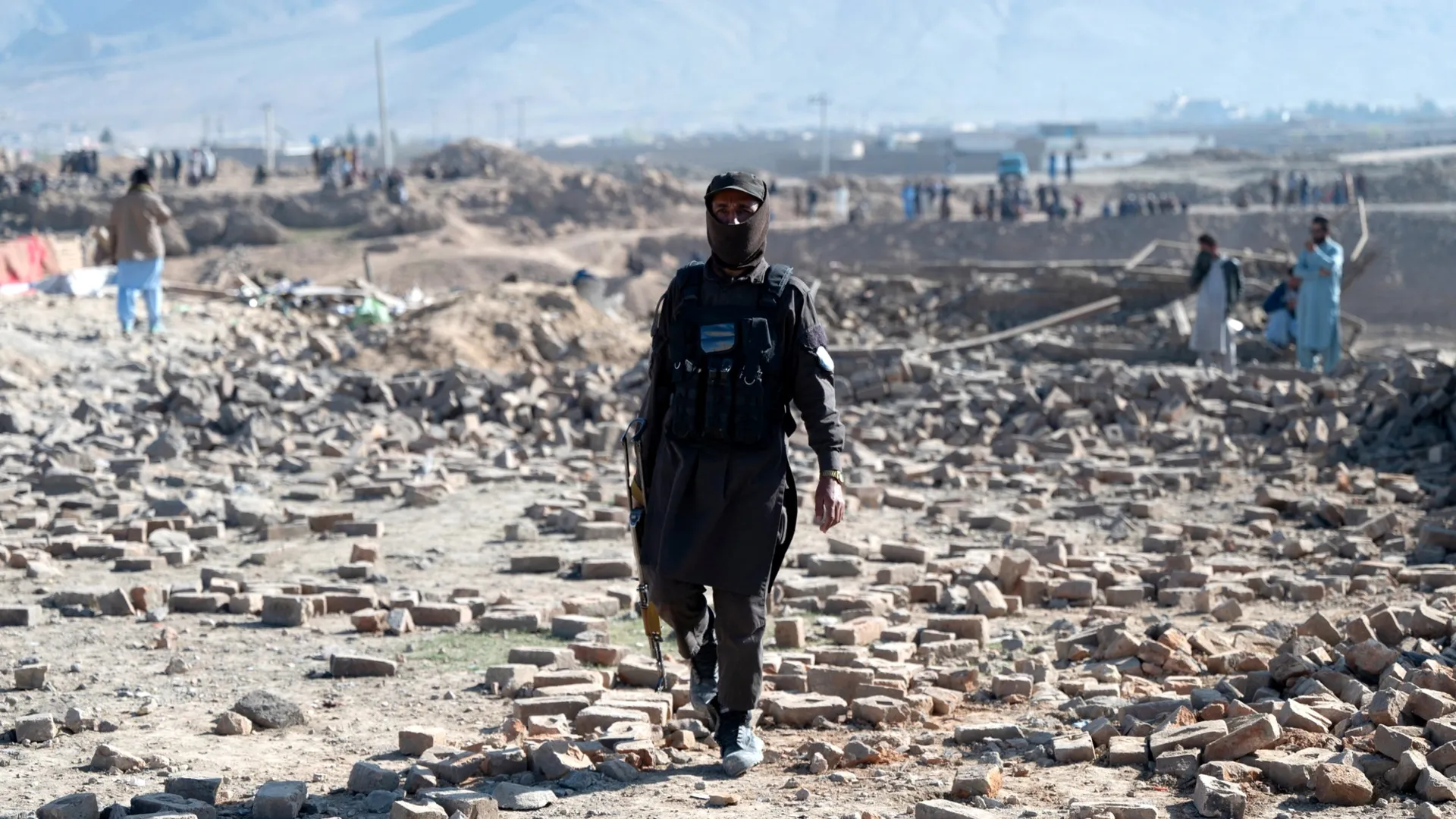
While the world is distracted by the US-Israeli strikes on Iran, another conflict is erupting between Iran’s neighbours.
Pakistan has declared “open war” on Afghanistan after fighting intensified over recent weeks. In a dangerous escalation from cross-border skirmishes, Pakistan launched air strikes at the end of February, targeting major cities including Kabul. Afghanistan’s Taliban regime responded with drone attacks. Both sides blame the other for the conflict.
More than 1,000 people are estimated to have been killed or injured, and 100,000 displaced. In one air strike on a Kabul drug rehabilitation centre last week, 400 people were killed, according to Afghan officials. With a ceasefire to mark the Muslim holiday of Eid al-Fitr set to expire, there are no signs of a desire for de-escalation.
The Week
Escape your echo chamber. Get the facts behind the news, plus analysis from multiple perspectives.
SUBSCRIBE & SAVE
Sign up for The Week's Free Newsletters
Join more than 350,000 subscribers and keep yourself informed with a selection of The Week’s most interesting, enlightening and entertaining stories - plus daily puzzles.
Join more than 350,000 subscribers and keep yourself informed with a selection of The Week’s most interesting, enlightening and entertaining stories - plus daily puzzles.
Latest Videos FromThe Week US
What’s the background?
This is “not a sudden rupture of relations”, said Rabia Akhtar on The Conversation. It’s the “intensification of long-simmering, historical security concerns” along their disputed 1,600-mile border: the Durand Line.
Afghanistan has never formally recognised the border, drawn in 1893 through ethnic Pashtun areas. That’s caused “sustained and persistent tension” since Pakistan’s independence in 1947. The countries also took opposite sides in the Cold War, with Pakistan “embedded” in the US-led framework and Afghanistan maintaining “closer ties” with the Soviet Union (until it invaded). All of this “entrenched cross-border militant networks”.
When the Taliban retook power in 2021, Pakistan “anticipated a more cooperative security environment” than the series of US-backed Afghan governments. It hoped the Taliban, which it had covertly supported all along, would help “rein in” several militant groups, said The New York Times. This was a “strategic miscalculation”.
Instead, terrorist attacks within Pakistan increased, particularly by the Tereek-e-Taliban Pakistan (TTP, or Pakistan Taliban). The group took advantage of Pakistan’s political chaos to further entrench its power in the border lands and threaten the country’s all-powerful military. The TTP also took a share of the US military equipment left in Afghanistan when America withdrew. This, and the release of hundreds of its fighters from Afghan prisons, erased much of Pakistan’s efforts to defeat it.
What triggered this outbreak?
The TTP has been increasing its attacks in Pakistan as it grows in power, killing 4,000 people in the last four years according to Pakistani authorities. Last year was the most violent for militancy in a decade, according to the Islamabad-based Center for Research and Security Studies. The separatist Balochistan Liberation Army also claimed attacks that killed almost 50 people. Islamabad has long accused the Taliban of harbouring such groups, allegedly allowing them to operate from sanctuaries within Afghanistan.
Pakistan launched air strikes against alleged TTP hideouts in Afghanistan last year, warning it would no longer tolerate “safe havens” for fighters. It also accused its historic foe, India, of supporting the Taliban, allegedly with Indian-made drones used in recent attacks. India then effectively normalised relations with the Taliban.
Both India and the Taliban “vehemently deny” Pakistan’s accusations, said the BBC. They say the TTP is “an internal matter” for Islamabad: a “Pakistan-created problem”. That’s “done little but to further infuriate” Pakistani leaders.
Violent clashes erupted on the border in October, and Pakistan carried out air strikes before suspending trade with landlocked Afghanistan. A truce didn’t last long; after years of diplomatic efforts, Pakistan “now says that there is nothing to talk about”.
What’s the significance?
Middle Eastern powers that have been mediating between Afghanistan and Pakistan for years currently have “limited bandwith” to de-escalate, said Chietigj Bajpaee on Chatham House. Despite Pakistan’s “superior military”, the Taliban has “a significant capacity for asymmetric warfare”. And if Pakistan “perceives an Indian hand behind Kabul’s actions”, there could also be renewed hostilities between India and Pakistan – two nuclear-armed states.
Exacerbating tensions is “the forced repatriation of Afghan refugees” from Pakistan and Iran; an estimated 2.7 million Afghans were returned last year, further straining Afghanistan’s “stretched public services” and economic woes.
Pakistan has been “taking advantage of the West’s disengagement” and regional powers’ distraction, said the Financial Times. It is “enraged”. But all-out war “threatens stability” across Asia. There is “the very real risk” that Afghanistan becomes “an incubator for terrorism” again.
For the “shaky truce” to endure, the intervention of the US and China is required. Although “precedents for a settlement are not inspiring”, the stakes are “too high for the world to keep looking away”.