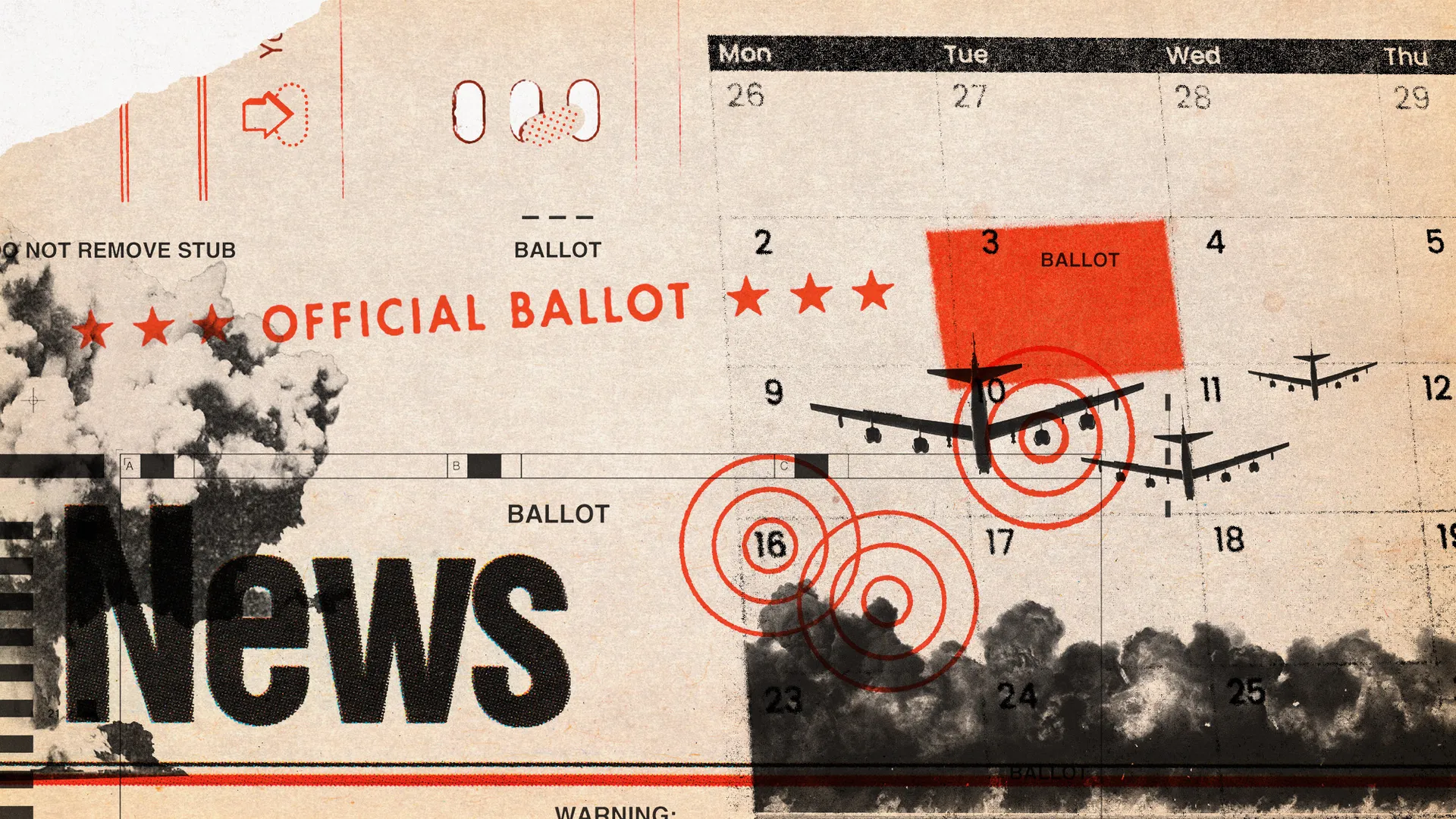
The midterm elections are looming as a milestone in the Iran war. President Donald Trump declined a ceasefire proposal from Tehran last week, reportedly because he expects to restart U.S. attacks after the vote. And Iran’s leaders may be betting that election pressure can force the White House to make concessions.
‘Midterm election problem’
The president expects to start a new round of bombing “after the November midterms,” said The Wall Street Journal. Trump on Friday rejected a proposed ceasefire that would reopen the Strait of Hormuz in exchange for lifting the U.S. blockade of Iranian ports.
Iranian leaders, however, say they want to make a deal “before Americans head to the polls this November,” said NBC News. “We don’t want it to get to the midterm elections,” Iranian President Masoud Pezeshkian said to reporters at last week’s United Nations assembly, per NBC.
The Week
Escape your echo chamber. Get the facts behind the news, plus analysis from multiple perspectives.
SUBSCRIBE & SAVE
Sign up for The Week's Free Newsletters
Join more than 350,000 subscribers and keep yourself informed with a selection of The Week’s most interesting, enlightening and entertaining stories - plus daily puzzles.
Join more than 350,000 subscribers and keep yourself informed with a selection of The Week’s most interesting, enlightening and entertaining stories - plus daily puzzles.
Latest Videos FromThe Week US
It is “highly unusual” for U.S. elections to “affect a war,” David Shribman said at The Globe and Mail. The “only precedent” for electoral considerations influencing war strategy so directly came in 1968, when President Lyndon B. Johnson halted bombing in North Vietnam “to help his vice-president, Hubert Humphrey,” in the presidential election. Humphrey lost.
Trump has a “midterm election problem” with the war, said Al Jazeera. Voters who were “promised easy victory” appear poised to punish Republicans in November, which affects strategic considerations. Iran “faces no such countdown,” given that it is “ruled by an unelected Supreme Leader.”
‘Potentially endless’ war
If the elections are affecting war strategy, the war is also affecting elections. U.S. voters are “angry” at the president and his party, Stephen Collinson said at CNN. Just 26% of voters “approve of his handling of the war.” Trump’s “odd” strategy is to give them the “opposite of what they want,” as he refuses to “listen to their fears.”
This is “hardly a recipe for success” in elections, said Collinson. A “potentially endless” war against Iran might be a mistake that gets the GOP’s most devoted voters to “finally ditch Trump,” David Wallace-Wells said at The New York Times.